Battery Powered Hydrofoil Surfboard
Battery Powered Hydrofoil Surfboard
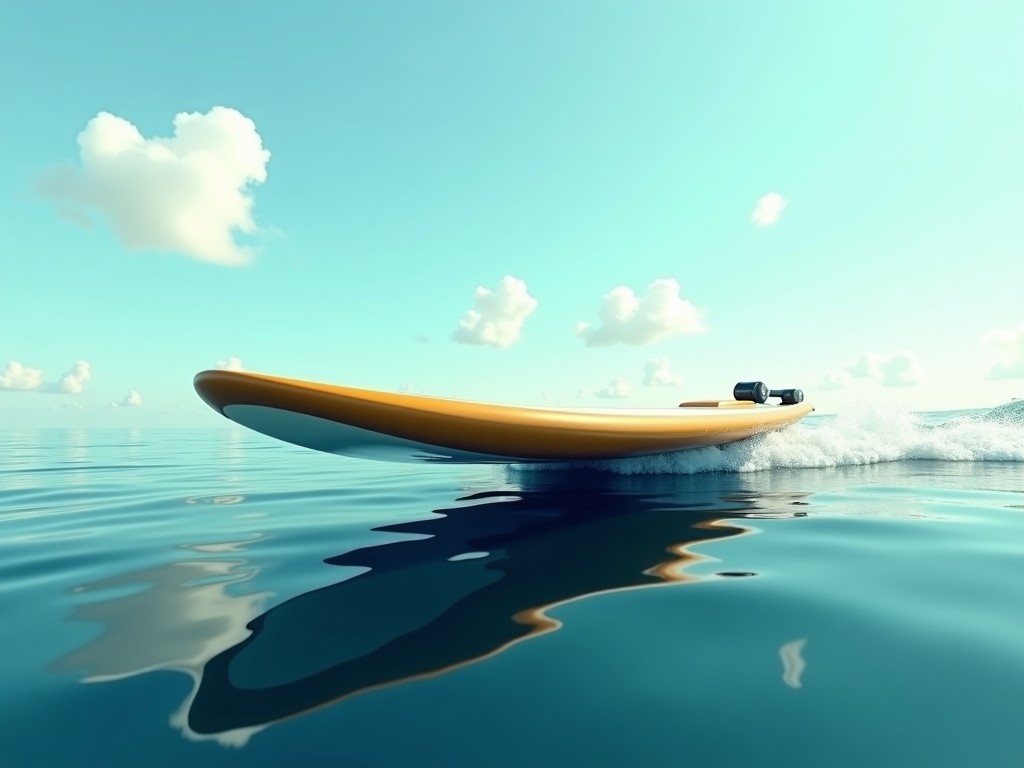
A battery powered hydrofoil surfboard integrates electric propulsion with underwater wing technology to lift the rider above the water surface, reducing drag and enabling efficient movement across calm or choppy conditions. This system replaces traditional paddling or wave-dependent riding with controllable thrust, allowing operation in locations without suitable surf. Core components include a sealed lithium-ion battery pack, waterproof motor controller, brushless DC motor, carbon fiber hydrofoil assembly, and reinforced board chassis. Performance is governed by energy density, power-to-weight ratio, foil aspect ratio, and control system latency. Understanding these parameters is essential for evaluating suitability in commercial training, patrol, or recreational rental applications where consistent operation and low maintenance are priorities.
Technical Specifications
| Parameter | Typical Value | Unit |
|---|---|---|
| Battery Capacity | 2.0–3.5 | kWh |
| Motor Power | 5–15 | kW |
| Maximum Speed | 25–35 | km/h |
| Operating Time | 45–90 | minutes |
| Board Length | 150–180 | cm |
| Foil Wingspan | 60–90 | cm |
| Total Weight (with battery) | 18–25 | kg |
| Charging Time (AC 220V) | 2–4 | hours |
Values represent typical production configurations; actual performance depends on battery chemistry, motor efficiency, foil design, and rider weight. Systems using lithium nickel manganese cobalt oxide (NMC) cells achieve higher energy density than lithium iron phosphate (LFP) alternatives, though LFP offers improved thermal stability and cycle life. Motor controllers employ field-oriented control (FOC) to minimize torque ripple and maximize efficiency across speed ranges. Hydrofoil geometry is optimized using computational fluid dynamics (CFD) to balance lift generation at low speeds with stability at higher velocities. All electrical housings meet IP68 standards for continuous submersion, with venting mechanisms to manage internal pressure changes during operation.
Material Selection and Construction
The board chassis utilizes a sandwich structure with PVC foam core and unidirectional carbon fiber reinforcement, providing a flexural modulus exceeding 25 GPa while maintaining impact resistance. Hydrofoil mast and wings are constructed from aerospace-grade 7075-T6 aluminum alloy or prepreg carbon fiber, selected based on stiffness requirements and corrosion exposure. Aluminum variants offer cost-effective repairability but require anodizing or coating for saltwater environments; carbon fiber foils deliver higher stiffness-to-weight ratios but demand careful impact avoidance. Motor mounts and battery trays are machined from marine-grade 316 stainless steel to resist galvanic corrosion when coupled with aluminum components. Sealing techniques include overmolded thermoplastic elastomer (TBO) gaskets and potting compounds for PCB encapsulation, ensuring long-term integrity under repeated thermal cycling and hydrostatic pressure.
- Board core: PVC foam (density 60–80 kg/m³) with 3K carbon fiber skins (0.3–0.5 mm ply thickness)
- Hydrofoil mast: 7075-T6 aluminum (wall thickness 3–4 mm) or carbon fiber tube (diameter 40–50 mm)
- Wings: NACA-profile sections with chord length 12–18 cm, aspect ratio 4–6
- Motor: Outrunner brushless DC, Kv rating 150–250 RPM/V, sealed stator with epoxy potting
- Battery: Modular lithium-ion packs with cell balancing, thermal sensors, and CAN bus communication
Fasteners are exclusively titanium grade 5 or passivated 316 stainless to prevent crevice corrosion in saline environments. All external surfaces receive UV-stabilized polyurethane coating to mitigate degradation from prolonged sun exposure. Internal cable routing follows strain-relief principles to avoid fatigue at bend points, with conduits made from cross-linked polyethylene (XLPE) for abrasion resistance. Manufacturing tolerances are held to ±0.5 mm for critical mating surfaces to ensure alignment and prevent vibration-induced wear. Assembly processes include torque-controlled fastening and dielectric grease application on conductive interfaces to inhibit oxidation.
Operational Applications
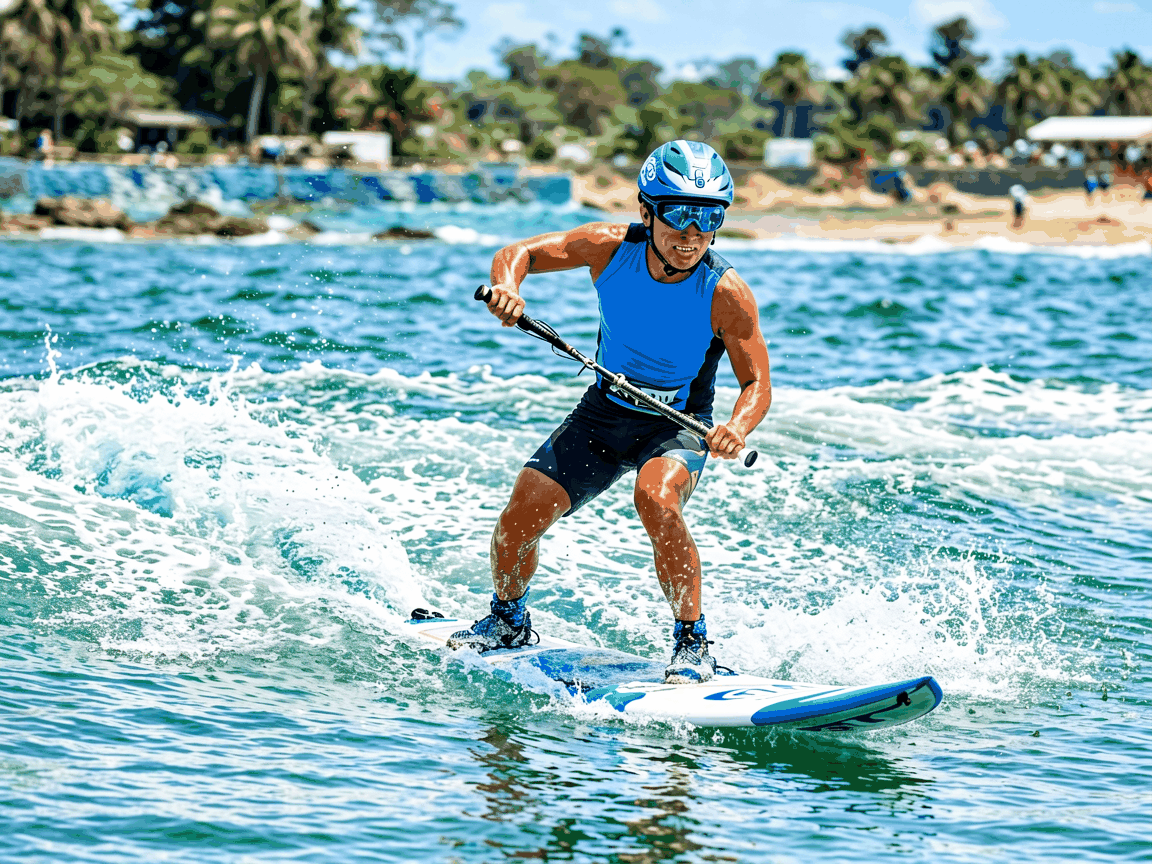
Battery powered hydrofoil surfboards serve specialized roles where traditional watercraft face limitations in access, noise, or emissions. In coastal patrol operations, they enable quiet, rapid response in shallow or vegetated zones where propeller-driven craft risk entanglement or detection. Training facilities use them to teach balance and foil control without reliance on wave generation, reducing operational costs and environmental impact. Research teams deploy sensor-equipped variants for nearshore bathymetric mapping or marine life observation, benefiting from low wake and minimal disturbance. Commercial rental operations in lakes or sheltered bays leverage their ease of use and zero-emission profile to comply with local noise and air quality regulations. Each application prioritizes different performance traits: patrol emphasizes reliability and endurance, training favors stability and forgiving handling, while rentals require simplicity of operation and robust safety interlocks.
Customization Options
System parameters can be adjusted to match specific operational profiles without redesigning core architecture. Battery capacity is scalable in 0.5 kWh increments by adding parallel cell groups, directly extending range at the cost of increased weight and chassis volume. Motor KV rating is selectable to optimize for either high-torque low-speed thrust (ideal for heavy payloads or rough water) or high-efficiency cruising (suited for long-distance patrol or survey). Hydrofoil geometry can be altered—larger wings increase low-speed lift for heavier riders or equipment, while smaller, high-aspect wings reduce drag at speed but require more precise control inputs. Control interfaces range from basic handheld throttles to integrated handlebar systems with GPS speed limiting, tilt-stabilization, and emergency shutoff. Optional modules include waterproof payload bays (up to 5 kg capacity), ultrasonic depth sensors, and LED navigation arrays for low-visibility operations.
| Customizable Parameter | Adjustment Range | Primary Impact |
|---|---|---|
| Battery Energy | 1.5–4.0 kWh | Operating duration, range |
| Motor Power | 3–20 kW | Acceleration, top speed, hill-climbing ability |
| Front Wing Area | 250–450 cm² | Lift at low speed, stability, drag |
| Mast Length | 60–90 cm | Ride height, wave clearance, maneuverability |
| Controller Firmware | Customizable via USB/CAN | Throttle response, braking regen, safety limits |
Adjustments are made during final assembly using standardized mounting interfaces and firmware configuration tools. Changes to battery or motor specifications may require updates to cooling pathways, wiring gauge, or structural reinforcement. Hydrofoil swaps are facilitated by quick-release torque-to-yield bolts on the mast interface, allowing field changes in under five minutes. Custom firmware profiles can be pre-loaded for specific use cases—such as speed-limited operation for training zones or maximum thrust profiles for emergency response—then locked via PIN protection to prevent unauthorized modification. All customizable options maintain compliance with IP68 sealing and corrosion resistance standards when installed according to manufacturer procedures.
Quality Control and Testing
Each unit undergoes a multi-stage validation process beginning with individual component verification. Battery packs are subjected to capacity grading, internal resistance measurement, and thermal runaway testing per UL 2580 guidelines. Motors are checked for winding insulation resistance (>100 MΩ), balance quality (G2.5 or better), and cogging torque minimization. Hydrofoil assemblies undergo dimensional inspection using coordinate measuring machines (CMM) to confirm symmetry and chord accuracy within ±0.2 mm. Sealing integrity is verified through hydrostatic pressure testing at 1.5x operational depth for 10 minutes, followed by thermal cycling between -10°C and +50°C to simulate environmental stress. Fully assembled units proceed to dynamic testing in controlled water environments, where thrust output, lift-off speed, battery discharge curves, and control system latency are recorded and compared against design targets. Any deviation beyond 5% triggers root cause analysis and corrective action before release.
- Incoming material certification: battery cells, carbon fiber cloth, aluminum extrusions
- Motor: no-load current, back-EMF constant, vibration spectrum
- Hydrofoil: surface finish roughness (<16 µm Ra), edge straightness, twist tolerance
- Electronics: conformal coating thickness, insulation resistance, CAN bus termination
- Final assembly: weight verification, center of gravity measurement, radio frequency interference (RFI) shielding
Documentation includes a traceability matrix linking each serial number to test results, material certificates, and operator manuals. Quality records are retained for a minimum of five years to support warranty claims and failure analysis. Sampling plans follow ISO 2859-1 for lot inspection, with critical seals and electrical connections subjected to 100% testing. Non-conforming items are segregated, analyzed for root cause (e.g., material defect, process deviation, handling damage), and either reworked or scrapped based on severity. Continuous improvement is driven by field feedback—particularly regarding seal longevity in tropical climates or connector corrosion in high-salinity waters—leading to periodic updates in material selection or assembly techniques.
Ordering and Support
Procurement begins with submission of an application questionnaire detailing intended use case, expected operating environment (salinity, temperature, depth), required endurance, and any regulatory constraints (e.g., local speed limits, noise ordinances). This information enables engineering review to recommend appropriate baseline configurations and identify necessary customizations. Quotations include itemized costs for base system, optional modules, spare parts kits, and documentation packages. Lead times typically range from 6 to 10 weeks for standard configurations, extending to 12–16 weeks for highly customized builds due to specialized foil fabrication or battery certification processes. Samples are available for evaluation upon receipt of a signed NDA and deposit, with return shipping costs borne by the requester if the unit is not purchased. All units ship via specialized freight carriers with foam cushioning and moisture-barrier wrapping to prevent damage during transit.
Post-delivery support includes remote diagnostics via CAN bus interface, firmware updates delivered through encrypted wireless link, and access to a technical knowledge base covering maintenance procedures, troubleshooting guides, and recommended inspection intervals. Spare parts inventory maintains critical seals, propulsion connectors, and control interface modules for immediate shipment. Warranty coverage extends to 24 months for manufacturing defects in materials or workmanship, excluding normal wear items such as propellers, foot straps, and surface coatings. Extended warranty options are available for commercial operators seeking longer-term protection. Training sessions—conducted either on-site or via virtual platform—cover safe operation, pre-check routines, charging best practices, and emergency response protocols to ensure users can maximize equipment lifespan and minimize downtime.