Buy Efoil Surfboard
Buy eFoil Surfboard
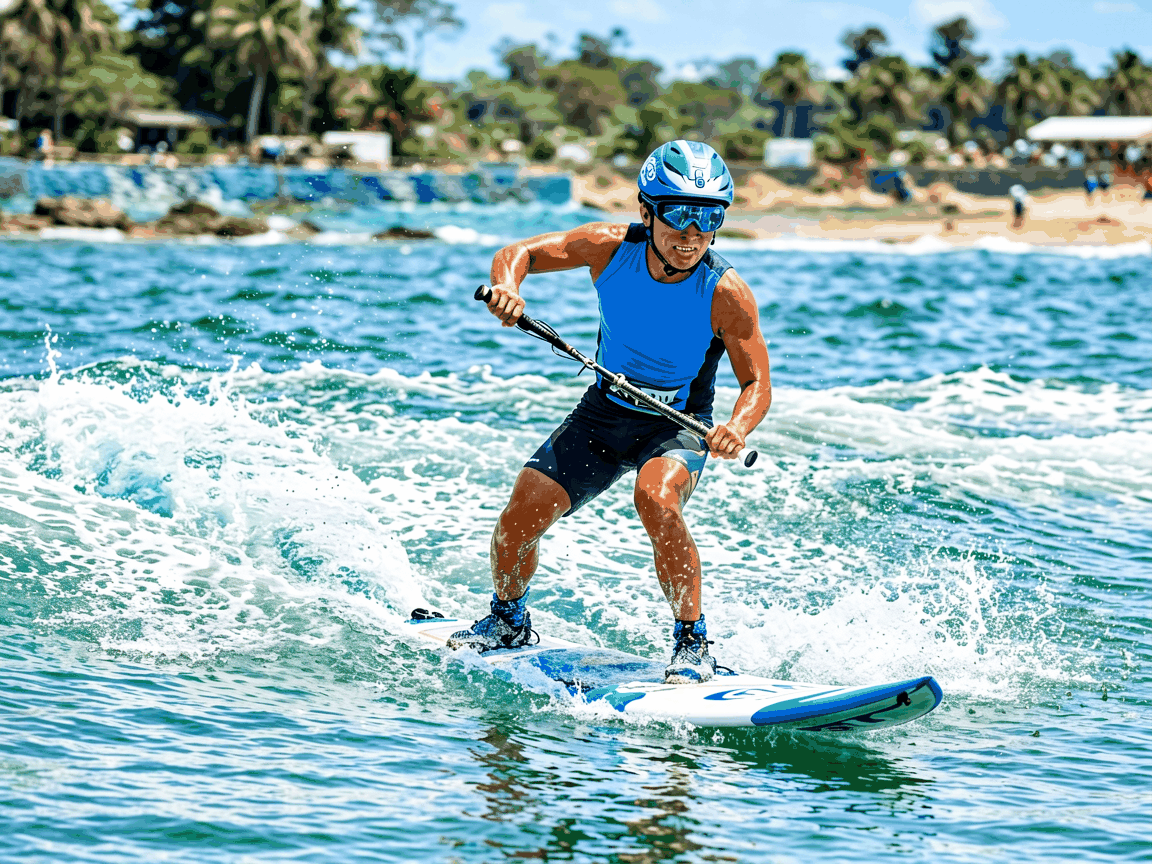
An eFoil surfboard combines an electric propulsion system with a hydrofoil to lift the rider above the water surface, reducing drag and enabling smooth, silent gliding. Unlike traditional surfboards, it operates independently of waves or wind, making it suitable for lakes, calm seas, and rivers. The core components include a waterproof battery pack, brushless motor, propeller, mast, fuselage, and wings—all engineered for marine environments.
When selecting an eFoil for industrial or commercial use—such as rental fleets, training centers, or resort operations—key considerations include battery endurance, motor power-to-weight ratio, corrosion resistance, and modularity for maintenance. Buyers should evaluate not just peak performance but also long-term reliability under frequent saltwater exposure and varying user skill levels.
This guide outlines the technical specifications, material choices, and operational factors that influence purchasing decisions for eFoil surfboards in B2B contexts. It avoids promotional language in favor of measurable engineering characteristics to support informed procurement.
Core System Architecture
The eFoil system integrates five primary subsystems: power storage, propulsion, hydrofoil, control interface, and structural mounting. The battery—typically lithium-ion with nickel-manganese-cobalt (NMC) chemistry—is sealed in an IP68-rated housing and positioned for optimal center of gravity. Voltage ranges from 36V to 72V depending on model, with capacity between 30Ah and 60Ah, delivering 1–2 hours of runtime at moderate cruising speed.
The propulsion unit uses a brushless DC motor mounted inside a sealed pod, driving a marine-grade propeller through a magnetic coupling to eliminate shaft seals. Motor power typically ranges from 3kW to 6kW peak, with continuous output limited by thermal management. Efficiency exceeds 85% under load due to minimal hydrodynamic drag when foiling.
The hydrofoil consists of a mast (70–90cm), fuselage, front wing (1200–1800cm²), and rear stabilizer (300–500cm²). Wing aspect ratio and profile are tuned for lift-to-drag ratio at speeds between 8–15 km/h. Aluminum 6061-T6 or carbon fiber composites are common mast materials, while wings often use reinforced polymer or carbon layups for stiffness and impact resistance.
Material Selection and Environmental Durability
Marine environments demand materials resistant to galvanic corrosion, UV degradation, and impact. The board’s hull is usually constructed from EPS core wrapped in fiberglass or carbon fiber laminate with epoxy resin, providing a balance of buoyancy, tensile strength (>40 MPa), and water resistance. Deck pads use EVA foam with closed-cell structure to prevent water absorption.
Metal components exposed to saltwater—such as motor mounts, mast fittings, and propeller shafts—are made from grade 316 stainless steel or titanium alloys to prevent pitting and crevice corrosion. Anodizing or powder coating is applied to aluminum parts where dissimilar metals must be isolated. All external fasteners follow ISO 9223 corrosion severity standards for C5-M (marine) environments.
Battery enclosures undergo pressure testing to 1.5x operational depth and thermal cycling between -20°C and 60°C to validate sealing integrity. Connectors are molded thermoplastic with gold-plated contacts and silicone sealing, rated for >500 mating cycles. These measures reduce field failure rates in rental operations where equipment sees daily saltwater exposure.
Performance Characteristics and Operational Envelope
Takeoff speed—the velocity at which lift exceeds weight—depends on wing loading and rider mass. For a 75kg rider, typical takeoff occurs between 8–12 km/h with a 1500cm² front wing. Heavier users or those with less experience may require larger wings (up to 2000cm²) to reduce stall speed, though this increases drag and reduces top speed.
Maximum speed is constrained by motor power, propeller cavitation limits, and stability. Most production models cap at 25–30 km/h to balance safety and performance. Range varies with speed: at 15 km/h, a 40Ah battery yields ~90 minutes; at 22 km/h, runtime drops to ~40 minutes due to cubic relationship between drag and velocity.
Turning radius and roll response are influenced by fuselage length and wing sweep. Shorter fuselages (<65cm) increase agility for slalom or training but reduce pitch stability. Longer setups (>75cm) improve tracking for beginners or long-distance cruising. Adjustable mast systems allow users to swap lengths based on water depth and skill progression.
Comparison of Common Configurations
| Parameter | Entry-Level (Rental/Training) | Performance (Guided Tours) | High-End (Private/Resort) |
|---|---|---|---|
| Battery Capacity | 30–40Ah | 40–50Ah | 50–60Ah |
| Motor Power (Peak) | 3–4 kW | 4–5 kW | 5–6 kW |
| Mast Length | 70 cm | 75–80 cm | 80–90 cm |
| Front Wing Area | 1600–1800 cm² | 1200–1400 cm² | 1000–1200 cm² |
| Estimated Runtime | 45–75 min | 60–90 min | 75–120 min |
| Target User Weight | 50–90 kg | 60–100 kg | 70–110 kg |
Values represent typical production models. Actual performance depends on rider technique, water conditions, and battery age. Custom configurations are available upon request for specific operational profiles.
Quality Control and Manufacturing Considerations
Industrial buyers should verify that manufacturers follow documented processes for battery assembly, motor sealing, and composite layup. Key inspection points include: X-ray or ultrasonic checks for voids in motor potting, dielectric strength testing (>500V) on electrical housings, and salt spray testing (ASTM B117) for 500+ hours on metal components.
Each unit should undergo a wet test post-assembly to validate propulsion, steering, and emergency cutoff functionality. Battery packs are sorted by capacity and internal resistance using DCIR testing to ensure parity in rental fleets. Traceability is maintained via serial-numbered logs for battery cells, motor windings, and composite batches.
Warranty terms often reflect confidence in these processes: 2 years on hull and foils, 1 year on battery (limited to 300 cycles), and 6 months on motor and electronics. Buyers should request test reports and quality manuals before volume orders to assess supplier maturity.
Applications in Commercial and Industrial Settings
eFoil systems are adopted in coastal resorts not as novelty items but as low-impact, high-margin water activities requiring minimal infrastructure. Unlike jet skis, they produce no emissions, negligible wake, and operate below 60 dB, allowing use in noise-restricted zones or marine protected areas where combustion engines are banned.
Training centers use larger-wing, lower-power models to reduce learning curve and injury risk. The silent operation enables instructor communication without shouting, and the predictable lift characteristics allow standardized lesson plans. Fleet operators benefit from modular design—swappable batteries and wings let them tailor equipment to user weight and skill level without maintaining multiple board types.
In freshwater environments—such as urban lakes or riverside resorts—eFoils provide access to water sports where wind or wave conditions are unreliable. Their independence from natural conditions increases utilization rates and revenue predictability compared to windsurfing or sailing schools.
Customization and Integration Options
Beyond standard models, manufacturers offer OEM adaptations for specific use cases. Common modifications include: reinforced deck inserts for heel straps in adaptive sports programs, upgraded cooling jackets for motors in tropical climates, and CANbus-enabled telemetry for fleet monitoring (speed, battery state, motor temperature).
Battery systems can be designed for quick-swap compatibility with shore-side charging stations, enabling continuous operation in high-demand locations. Alternative motor mounts allow integration with custom hulls or adaptive frames for accessibility programs. Software limits—such as speed governors or geofencing—can be pre-configured via Bluetooth or USB for rental liability management.
Cosmetic options (color, logos, deck patterns) are available but secondary to functional customization. Buyers should prioritize discussions around serviceability, spare parts availability, and firmware update protocols when evaluating suppliers for long-term partnerships.
For technical inquiries, specification sheets, or to discuss volume pricing for commercial fleets, contact our engineering team.
Request Technical Specifications