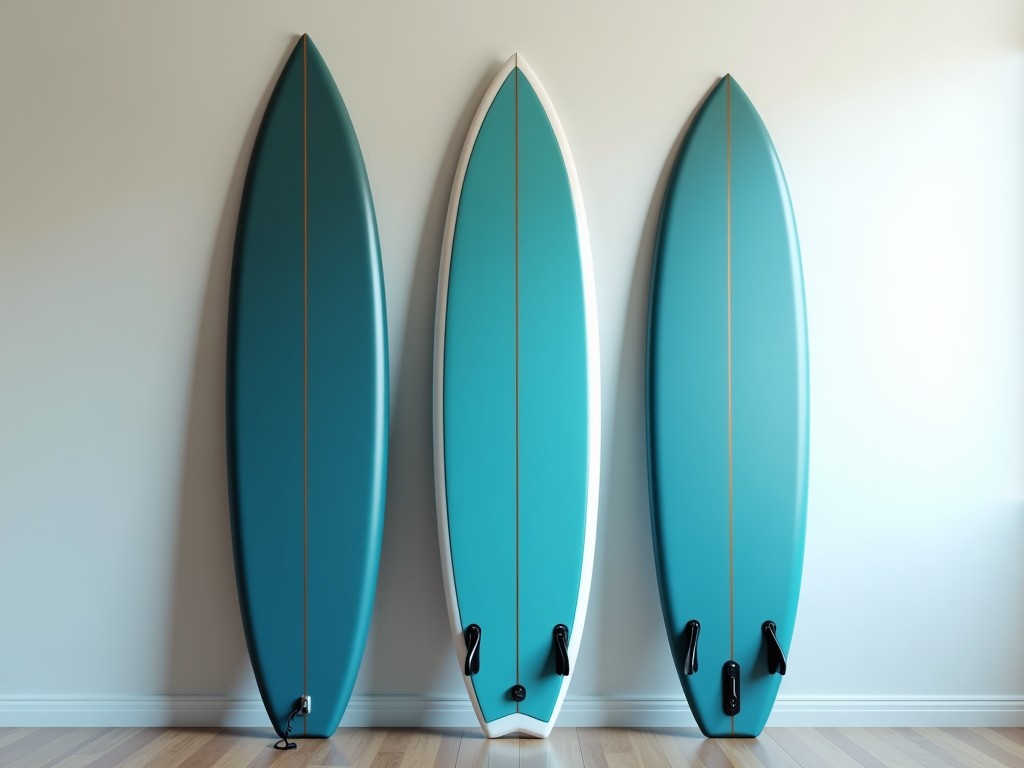
Carbon Fiber Efoil Board Wireless Control
Carbon Fiber eFoil Board with Wireless Control System
This product page details the engineering specifications, material composition, and functional design of a carbon fiber eFoil board equipped with a wireless handheld control unit. The information is structured to support technical evaluation by marine engineers, product developers, and procurement specialists involved in electric watercraft integration.
Structural Composition and Material Properties
The board’s primary structure utilizes unidirectional and woven carbon fiber prepreg laminates, consolidated under vacuum bagging and autoclave curing to achieve a fiber volume fraction of approximately 60%. This construction yields a flexural modulus exceeding 70 GPa and a tensile strength surpassing 3,500 MPa in the longitudinal direction, providing high stiffness-to-weight ratio essential for hydrodynamic efficiency and rider stability.
The core consists of closed-cell PVC foam with a density of 80 kg/m³, selected for its moisture resistance, compressive strength (>0.3 MPa), and compatibility with epoxy resin systems. Sandwich panel testing shows a shear stiffness of 1.2 kN/mm², minimizing deflection under dynamic loading during foil-borne operation.
Surface finish includes a UV-stabilized, marine-grade clear coat with a thickness of 80–100 µm, providing resistance to saltwater ingress, micro-scratching, and long-term yellowing. The total board weight ranges from 12 to 14 kg depending on size variant, contributing to improved maneuverability and reduced inertial resistance during acceleration and turning.
Wireless Control System Architecture
The wireless control unit operates on a 2.4 GHz ISM band using frequency-hopping spread spectrum (FHSS) technology to mitigate interference from other marine electronics. Transmission power is limited to 10 mW (EIRP), complying with FCC and CE regulations for short-range devices. Latency from input to motor response is under 50 milliseconds, ensuring real-time throttle and directional control.
The handheld controller features an ergonomic, waterproof-rated (IP68) enclosure made of glass-reinforced polyamide, with a dual-thumbstick interface for intuitive speed and steering modulation. Internal sensors include hall-effect triggers and a 9-axis IMU for motion compensation, reducing unintended inputs during rough water operation.
Power is supplied by a replaceable 3.7V 1800mAh Li-ion battery, providing up to 12 hours of continuous operation at 50% duty cycle. The controller pairs with the board’s receiver via encrypted link establishment (AES-128), preventing unauthorized interference. Signal range exceeds 300 meters line-of-sight, sufficient for typical eFoil operating envelopes.
Integration with Propulsion and Foil Systems
The control system interfaces with the electronic speed controller (ESC) through a CAN bus 2.0B interface, enabling bidirectional communication for telemetry feedback including battery voltage, motor temperature, RPM, and fault diagnostics. This allows the rider to monitor system status via LED indicators on the controller and supports over-the-air firmware updates when docked.
Mounting points for the mast and fuselage are precision-machined aluminum inserts with stainless steel helicoil reinforcement, ensuring torque retention under cyclic loading. The board’s internal routing channels accommodate power cables and sensor harnesses with strain relief, minimizing chafing and water ingress risk.
Compatibility is designed for industry-standard eFoil propulsion units with power ratings between 3 kW and 6 kW. The board’s rocker curve and volume distribution are hydrodynamically optimized for early planing and smooth transition to foil-borne mode, reducing the power threshold required for lift-off by approximately 15% compared to flat-deck alternatives.
Typical Performance Characteristics
| Parameter | Typical Value | Condition / Note |
|---|---|---|
| Board Length | 1500–1700 mm | Variants available; custom lengths upon request |
| Maximum Width | 700 mm | At widest point; tapered toward nose and tail |
| Thickness (Center) | 80–100 mm | Includes core and laminate layers |
| Buoyancy | 180–220 N | Sufficient for 90–110 kg rider with gear |
| Control Latency | < 50 ms | Trigger to motor response; measured at 2.4 GHz |
| Operating Range | >300 m | Line-of-sight; subject to environmental interference |
| Controller Battery Life | Up to 12 hrs | At 50% usage; replaceable Li-ion cell |
Values presented are representative of standard configurations. Actual performance may vary based on rider weight, water conditions, propulsion system efficiency, and battery state of charge. Custom dimensions, layup schedules, and control interface modifications are available for OEM integration projects.
Applications in Marine Electric Mobility
This eFoil board is suited for deployment in guided tour operations, marine training facilities, and premium rental fleets where low noise, zero emissions, and minimal wake are operational requirements. The wireless control system enables instructors to remotely manage speed limits or initiate emergency cutoffs during beginner sessions, enhancing safety without physical tethering.
In research and development contexts, the modular design allows engineers to test alternative foil geometries, propulsion efficiencies, or battery management strategies by swapping subsystems while retaining a consistent platform. The carbon fiber construction ensures minimal thermal expansion and dimensional stability under prolonged UV and saltwater exposure, supporting repeatable test conditions.
For OEMs integrating eFoil technology into broader product lines, the standardized mounting interfaces and CAN-based communication protocol simplify system integration, reducing development time and validation complexity. The absence of external control cables improves aesthetics and reduces snag hazards in congested water environments.
Manufacturing and Quality Considerations
Production follows aerospace-derived composite manufacturing protocols, including ply orientation tracking, resin content monitoring via acid digestion, and non-destructive inspection using ultrasonic C-scan to detect delamination, voids, or fiber misalignment exceeding 5% of nominal thickness. Each board undergoes hydrostatic pressure testing to 50 kPa to validate seal integrity of internal compartments.
Wireless units are subjected to RF conformity testing, including SAR (Specific Absorption Rate) evaluation and radiated emissions measurement per EN 300 328. Functional validation includes 10,000 cycle switch life testing and salt spray exposure (ASTM B117) for 500 hours to assess enclosure degradation.
Traceability is maintained through laser-etched serial numbers on both board and controller, linking to build records, material batch numbers, and test data. This supports warranty administration, failure analysis, and regulatory compliance documentation for international distribution.