Electric Hydrofoil Board For Beginners
Electric Hydrofoil Board for Beginners
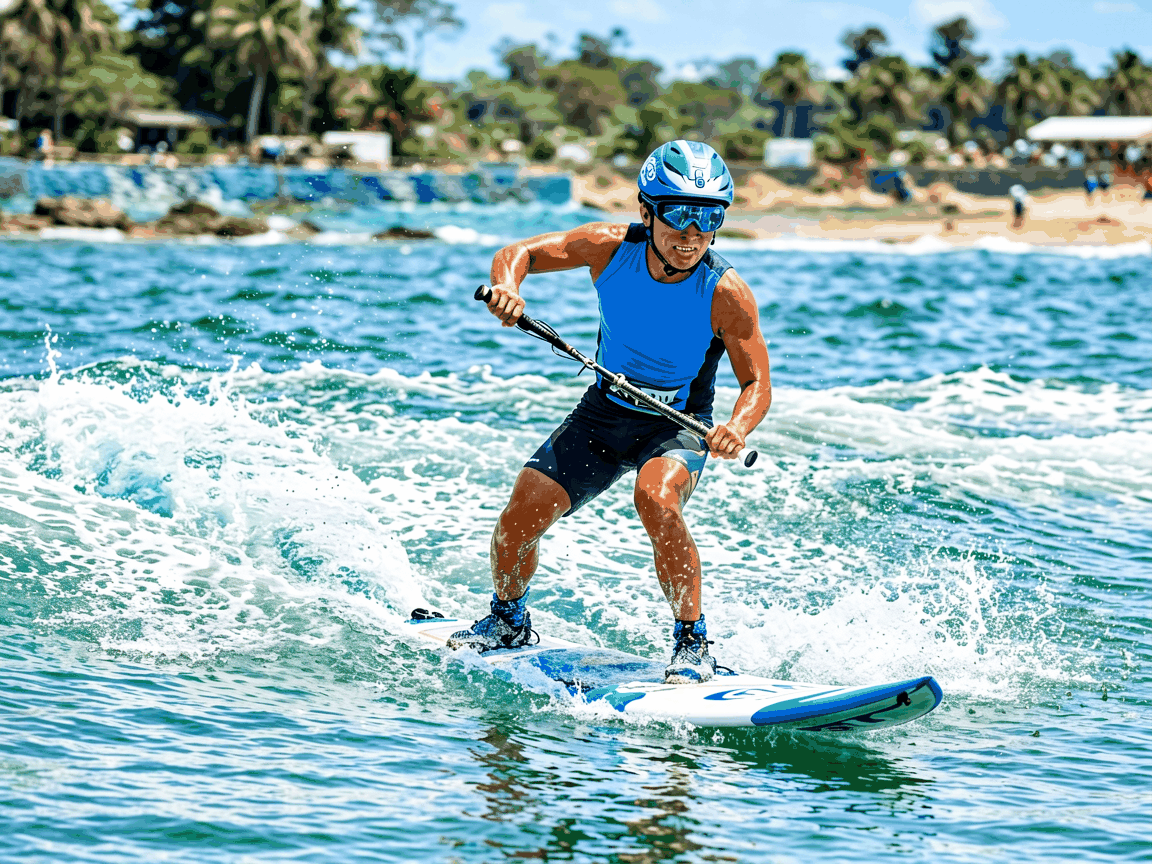
An electric hydrofoil board for beginners combines a battery-powered propulsion system with a submerged wing (hydrofoil) that lifts the rider above the water surface at speed, reducing drag and providing a smooth, stable glide. This design minimizes the learning curve associated with traditional surfing or windsurfing by eliminating the need for wave timing or wind dependency, allowing consistent practice in calm conditions.
For industrial buyers evaluating entry-level models, key technical considerations include propulsion efficiency, hydrofoil geometry, battery energy density, and control system responsiveness—factors that directly influence safety, usability, and long-term operational value in training or rental environments.
Core Technical Specifications
Beginner-focused electric hydrofoil boards typically feature a motor power range of 3–5 kW, sufficient to achieve planing speeds of 12–18 km/h without requiring prior experience. The hydrofoil assembly uses a front wing with a surface area of 1500–2000 cm² and an aspect ratio of 5–7, optimized for early lift at low speeds and inherent stability during turns.
Battery systems commonly employ lithium-ion chemistry with capacities between 2–4 kWh, providing 60–90 minutes of runtime per charge at moderate use. Charging times range from 2–4 hours using standard AC inputs, with optional fast-charging kits reducing downtime to under 1.5 hours for commercial fleets.
Control is managed via a wireless handheld throttle with waterproof rating IP67, offering proportional speed adjustment and automatic motor cutoff upon fall detection. Board length averages 150–170 cm with width of 50–60 cm, constructed from marine-grade EPS core reinforced with carbon fiber or fiberglass skins for impact resistance and buoyancy control.
Hydrofoil Design and Stability Characteristics
The hydrofoil’s lift generation follows Bernoulli’s principle and Newton’s third law, where water flow over the wing’s curved upper surface creates pressure differential, producing upward force. Beginner models prioritize high lift-to-drag ratios at low speeds through thick airfoil sections and moderate sweep angles, reducing the speed threshold for foil engagement—typically achievable at 8–10 km/h.
Lateral stability is enhanced by a rear stabilizer wing with negative angle of attack, which counters pitch oscillations and prevents sudden breaching. Mast length usually ranges from 60–80 cm, balancing ground clearance in shallow water with reduced moment of inertia for easier maneuvering during learning phases.
Materials selection avoids corrosive alloys; masts and fuselages use aerospace-grade aluminum 6061-T6 or marine stainless steel 316, while wing components employ pre-preg carbon fiber with epoxy resin to resist fatigue from cyclic loading. All submerged interfaces are sealed with marine-grade O-rings and potting compounds to prevent water ingress.
Applications in Training and Rental Operations
Electric hydrofoil boards for beginners are primarily deployed in controlled aquatic environments such as lakes, lagoons, and sheltered coastal zones where consistent water depth (>1.5 m) and minimal current ensure safe, repeatable training conditions. Their quiet operation and zero local emissions make them suitable for use in noise-sensitive or ecologically regulated areas where internal combustion alternatives are restricted.
In rental fleets, the standardized performance envelope reduces variability in user experience, simplifying instructor certification and safety protocol development. The absence of sails, rigs, or external power sources decreases setup time and maintenance complexity compared to wind-dependent systems, increasing daily utilization rates.
Operational durability is supported by modular design—common failure points like propellers, seals, and battery connectors are field-replaceable with minimal tools. Predictive maintenance schedules based on charge cycle counts and motor hour meters help fleet managers anticipate service needs before downtime occurs.
Comparison Table: Key Parameters for Beginner Models
| Parameter | Typical Range (Beginner) | Performance Implication |
|---|---|---|
| Motor Power | 3–5 kW | Ensures reliable lift at low throttle; avoids overpowering novice riders |
| Hydrofoil Front Wing Area | 1500–2000 cm² | Generates sufficient lift below 15 km/h; reduces learning speed threshold |
| Battery Capacity | 2–4 kWh | Supports 60–90 min runtime; enables multiple sessions per charge in training use |
| Mast Length | 60–80 cm | Balances shallow-water clearance with responsive handling during falls |
| Charging Time (Standard) | 2–4 hours | Compatible with overnight charging; supports daily rotation in rental operations |
Safety Systems and Redundancy Features
Beginner models incorporate multiple layers of safety: magnetic kill switches attached to the rider’s wrist or vest instantly cut motor power upon separation; redundant Hall-effect sensors in the throttle prevent single-point failure in speed signaling; and motor controllers include thermal overload protection and current limiting to prevent damage during prolonged low-speed operation.
Buoyancy is engineered to exceed the combined weight of rider, battery, and motor by 15–20%, ensuring the board remains afloat even if flooded. Impact zones—particularly the nose and rail edges—are reinforced with thermoplastic urethane (TPU) strips or rubberized edges to absorb collision energy without damaging the hydrofoil or battery enclosure.
Waterproofing extends to all electrical connectors (IP68 rated), with conformal coating applied to PCBs to resist corrosion from salt spray or prolonged immersion. Diagnostic LEDs on the board housing indicate system status, battery level, and fault codes, enabling quick troubleshooting without disassembly.
Customization and Fleet Configuration Options
Industrial buyers can specify alternative battery capacities to match operational duty cycles—higher capacity units extend runtime for guided tours, while swappable packs enable continuous use in high-turnover rental settings. Motor kv ratings can be adjusted to prioritize torque for heavier riders or top speed for advanced progression paths, subject to stability validation.
Hydrofoil wings are available in interchangeable sets, allowing operators to start with large, high-lift beginner wings and transition to smaller, higher-performance models as users advance—all using the same mast and fuselage. Color schemes, deck padding thickness, and foot strap configurations can be tailored to brand identity or ergonomic requirements without altering core hydrodynamics.
Optional GPS-based geofencing and speed limiting via companion software enable zone-specific operational controls, useful in shared waterways or regulated zones. All customizations maintain compliance with CE, UL, or IP standards where applicable, and documentation is provided for integration into fleet safety manuals.
For technical inquiries, customization requests, or fleet pricing, contact our engineering team to discuss your specific operational requirements.
Request Technical Specification Sheet