Electric Hydrofoil Surfboard For Flat Water
Electric Hydrofoil Surfboard for Flat Water
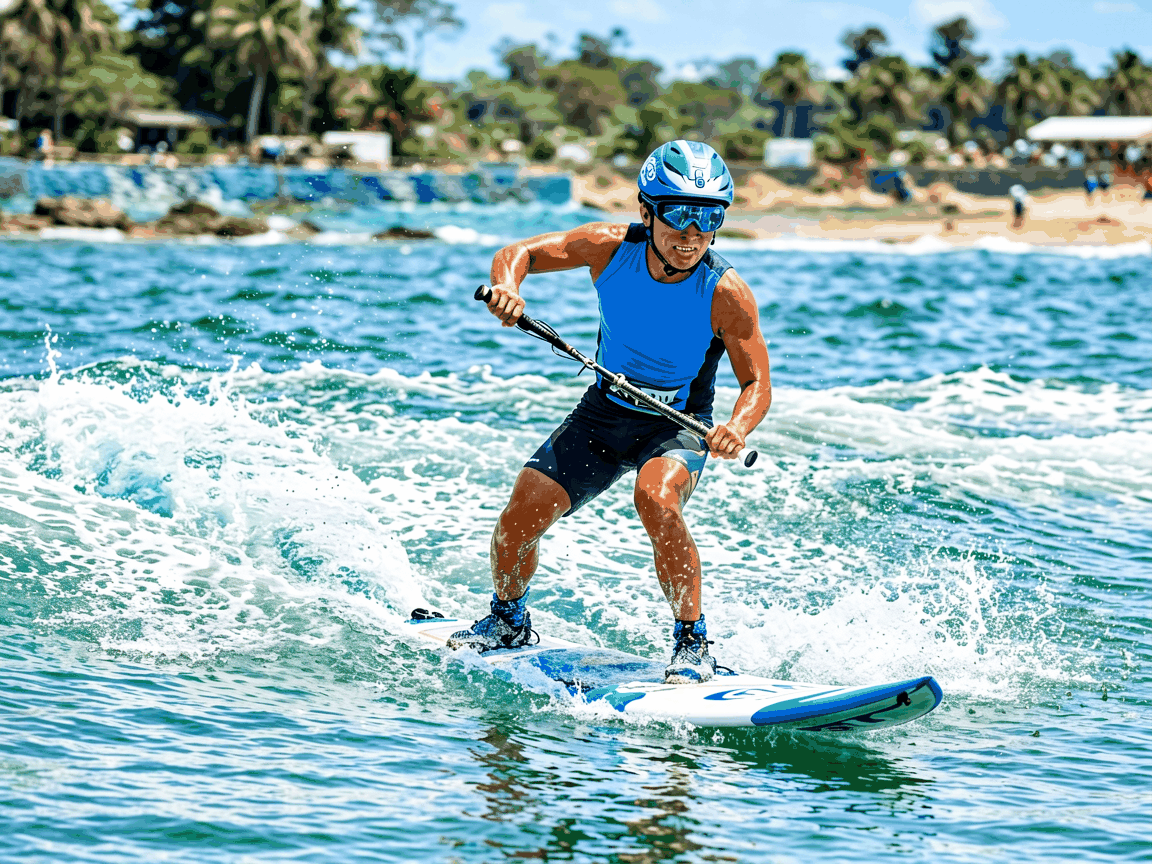
This electric hydrofoil surfboard is engineered for propulsion and lift generation in low-energy environments such as lakes, reservoirs, and calm coastal zones. Unlike wave-dependent boards, it relies on an integrated electric drive system to create forward motion, enabling the hydrofoil wing to generate sufficient lift for the board to rise above the water surface at controllable speeds. The design prioritizes energy efficiency, hydrodynamic stability, and precise control under variable flat-water conditions.
Core System Architecture
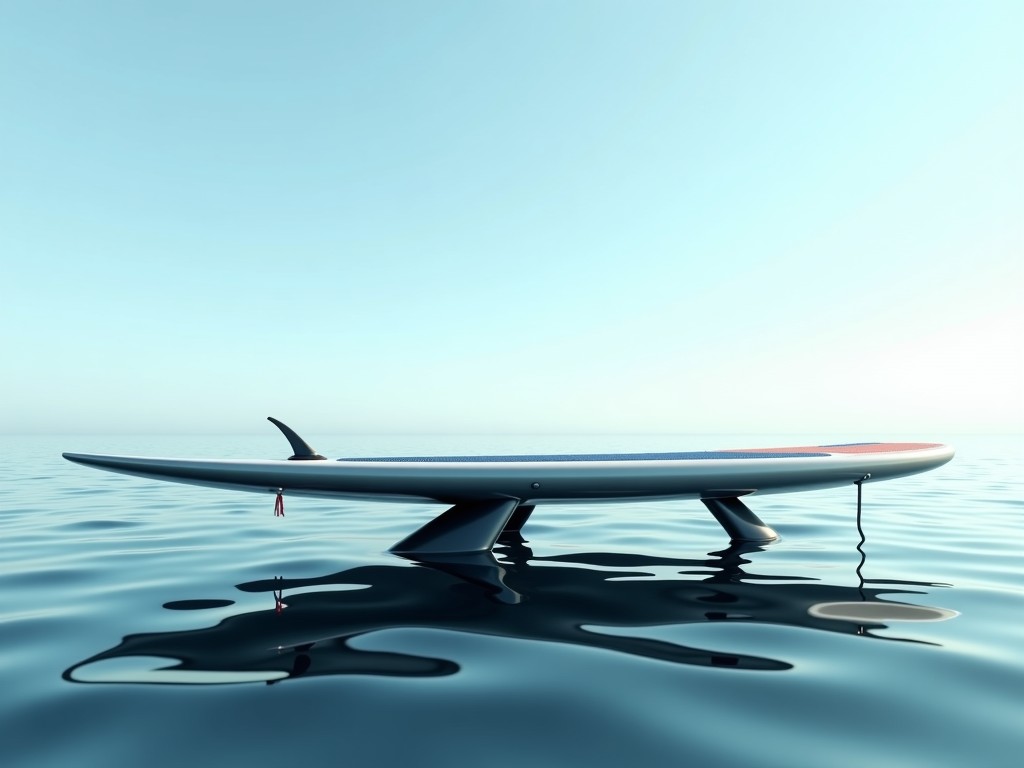
The system comprises four primary subsystems: a sealed brushless DC motor and propeller unit mounted beneath the board, a lithium-ion battery pack integrated into the board’s internal cavity, a handheld wireless throttle controller, and a carbon-fiber-reinforced hydrofoil mast and wing assembly. The motor delivers direct drive propulsion without gears or belts, minimizing mechanical loss and maintenance points. The battery is positioned low and centrally to optimize pitch and roll stability during foiling transitions.
Power management is handled by a field-oriented control (FOC) electronic speed controller (ESC) that modulates torque based on throttle input and real-time speed feedback from a waterproof Hall-effect sensor. The ESC includes thermal monitoring, overcurrent protection, and low-voltage cutoff to prevent battery damage. All electronic components are potted or conformally coated to IP68 standards for continuous submersion operation.
Hydrofoil Design and Performance Characteristics
The hydrofoil uses a high-aspect-ratio front wing with a NACA-series profile optimized for lift-to-drag ratio at speeds between 8 and 18 km/h. The wing spans 900 mm with a chord taper from 180 mm at the root to 90 mm at the tip, reducing induced drag while maintaining structural stiffness. The rear stabilizer wing is set at a negative angle of incidence to provide longitudinal pitch damping, preventing porpoising oscillations common in beginner-operated foil systems.
Mast length is available in 700 mm and 900 mm variants, constructed from unidirectional carbon fiber prepreg with a foam core for buckling resistance. The mast-to-fuselage joint uses a titanium alloy keyway system to resist torsional loads during carving maneuvers. Fuselage length is fixed at 650 mm to balance turning responsiveness with directional stability, verified through tow-tank testing at scale before full-size validation.
Energy System and Operational Range
The battery pack uses lithium nickel manganese cobalt oxide (NMC) chemistry in a 14s4p configuration, delivering 51.8 V nominal voltage and 20 Ah capacity (1036 Wh total energy). Usable energy is limited to 80% depth of discharge to extend cycle life, yielding approximately 830 Wh available for propulsion. Under typical flat-water foiling at 12 km/h average speed, the system consumes 180–220 W, providing 60–75 minutes of continuous operation per charge.
Charging is conducted via a proprietary waterproof connector using CC-CV protocol at 4 A maximum current, achieving 80% state of charge in 90 minutes and full charge in 150 minutes with the supplied 200 W charger. The battery management system (BMS) actively balances cells during charge and discharge, logs cycle counts, and communicates fault status via LED indicators on the board’s deck. Ambient temperature operating range is -10°C to 45°C; performance derates below 0°C due to electrolyte viscosity effects.
Control Interface and Rider Feedback
The handheld controller uses a 2.4 GHz FHSS radio link with AES-128 encryption to prevent signal interference or hijacking. It features a Hall-effect trigger with adjustable spring tension for customized throttle feel, mapped to motor torque output via a programmable lookup table. The controller includes an OLED display showing real-time speed (from GPS or paddle-wheel sensor), battery percentage, power draw, and fault codes. Signal latency is under 50 ms from input to motor response.
Haptic feedback is integrated into the controller grip to alert riders of low battery (<20% capacity) or motor overtemperature without requiring visual attention. The board’s deck includes a textured EVA foam pad with a central concave groove for consistent front-foot placement, reducing stance variability during learning phases. Footstrap inserts are molded into the deck at 450 mm intervals, allowing adjustable strap angles for different riding styles and boot sizes.
Materials and Manufacturing Considerations
The board hull is fabricated from EPS foam core reinforced with unidirectional and biaxial carbon fiber layers, vacuum-bagged and cured at 80°C to achieve a flexural modulus of 8.5 GPa and impact resistance exceeding 15 J (Gardner impact test). The deck surface features a diamond-grooved finish to enhance wet-foot grip without abrasion. All metal fasteners are grade 316 stainless steel or titanium Grade 5 to resist galvanic corrosion in saline or freshwater environments.
Sealing is achieved through laser-welded thermoplastic polyurethane (TPU) gaskets at cable penetrations and molded silicone O-rings at hatch covers, validated to withstand 50 kPa hydrostatic pressure without leakage. Production uses CNC-machined aluminum molds for fuselage and wing components to ensure dimensional repeatability within ±0.2 mm. Each unit undergoes final assembly in a Class 7 cleanroom area to prevent particulate contamination of electronic assemblies.
Quality Control and Validation Testing
Every completed unit undergoes a 10-minute dry-run functional check to verify motor direction, ESC communication, and throttle response. This is followed by a 30-minute submerged soak test at 0.5 m depth to confirm sealing integrity under hydrostatic pressure. Post-soak, insulation resistance is measured between live circuits and ground, requiring >100 MΩ at 500 V DC to pass.
Hydrofoil alignment is verified using a laser tracker system to ensure mast verticality within 0.5° and wing incidence angles within ±0.3° of design specifications. Load testing applies 1500 N vertical and 800 N lateral forces to the mast-fuselage joint to simulate extreme maneuvering loads, with acceptance criteria based on zero permanent deformation. Battery packs are individually capacity-graded and matched to within 2% Ah variance before installation.
Applications in Flat Water Environments
This system enables efficient transportation and recreation in environments where traditional paddling or sailing is impractical due to low wind, physical limitations, or restricted access. In reservoirs with no-wake zones, it allows silent, zero-emission transit for inspection crews monitoring aquatic vegetation or water quality sensors. The ability to hover above submerged obstacles reduces collision risk in areas with submerged timber, rock fields, or municipal infrastructure.
Training centers use the predictable lift characteristics to teach foil balance and edge control without the variability of ocean waves. The consistent power delivery allows repeated practice of takeoffs, turns, and landings in a controlled setting, reducing the learning curve compared to wind- or wave-dependent methods. Rescue operations in flood-affected lakes benefit from the board’s ability to navigate debris fields at speed while maintaining operator safety above the waterline.
Customization Options and Integration
Motor KV rating can be selected between 180 and 240 RPM/V to tune top speed and torque characteristics for specific payloads or water conditions. Battery capacity is scalable in 2 Ah increments up to 28 Ah (1450 Wh) by adding parallel cell groups, with corresponding adjustments to BMS thresholds and charger profiles. Mast length options include 500 mm for shallow-water operation and 1100 mm for deep-water stability, each requiring fuselage and wing incidence recalibration.
Controller firmware supports custom torque curves, speed limiting, and geofencing via USB-C configuration port. Optional accessories include a detachable sail mast mount for wind-assist modes, a sonar pod bracket for underwater imaging, and a GPS tracker enclosure for fleet monitoring. All customizations are subject to engineering review to ensure center of gravity, structural load paths, and waterproofing integrity remain within validated limits.
| Parameter | Typical Value | Adjustable Range |
|---|---|---|
| System Voltage | 51.8 V | Fixed |
| Battery Capacity | 20 Ah | 10–28 Ah |
| Max Speed | 22 km/h | 15–28 km/h (KV dependent) |
| Operating Time | 60–75 min | 30–120 min (capacity/speed dependent) |
| Mast Length | 700/900 mm | 500–1100 mm |
| Front Wing Area | 0.15 m² | 0.12–0.20 m² |
| Charging Time (80%) | 90 min | 60–180 min (charger dependent) |
| Operating Temp | -10°C to 45°C | -20°C to 50°C (limited performance) |
For detailed performance curves, material certifications, or integration support for commercial or institutional applications, contact our engineering team to discuss project-specific requirements. All technical documentation, including CAD models, wiring schematics, and test reports, is available upon execution of a mutual NDA.