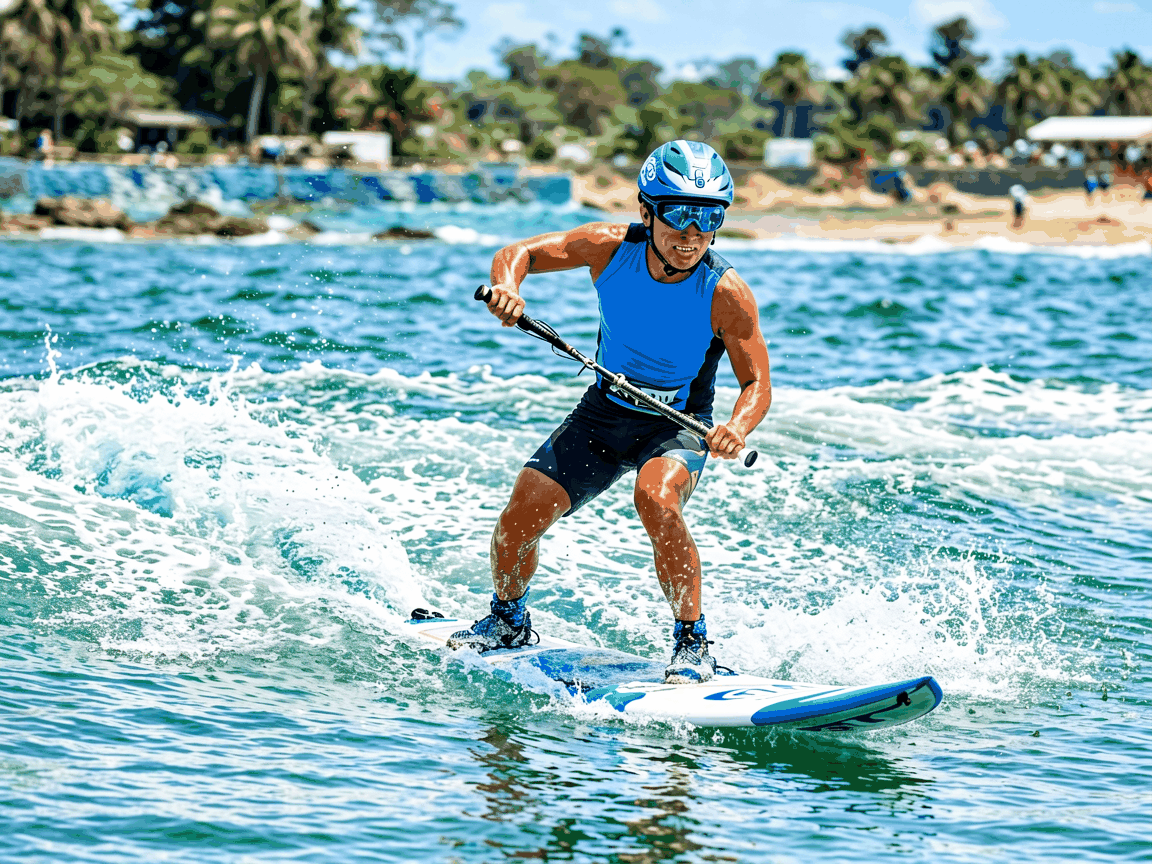
Electric Surfboard With Hydrofoil
Electric Surfboard with Hydrofoil
An electric surfboard with hydrofoil combines battery-powered propulsion with a submerged wing system to lift the board above the water surface, reducing drag and enabling efficient gliding at moderate speeds. This configuration differs from conventional electric surfboards by minimizing wetted surface area once foiling is achieved, which extends range and improves ride stability in choppy conditions. The technology integrates marine-grade materials, sealed electric drivetrains, and foil geometry optimized for low-speed takeoff and sustained flight.
Industrial buyers evaluating this technology consider factors such as power system efficiency, foil structural integrity under cyclic loading, and environmental sealing performance. Unlike recreational models, industrial-grade variants prioritize serviceability, corrosion resistance, and predictable hydrodynamic behavior across varying payloads and water conditions. The following sections detail the technical characteristics, applications, and engineering considerations relevant to procurement and integration.
Core System Architecture
The system comprises three primary subsystems: the sealed electric propulsion unit, the hydrofoil assembly, and the pressure-resistant battery enclosure. The propulsion unit typically uses a brushless DC motor rated between 5–15 kW, depending on target speed and payload, directly driving a marine-grade propeller through a sealed shaft. Motor efficiency is maintained above 85% across the operational range via liquid cooling and precision winding design.
The hydrofoil assembly consists of a front wing, rear stabilizer, and vertical strut, all constructed from carbon fiber-reinforced polymer or marine-grade aluminum alloy. The front wing generates lift at speeds as low as 8–12 km/h, with aspect ratios typically ranging from 5 to 8 to balance efficiency and stall resistance. Strut length varies between 60–90 cm to accommodate different water depths and wave conditions.
The battery enclosure is fabricated from injection-molded polycarbonate or aluminum, sealed to IP68 standards, and contains lithium-ion cells with nominal voltage between 36–72 V and capacity from 20–50 Ah. Thermal management is achieved through conductive cooling plates and phase-change materials to maintain cell temperatures below 45°C during continuous operation. Battery management systems monitor cell balance, temperature, and current draw to prevent over-discharge and thermal runaway.
Performance Characteristics
Takeoff speed depends on foil design, rider weight, and water conditions, typically ranging from 8 to 14 km/h for payloads between 70–100 kg. Once airborne, drag reduction allows sustained speeds of 20–35 km/h with power consumption between 800–2000 W, depending on speed and foil efficiency. Range varies from 15–40 km per charge under typical conditions, influenced by speed profile, weight, and water temperature.
Foil stiffness is critical for maintaining consistent ride height and preventing ventilation. Carbon fiber foils exhibit longitudinal stiffness of 80–120 kN/mm, while aluminum variants range from 40–60 kN/mm. Torsional stiffness affects roll response and is typically designed to exceed 15 kN·m/rad for stable handling. These values are verified through finite element analysis and modal testing during development.
Motor torque delivery is managed via electronic speed controllers with regenerative braking capability, allowing energy recovery during deceleration. Peak torque is available from zero RPM, enabling rapid acceleration to foiling speed. Controllers include programmable acceleration curves, speed limits, and low-voltage cutoffs to protect the battery and ensure consistent behavior across operating conditions.
Material Selection and Durability
Material choices are driven by exposure to saltwater, UV radiation, and mechanical impact. The board deck uses closed-cell PVC foam or EPS core with fiberglass or carbon fiber laminate, providing compressive strength above 0.3 MPa and density under 45 kg/m³. Surface layers are coated with UV-stabilized epoxy or polyurethane to prevent delamination and yellowing.
Fasteners and connectors are made from grade 316 stainless steel or titanium to resist galvanic corrosion. Sealing interfaces use EPDM or nitrile rubber O-rings with DuPont™ Krytox® lubricant to maintain integrity over 500+ mating cycles. All external surfaces undergo salt spray testing (ASTM B117) for minimum 500 hours to validate corrosion resistance.
Battery cells are selected for high cycle life (typically 800+ cycles at 80% depth of discharge) and thermal stability. Enclosures incorporate pressure equalization vents to prevent internal pressure buildup from temperature changes or altitude shifts. Impact resistance is validated through drop testing from 1.5 meters onto concrete, simulating handling and transport scenarios.
Applications in Industrial and Professional Contexts
Beyond recreation, electric hydrofoil surfboards serve specialized roles in marine inspection, coastal surveying, and lifeguard operations. Their low wake and quiet operation minimize disturbance to marine life and allow close approach to structures or wildlife without scuttling sediment. The ability to glide efficiently at low power extends operational time for battery-limited missions.
In training environments, these boards provide a stable platform for teaching hydrofoil balance and control before transitioning to powered or unpowered foil systems. The consistent power delivery eliminates variability from wind or wave conditions, enabling repeatable skill acquisition. Instructors can adjust speed limits remotely via wireless tether for progressive learning.
Resort and facility operators use them for guest transportation across lagoons or between moored vessels, reducing reliance on noisy watercraft. Their compact size allows storage on small craft or docksides, and quick-change battery systems enable continuous operation with minimal downtime. Maintenance requirements are limited to rinsing, inspection of seals, and periodic battery health checks.
Customization and Integration Options
Manufacturers offer customization in motor power, foil geometry, battery capacity, and control interface to match specific operational needs. Higher voltage systems (up to 96 V) reduce current draw for equivalent power, improving efficiency in wiring and connectors. Foil wings can be swapped for different aspect ratios or area to optimize for speed, lift, or maneuverability.
Control interfaces range from handheld wireless remotes to integrated throttle grips with LCD displays showing speed, battery level, and power consumption. Optional GPS modules enable route logging and geofencing for rental fleets. Communication protocols such as CAN bus or UART allow integration with external monitoring systems for data logging or remote diagnostics.
Deck fittings can include attachment points for tow lines, sensor mounts, or small payloads (up to 5 kg) for inspection cameras or environmental sensors. Foot strap configurations are adjustable for different stances, and optional handlebars provide additional stability for novice users or rough-water operation. All customizations are subject to hydrodynamic validation to ensure stability and control remain within safe limits.
Quality Control and Testing
Quality assurance begins with material traceability and continues through in-process inspections and final validation. Each battery enclosure undergoes pressure testing at 20 kPa to verify sealing integrity before assembly. Motor insulation resistance is measured at 500 VDC, with minimum acceptable values of 100 MΩ to prevent leakage currents.
Foil assemblies are checked for dimensional accuracy using CMM or laser scanning, with tolerances typically held to ±0.5 mm on chord and span. Dynamic balancing is performed to minimize vibration at operating speeds. Assembled units undergo pool testing to validate takeoff speed, stability, and battery endurance under controlled conditions.
Final inspection includes functional checks of all electronic systems, verification of emergency cutoffs, and visual inspection for delamination, cracks, or loose fasteners. Test data is retained for traceability, and units are packaged with desiccants and shock-absorbing foam to prevent damage during transit. Manufacturers typically provide a 12-month limited warranty covering materials and workmanship, subject to proper use and maintenance.
| Parameter | Typical Range | Notes |
|---|---|---|
| Motor Power | 5–15 kW | Dependent on target speed and payload |
| Takeoff Speed | 8–14 km/h | For 70–100 kg rider in calm water |
| Operating Speed | 20–35 km/h | After foiling is achieved |
| Range | 15–40 km | Variable with speed, weight, and conditions |
| Battery Voltage | 36–72 V | Nominal; higher voltages available |
| Foil Aspect Ratio | 5–8 | Front wing; affects efficiency and stall |
| Enclosure Rating | IP68 | Dust-tight and protected against continuous immersion |
Procurement decisions should consider total cost of ownership, including battery replacement cycles, maintenance accessibility, and availability of spare parts. Suppliers capable of providing detailed technical documentation, CAD models, and material certifications reduce integration risk. Long-term value is enhanced by modular design, which allows upgrades to individual subsystems without replacing the entire unit.
Environmental compliance is increasingly relevant, particularly for use in protected marine zones. Electric systems produce zero local emissions and operate below noise thresholds that disturb wildlife. Manufacturers may provide documentation on battery recyclability and material sourcing to support sustainability reporting.
For technical inquiries, customization requests, or quotation preparation, contact the manufacturer directly. Providing details on intended use case, expected payload, operating environment, and required range enables accurate scoping of power system, foil selection, and battery capacity. Engineering support is available to validate compatibility with existing infrastructure or operational protocols.