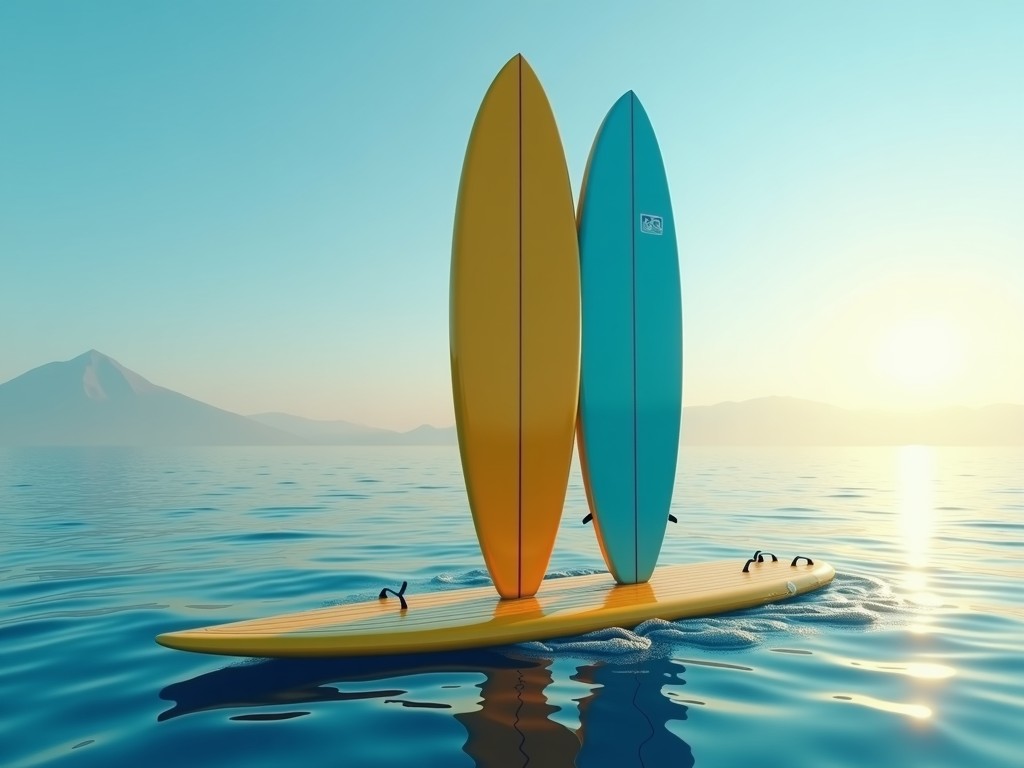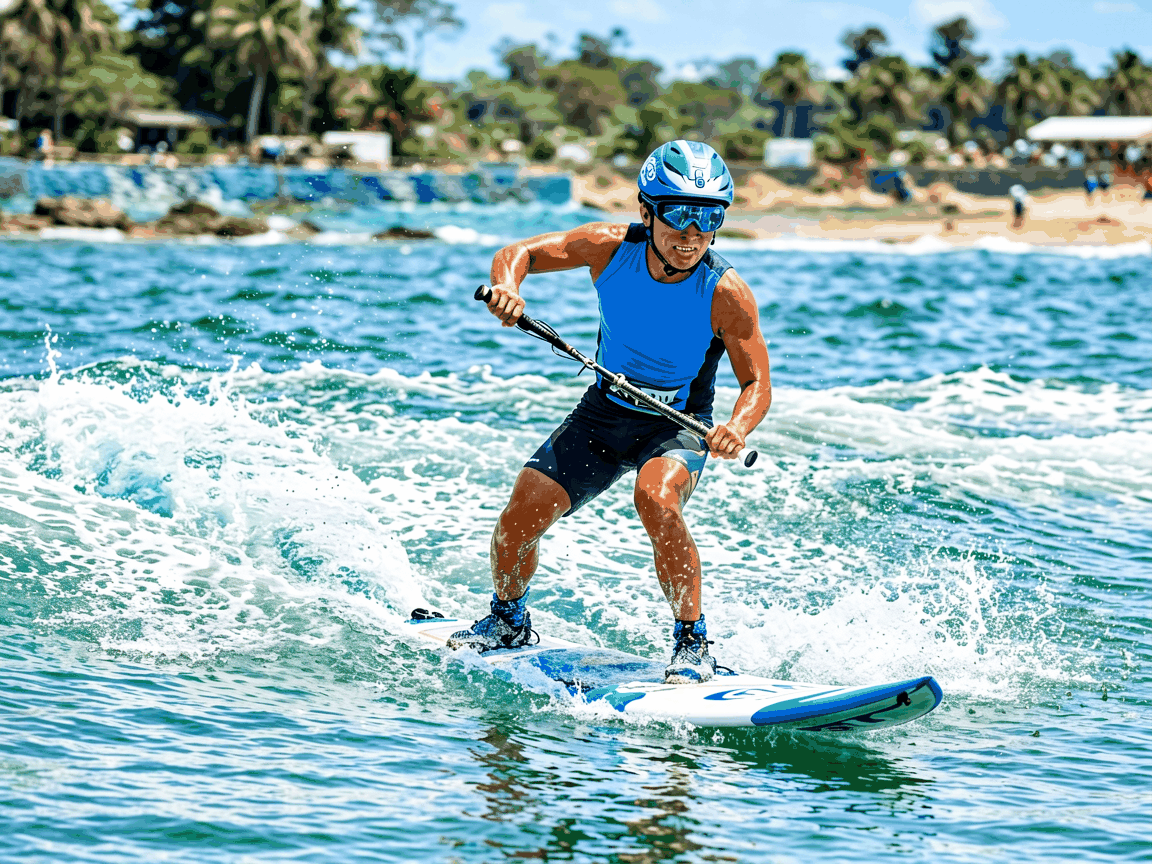
Fast Electric Hydrofoil Surfboard
Fast Electric Hydrofoil Surfboard
An electric hydrofoil surfboard combines electric propulsion with hydrofoil technology to lift the board above the water surface, reducing drag and enabling higher speeds with less energy. This design allows riders to glide smoothly over choppy conditions that would impede traditional surfboards. The system integrates a waterproof motor, battery pack, and control electronics within a sealed hull, while the submerged foil generates lift as speed increases. Performance depends on foil geometry, motor power-to-weight ratio, and battery energy density. Understanding these interdependencies is critical for evaluating suitability in professional water sports, patrol, or recreation applications.
Core Technical Specifications
The board’s performance is governed by the interaction between thrust, lift, and drag forces. Motor power determines acceleration and top speed, while foil aspect ratio and surface area influence lift efficiency and stability. Battery capacity dictates operational duration, which must be balanced against weight to avoid negating foil benefits. Control systems modulate power delivery in response to rider input and speed sensors to maintain foil-borne equilibrium. Material selection affects hull rigidity, corrosion resistance, and overall mass—factors that directly impact handling and longevity in marine environments.
| Parameter | Typical Value | Notes |
|---|---|---|
| Motor Power | 5–15 kW | Brushless DC, water-cooled |
| Battery Capacity | 1–3 kWh | Lithium-ion, sealed marine-grade |
| Top Speed | 25–35 km/h | Dependent on foil design and rider weight |
| Operational Duration | 30–90 minutes | Variable with throttle use and conditions |
| Foil Material | Carbon fiber reinforced polymer | High stiffness-to-weight ratio |
| Hull Construction | EPS core with fiberglass or carbon fiber skin | Watertight, impact-resistant |
| Control Interface | Wireless handheld throttle | Waterproof, floating, magnetic cut-off |
Design and Engineering Considerations
Hydrofoil lift is generated by pressure differentials across the foil surfaces as water flows over them. The foil must be angled slightly upward (angle of attack) to produce lift, which increases with the square of speed until equilibrium is reached where lift equals the combined weight of board, battery, and rider. Excessive angle causes drag and potential stall; insufficient angle fails to lift the board. The mast connecting foil to board must resist bending moments from lift and drag forces while maintaining alignment. Carbon fiber is preferred for masts and wings due to its high modulus and fatigue resistance, though aluminum alloys are used in cost-sensitive models with increased weight penalties.
Motor placement affects center of gravity and hydrodynamic flow. Ideally, the motor is positioned low and aft to promote stability and minimize disruption of water inflow to the foil. Propeller design—pitch, diameter, blade count—must match motor KV rating and intended speed range to avoid cavitation or overload. Battery packs are distributed to balance trim, often split between forward and aft compartments. Thermal management is critical; motors and controllers require liquid cooling or substantial heat sinking to prevent derating during sustained use. Sealing integrity at shaft penetrations and lid gaskets is verified via pressure testing to IP68 standards.
Applications in Professional and Recreational Contexts
Beyond recreation, electric hydrofoil surfboards serve in coastal patrol, lifeguard response, and marine research where rapid deployment over variable sea states is advantageous. Their quiet operation and zero emissions allow access to ecologically sensitive zones without disturbance. In training environments, they provide consistent propulsion independent of wave conditions, enabling repetition of balance and maneuver drills. For rental operations, modular battery systems support quick turnover between users. The absence of external props or jets reduces entanglement risk in debris-laden or vegetated waters, enhancing safety in inland waterways or near shorelines.
- Coastal surveillance and rapid response
- Marine biology observation in shallow zones
- Wave-independent training platforms
- Electric rental fleets in regulated waterways
- Emergency transport over flooded or obstructed areas
Customization and Integration Options
Manufacturers offer scaling of motor power and battery capacity to match user weight, intended use case, and regulatory speed limits. Foil geometry can be optimized for either high-speed efficiency (high aspect ratio, narrow chord) or low-speed lift and maneuverability (lower aspect ratio, wider chord). Mast length adjusts for water depth conditions—longer masts prevent foiling in shallow water but increase leverage forces. Control systems may include GPS-based speed limiting, geofencing, or telemetry for fleet management. Hull shapes vary from short, agile designs to longer, more stable platforms suitable for heavier riders or tandem operation.
Material substitutions affect weight, cost, and durability. Full carbon fiber hulls reduce mass but increase expense; fiberglass offers a balanced alternative. Foil coatings may include abrasion-resistant layers for sandy environments. Battery chemistries can prioritize energy density (NMC) or thermal stability and cycle life (LFP), with the latter preferred for commercial use despite lower specific energy. Connector types, charging ports, and software interfaces are often configurable to align with existing maintenance or charging infrastructure.
Quality Control and Manufacturing Validation
Each board undergoes hydrostatic pressure testing to validate seal integrity at all penetrations—motor shaft, wiring glands, and access hatches—typically to 1.5x rated operating depth. Foil assemblies are checked for dimensional symmetry and surface finish to ensure balanced lift and minimize vibration. Battery packs undergo capacity verification, impedance testing, and thermal runaway screening per IEC 62133. Motor insulation resistance and dynamic balance are validated before final assembly. Finished units receive functional testing: throttle response, cut-off efficacy, speed accuracy, and buoyancy confirmation. Documentation includes material traceability, test reports, and user manuals detailing maintenance intervals for seals, bearings, and firmware updates.
Corrosion resistance is assessed via salt spray testing (ASTM B117) on exposed metals and coatings. Impact resistance is evaluated through controlled drop tests simulating handling and transport stresses. UV stability of hull gels and decals is checked to prevent premature degradation. For production consistency, first-article inspection validates tooling and process controls before batch release. These procedures reduce field failure risk and support warranty compliance, particularly important for rental or institutional buyers managing multiple units.
For technical inquiries, customization requests, or quotation preparation, please contact our engineering team.
Request Technical Specification Sheet