Hydrofoil E Surfboard For Summer Sports
Hydrofoil E-Surfboard for Summer Sports
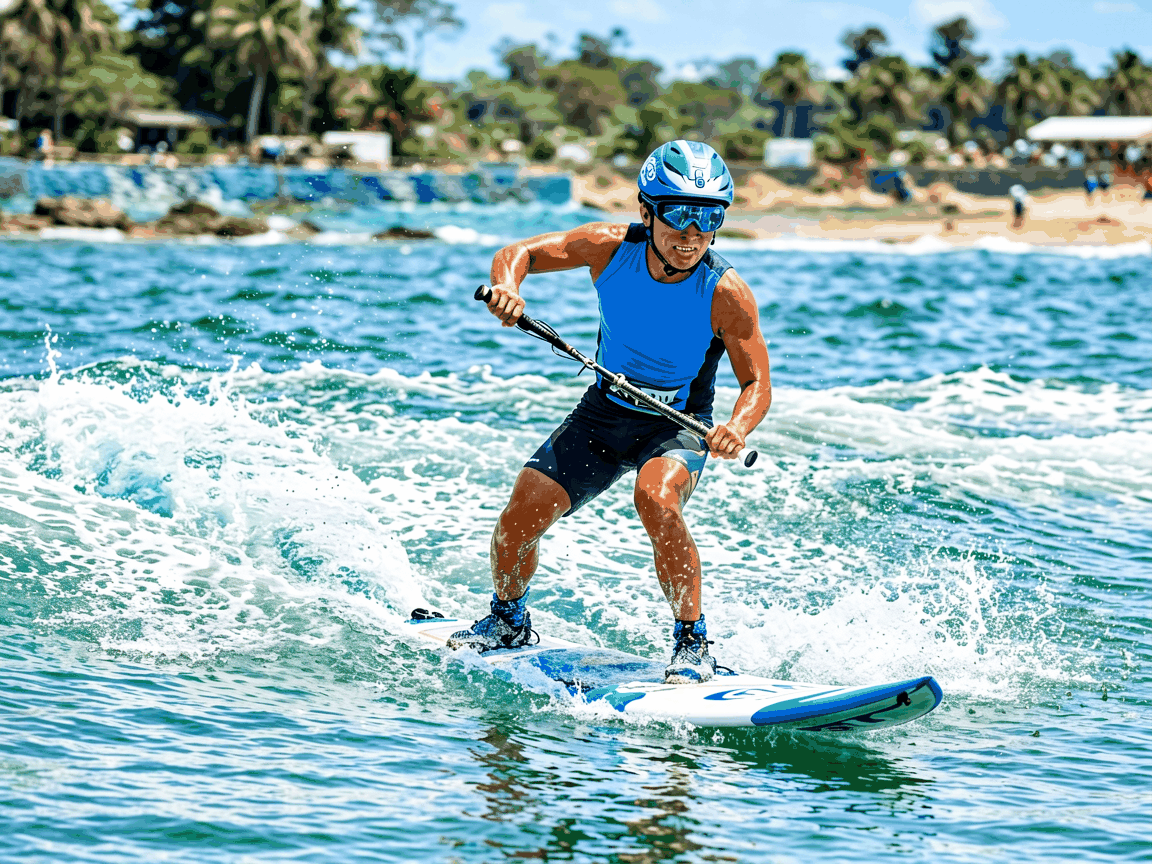
Hydrofoil e-surfboards combine electric propulsion with hydrofoil technology to lift the board above the water surface, reducing drag and enabling higher speeds with less energy consumption. This design is particularly suited for summer sports applications where riders seek extended ride times, improved efficiency, and performance in variable water conditions such as chop or light wind.
Core Technical Components
The system integrates a sealed electric motor, lithium-ion battery pack, hydrofoil assembly, and electronic speed controller (ESC). The motor is typically mounted vertically within a streamlined pod beneath the board, driving a propeller that generates thrust. The hydrofoil consists of a front wing, rear stabilizer and a front lifting wing, usually constructed from carbon fiber-reinforced polymer for stiffness and corrosion resistance. Battery capacity ranges from 2 to 4 kWh, providing 60 to 90 minutes of operation depending on rider weight, speed, and water conditions.
Hydrofoil Design and Performance Characteristics
The hydrofoil generates lift as water flows over its wings, allowing the board to rise above the surface at speeds typically between 8 and 12 km/h. Once airborne, drag is reduced by up to 60% compared to displacement mode, significantly improving efficiency. Front wing aspect ratios generally range from 5 to 8, balancing lift efficiency with stall resistance. Stabilizer size is tuned to maintain pitch stability across the operational speed envelope, minimizing the need for active rider input to maintain altitude.
Power System and Energy Management
Electric motors used in these systems are typically brushless DC (BLDC) with power ratings between 3 and 5 kW peak, cooled via liquid or passive conduction through the board structure. Battery packs use lithium nickel manganese cobalt oxide (NMC) or lithium iron phosphate (LFP) chemistries, selected based on energy density, thermal stability, and cycle life requirements. An integrated battery management system (BMS) monitors cell voltage, temperature, and state of charge, enabling safe operation and regenerative braking during deceleration or when riding waves.
Control and Rider Interface
Speed is regulated via a handheld wireless throttle using 2.4 GHz or Bluetooth Low Energy (BLE) communication, sending PWM signals to the ESC. The throttle provides proportional control, allowing smooth acceleration and deceleration. Some models include fall detection sensors that automatically cut power if the rider detaches from the board, enhancing safety. Display options on the throttle or board may show speed, battery level, and system diagnostics.
Materials and Construction
The board hull is commonly made from epoxy-coated carbon fiber or fiberglass-reinforced foam core, offering a high strength-to-weight ratio and resistance to UV degradation and saltwater ingress. Hydrofoil components are predominantly carbon fiber for stiffness, though marine-grade aluminum or titanium may be used in specific joints or mounts for cost or manufacturability reasons. All external fasteners are stainless steel (A4/316 grade) to prevent corrosion in marine environments.
Typical Operational Specifications
| Parameter | Typical Range |
|---|---|
| Board Length | 1500–1800 mm |
| Board Width | 500–600 mm |
| Ready-to-Ride Weight | 20–28 kg |
| Maximum Speed | 35–45 km/h |
| Battery Voltage | 36–52 V nominal |
| Charging Time (80%) | 60–90 minutes |
| Operating Temperature | 0–40 °C |
Applications in Summer Sports
Hydrofoil e-surfboards enable extended use in flat water environments where traditional surfing or wind-dependent foiling is not feasible. They are used in coastal resorts, inland lakes, and protected bays for recreational riding, training, and guided tours. The electric drive allows consistent performance regardless of wind or wave conditions, making them suitable for instructional programs where repeatability and safety are critical. Their quiet operation and zero emissions also support use in environmentally sensitive zones where internal combustion engines are restricted.
Customization and Integration Options
Manufacturers offer scalable configurations to meet specific operational needs. Battery capacity can be adjusted to prioritize range over peak power or vice versa. Motor kv rating and propeller pitch are tuned to match target speed and torque requirements. Hydrofoil geometry—including wing area, aspect ratio, and stabilizer size—can be modified based on rider skill level, intended use (e.g., cruising vs. carving), and typical water conditions. Control systems may be adapted for fleet management, including GPS tracking, usage logging, and remote diagnostics.
For commercial operators, modular battery packs enable quick swap systems to minimize downtime between sessions. Board geometry can be altered to accommodate different rider sizes or stances, and deck pads are available in various textures and thicknesses for grip and comfort. All customizations are subject to hydrodynamic and structural validation to ensure safety and performance integrity.
Quality Assurance and Testing
Each unit undergoes functional testing of the propulsion system, including throttle response, motor temperature rise under load, and battery discharge characteristics. Hydrofoil alignment is verified using laser measurement tools to ensure symmetry and correct angle of incidence. Sealing integrity of electronic enclosures is confirmed via IP67 or IP68 testing, depending on component location. Boards are subjected to impact and fatigue testing on representative hull areas to validate durability under expected operational stresses.
Before shipment, every board receives a final inspection covering cosmetic finish, hardware tightness, wireless pairing, and safety cutoff functionality. Documentation includes a user manual, maintenance schedule, and battery handling guidelines. Spare parts and service support are typically available for major components, with recommended inspection intervals based on usage hours.