Motorized Hydrofoil Surfing
Motorized Hydrofoil Surfing Systems
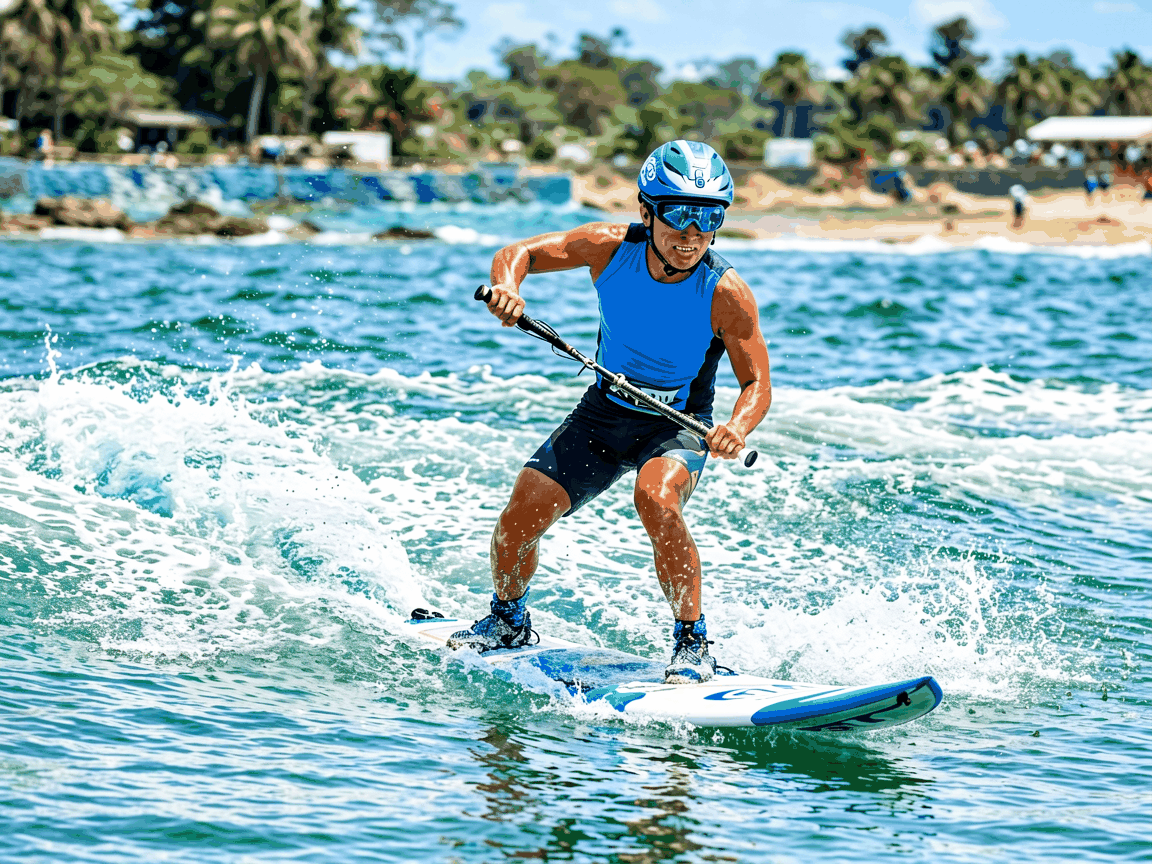
Motorized hydrofoil surfing combines electric propulsion with submerged foil technology to enable controlled lift and movement across water surfaces without reliance on waves or wind. The system integrates a waterproof electric motor, battery pack, and hydrofoil assembly to generate thrust and lift, allowing riders to glide above the water at variable speeds. This technology supports applications in recreation, training, and light-duty water patrol where traditional surfing or boating is impractical.
System Architecture and Core Components
The motorized hydrofoil system consists of four primary subsystems: the propulsion unit, energy storage, control interface, and hydrofoil wing assembly. The propulsion unit uses a sealed, brushless DC motor rated for continuous underwater operation, typically ranging from 5 to 15 kW depending on model and intended load. Motor housing is constructed from marine-grade aluminum or titanium alloy to resist corrosion and withstand hydrostatic pressure at operational depths up to 1.5 meters.
Energy is supplied by a lithium-ion battery pack enclosed in a watertight, impact-resistant casing. Battery capacity ranges from 2 to 5 kWh, providing 30 to 90 minutes of operational time at moderate throttle. Battery management systems include thermal monitoring, overcurrent protection, and state-of-charge estimation to ensure safety and longevity. Charging is performed via sealed connectors with IP68 rating, compatible with standard 110V/220V AC inputs.
The control interface features a wireless handheld throttle with waterproof encoding and low-latency signal transmission to the motor controller. Throttle input is processed by a microcontroller-based system that adjusts power output in real time based on speed, tilt, and water resistance feedback. Safety features include automatic motor cut-off upon loss of signal, water immersion detection, and manual kill switch accessibility.
The hydrofoil wing assembly comprises a front lift wing, rear stabilizer, and vertical strut (mast) connecting to the board. Wings are manufactured using carbon fiber-reinforced polymer or glass fiber composites with CNC-machined aluminum fittings. Aspect ratio typically ranges from 5 to 8, balancing lift efficiency and maneuverability. Mast length varies between 60 and 90 cm to accommodate different water conditions and rider preferences.
Performance Characteristics and Operational Parameters
| Parameter | Typical Range | Notes |
|---|---|---|
| Maximum Speed | 20–35 km/h | Dependent on motor power, wing design, and rider weight |
| Lift-Off Speed | 8–12 km/h | Speed at which hydrofoil generates sufficient lift to raise board above water |
| Operating Depth (Motor) | 0.2–1.5 m | Limited by motor sealing and cooling requirements |
| Battery Recharge Time | 2–4 hours | Using standard AC charger; fast charging may reduce cycle life |
| Total System Weight | 12–20 kg | Includes board, motor, battery, and foil; varies by materials |
Material Selection and Durability Considerations
Material choices directly affect system longevity, weight, and performance in marine environments. Motor housings commonly use hard-anodized aluminum (Type III) or grade 5 titanium for optimal strength-to-weight ratio and resistance to saltwater corrosion. Internal motor components are potted with epoxy or silicone compounds to prevent water ingress and vibration damage.
Battery enclosures are fabricated from polycarbonate or ABS blends with UV stabilizers and rubber gaskets to maintain IP68 sealing over repeated thermal cycles. Connectors use gold-plated contacts and marine-grade stainless steel housings to prevent galvanic corrosion. Hydrofoil masts and fittings often employ 6061-T6 or 7075-T6 aluminum alloys, machined to tight tolerances and finished with chromate conversion coating or anodizing.
Wing surfaces utilize pre-impregnated carbon fiber fabric cured under vacuum pressure to achieve high fiber volume fraction and minimal void content. Leading edges are reinforced with polyurethane or thermoplastic elastomer strips to resist impact from debris. Trailing edges feature tapered thicknesses to reduce vortex shedding and improve lift-to-drag ratio across operating speeds.
Applications and Operational Suitability
Motorized hydrofoil systems are suited for environments where traditional water sports equipment faces limitations. In flat-water lakes, rivers, or calm coastal zones lacking consistent wave formation, the self-propelled nature enables consistent riding opportunities. Training facilities use these systems to teach foil balance and control without requiring wave generation or boat towing, reducing logistical complexity and operational costs.
Light utility applications include shoreline inspection, environmental monitoring, and lifeguard support in designated zones. The low acoustic signature and zero-emission operation make these systems suitable for ecologically sensitive areas where noise or pollution from combustion engines is restricted. Operational speed and maneuverability allow personnel to navigate near structures or vegetation with minimal wake disturbance.
Rental operators and water sports centers adopt motorized hydrofoils to expand service offerings beyond seasonal or weather-dependent activities. The modular design allows quick battery swapping and foil interchangeability, supporting high utilization rates. Systems are designed for shallow water operation (minimum 0.5 m depth), enabling use in areas inaccessible to propeller-driven craft.
Customization Options and Integration Flexibility
Manufacturers offer configurable parameters to align system performance with specific use cases. Motor power can be selected from discrete tiers (e.g., 5 kW, 8 kW, 12 kW) to match target speed, payload, and battery endurance requirements. Higher wattage models accommodate heavier riders or payloads but increase energy consumption and thermal load on the propulsion unit.
Battery capacity is scalable within mechanical and weight constraints of the board enclosure. Optional dual-battery configurations allow extended operation or redundancy for professional use. Battery chemistry variants (e.g., NMC, LFP) are available upon request, trading off energy density, cycle life, and thermal stability based on user priorities.
Hydrofoil wings are available in multiple planforms and aspect ratios to optimize for speed, stability, or carving performance. High-aspect wings (>7.0) reduce induced drag for efficiency and top speed, while lower-aspect designs (<5.5) enhance roll responsiveness and low-speed lift. Mast length and fuselage geometry can be adjusted to alter pitch stability and grounding clearance in variable water depths.
Quality Control and Manufacturing Validation
Production processes emphasize repeatability and traceability for critical components. Motor windings undergo automated resistance and insulation testing before potting. Each sealed unit is subjected to hydrostatic pressure testing (typically 1.5x operational depth) and thermal cycling to validate long-term sealing integrity. Battery packs receive cell balancing verification, insulation resistance checks, and functional capacity grading before integration.
Hydrofoil wings are inspected using laser scanning or coordinate measuring machines to confirm dimensional accuracy against CAD models, with tolerances typically held to ±0.5 mm for chord and thickness distributions. Composite layups are verified via ultrasonic testing for delamination or voids. Final assembly includes dynamic balancing of the propeller and functional testing of throttle response, motor cutoff, and waterproof connectors under simulated operating conditions.
Documentation includes material certificates, test reports, and unique serial numbering for lifecycle tracking. Systems are designed for serviceability, with modular subsystems allowing field replacement of batteries, motors, or foil components using standardized interfaces. Maintenance intervals are based on operational hours rather than calendar time, reflecting actual wear patterns in aquatic environments.
For detailed specifications, configuration options, or inquiries regarding integration into training, recreation, or utility programs, contact our technical team to discuss your specific requirements.