Motorized Surfboard Above Water
Motorized Surfboard Above Water: Technical Overview for Industrial Applications
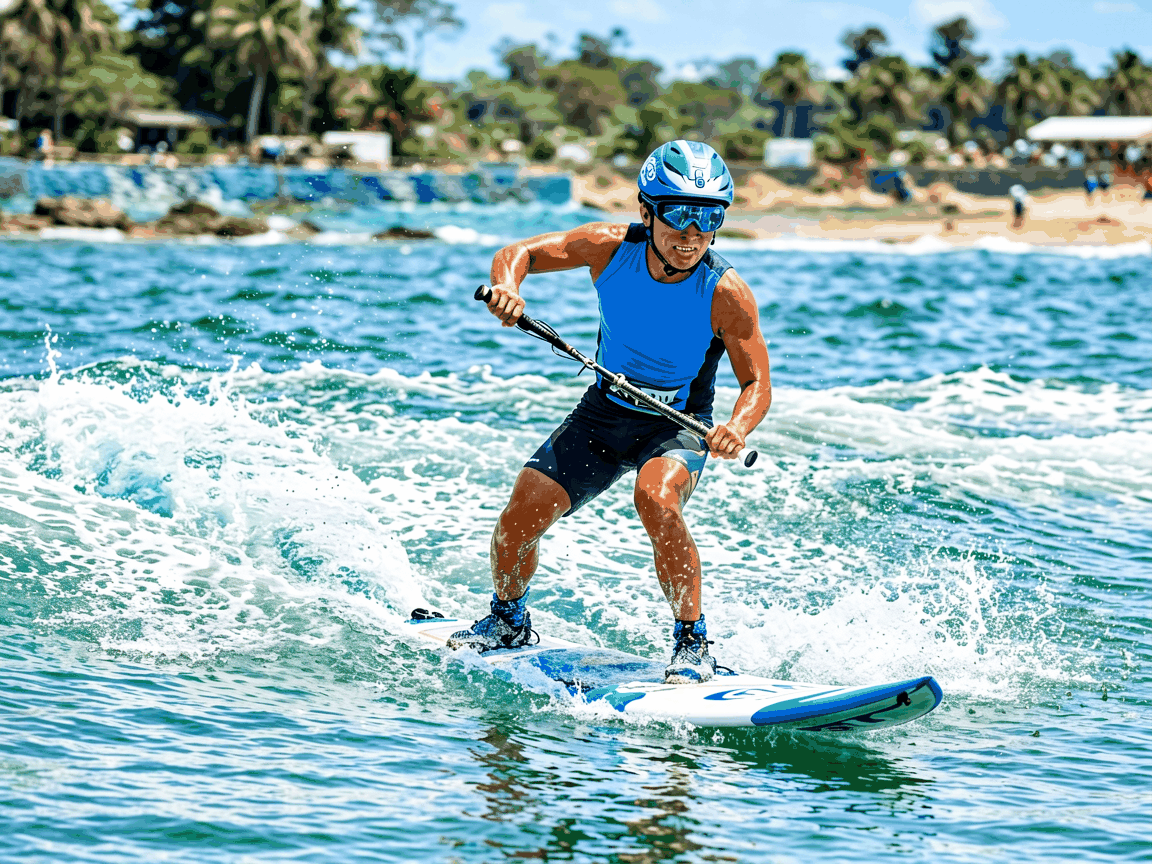
Motorized surfboards designed for above-water operation represent a specialized class of personal watercraft that utilize electric propulsion systems to achieve planing lift without submersion. These systems are engineered for recreational and light commercial use in calm to moderate water conditions, where traditional jet skis or propeller-driven craft may be impractical due to draft limitations or environmental sensitivity. The core function relies on a combination of hydrofoil geometry, thrust vectoring, and power management to maintain stable elevation above the water surface while enabling directional control and speed modulation.
Industrial buyers evaluating these systems prioritize understanding the interplay between power-to-weight ratio, battery energy density, and hydrodynamic efficiency. Unlike conventional watercraft that displace water, above-water motorized surfboards minimize wetted surface area through active lift generation, reducing drag at cruising speeds. This principle allows for extended range per charge compared to submerged alternatives of similar power, though it introduces complexities in stability control and response to dynamic water conditions such as chop or wake interference.
Key Technical Specifications and Performance Parameters
Performance is defined by several interdependent metrics: maximum speed, endurance, climb rate, and turning radius under load. Typical models achieve speeds between 25–35 km/h (15–22 mph) with a single rider weighing up to 100 kg, depending on propeller efficiency and hull design. Endurance ranges from 45 to 90 minutes of mixed-use operation, heavily influenced by throttle duty cycle, water salinity (affecting buoyancy), and ambient temperature impacting battery output. Climb rate—the ability to gain elevation from water contact to sustained flight—is constrained by thrust-to-weight ratio, which must exceed 1.2:1 for reliable takeoff in calm conditions.
Turning performance is governed by thrust vectoring mechanism design. Systems using gimbal-mounted motors achieve tighter turning radii (as low as 3–5 meters) compared to fixed-thrust designs relying on weight shift or rudder surfaces, which often require wider arcs and greater rider skill. Load sensitivity is critical; performance degrades nonlinearly with added mass due to increased induced drag and reduced margin for control authority. Manufacturers typically specify maximum payload inclusive of rider and gear, with derating curves available for elevated temperatures or high-altitude operation (though rare in marine contexts).
Power System Architecture and Energy Storage
The propulsion system centers on a brushless DC motor, typically rated between 5–15 kW continuous power, paired with a lithium-ion battery pack. Voltage systems commonly operate at 48V or 72V DC to balance conductor size, controller losses, and arc suppression requirements. Motor selection emphasizes high Kv (RPM per volt) for propeller efficiency at lower voltages, though thermal management becomes critical due to sustained high-current draw during acceleration and climb phases. Most units incorporate liquid or forced-air cooling for the motor stator and controller to maintain performance over repeated cycles.
Battery packs are engineered for marine exposure, featuring IP67-rated enclosures, cell balancing, and multi-layer protection against overcharge, over-discharge, and short circuits. Energy density typically ranges from 150–220 Wh/kg at the pack level, influencing overall craft weight and handling. Charging systems vary: onboard chargers (2–4 kW) allow AC replenishment in 2–4 hours, while fast-charging options (up to 10 kW DC) reduce downtime to under an hour but require specialized infrastructure and may affect long-term cell longevity if used frequently. Regenerative braking is rarely implemented due to low energy recovery potential during deceleration in water.
Hydrofoil Design and Stability Systems
The hydrofoil assembly is the primary determinant of above-water performance. Foils are typically constructed from carbon fiber-reinforced polymer or marine-grade aluminum alloys, chosen for stiffness-to-weight ratio and corrosion resistance. Aspect ratio (span squared divided by area) directly impacts lift-induced drag; higher aspect ratios (e.g., 8–12) improve efficiency but increase sensitivity to roll and yaw disturbances. Foil sections often employ symmetrical or slightly cambered profiles optimized for low Reynolds number operation (Re < 500,000) typical at speeds below 35 km/h.
Active stabilization systems are increasingly common, integrating inertial measurement units (IMUs) and microcontrollers to adjust motor thrust or foil angle of attack in real time. These systems mitigate pitch oscillations caused by wave encounter or rider movement, significantly reducing the skill threshold for stable operation. Passive stability relies on dihedral angle, foil placement relative to center of gravity, and damping surfaces. Some designs incorporate surface-piercing foils that ventilate intentionally to limit maximum height and prevent broaching, trading peak efficiency for operational safety and predictability.
Materials, Construction, and Environmental Considerations
Hull and fuselage components are predominantly manufactured using vacuum-bagged carbon fiber or fiberglass composites over foam cores (PVC or PET), providing high specific stiffness and water resistance. Metal components—such as motor mounts, foil struts, and control linkages—utilize grade 316 stainless steel or anodized 6061-T6 aluminum to resist galvanic corrosion in saltwater environments. Sealing techniques include molded rubber gaskets, potting compounds for electronics, and conformal coating on circuit boards to withstand prolonged moisture exposure and spray.
Environmental compliance is addressed through material selection and manufacturing processes. Many manufacturers avoid lead-based solder and halogenated flame retardants in electronics, aligning with RoHS principles. End-of-life considerations include design for disassembly to facilitate battery recycling and composite material recovery. While not subject to maritime vessel regulations in most jurisdictions due to size and power limits, responsible operators adhere to local noise ordinances and wildlife protection zones, as electric systems produce minimal acoustic signature compared to internal combustion alternatives.
Typical Applications and Operational Profiles
Beyond recreational use, motorized surfboards above water find utility in specialized commercial and institutional applications. Coastal resorts and marine education programs employ them for guided tours in ecologically sensitive areas where wake minimization and zero emissions are prioritized. Their low draft enables operation in shallow lagoons or over seagrass beds without habitat disruption, a distinct advantage over jet-driven craft. Some lifeguard and patrol services evaluate them for rapid response in calm coastal zones, leveraging quick deployment and silent approach for surveillance or short-distance transport of personnel and light equipment.
In research settings, these platforms serve as stable, maneuverable bases for deploying sensors—such as water quality probes, underwater cameras, or Doppler current meters—below the surface while the craft remains airborne. This decouples sensor motion from hull-induced vibrations and reduces biofouling risk on instruments. Film and media production units value the quiet operation and ability to capture low-angle shots without disturbing marine life or creating disruptive wakes. Operational profiles in these contexts typically involve short bursts (10–20 minutes) at moderate speed, followed by stationary observation or low-speed transit, optimizing battery use for mission-specific duty cycles.
Customization Options and Integration Flexibility
Manufacturers offer scalability in power system configuration to match end-use requirements. Battery capacity can be increased in modular increments (e.g., 2–4 kWh blocks) to extend range, though this affects center of gravity and may require foil or trim adjustments. Motor winding variants allow tuning for either high torque (better for heavy loads or rough water) or high RPM (suited for speed and efficiency in calm conditions). Control interfaces range from basic handheld throttles to CANbus-enabled systems compatible with external displays, GPS modules, or remote monitoring telemetry.
Hydrofoil geometry is frequently customizable, with interchangeable front wings and stabilizers allowing optimization for different payloads, water conditions, or desired handling characteristics. Payload adapters enable secure attachment of equipment such as survey gear, communication relays, or small payload delivery systems. OEM integration options include customized control software, branded interfaces, and specialized mounting points for third-party accessories. All customizations undergo validation to ensure stability margins remain within safe operational envelopes, particularly regarding pitch control and stall characteristics.
Quality Control and Manufacturing Validation
Production quality control focuses on verifying structural integrity, electrical safety, and hydrodynamic performance. Each hull undergoes non-destructive inspection—typically ultrasonic or thermographic scanning—to detect delamination, voids, or impact damage in composite layers. Foil assemblies are checked for dimensional accuracy and surface finish, as roughness exceeding 50 micrometers can significantly increase drag and induce premature transition to turbulent flow. Bonding points between metal and composite components are validated via pull-off testing to ensure adhesion strength meets design specifications under cyclic load and moisture exposure.
Electrical systems undergo hipot testing, insulation resistance checks, and functional validation of all safety interlocks (e.g., kill switch, water immersion detection). Battery packs are subjected to capacity verification, cell voltage balancing tests, and thermal runaway resistance assessments per UN 38.3 standards. Final assembly includes dynamic testing: verifying takeoff consistency, speed accuracy, and control response across the operational envelope. While full-scale tank testing is uncommon due to cost, manufacturers rely on scaled model testing and computational fluid dynamics (CFD) simulations to refine foil designs prior to production tooling.
Comparison with Alternative Water Propulsion Systems
| Parameter | Motorized Surfboard (Above Water) | Electric Jet Ski | Traditional Propeller Dinghy |
|---|---|---|---|
| Typical Draft | 0–10 cm (foil-borne) | 15–30 cm | 25–40 cm |
| Wetted Surface Area | Minimal (foils only) | Moderate (hull + jet intake) | High (full hull) |
| Noise Signature | Very low (motor + propeller) | Low (jet pump whine) | Moderate (propeller cavitation) |
| Shallow Water Operation | Excellent | Good | Limited |
| Turning Agility | High (with vectoring) | Moderate | Low–Moderate |
| Rider Skill Requirement | Moderate–High (initial) | Low | Low |
| Maintenance Complexity | Moderate (foils, seals, electronics) | Low–Moderate | Low |
The above-water motorized surfboard excels in applications requiring minimal environmental disturbance and access to shallow or vegetated waters, where its foil-borne operation reduces both physical and acoustic footprint. However, this advantage comes with increased operational complexity compared to simpler jet ski or propeller-driven alternatives, particularly in mastering the transition between waterborne and foil-borne states and managing pitch stability. Electric jet skis offer greater inherent stability and ease of use but sacrifice shallow-water capability and generate more wake. Propeller dinghies remain the most robust and low-maintenance option for utility tasks but are hindered by drag and draft limitations in sensitive environments.
Procurement Considerations and Lifecycle Value
When specifying these systems for institutional or commercial use, buyers should evaluate total cost of ownership beyond initial purchase price. Key factors include battery cycle life (typically 500–800 full cycles to 80% capacity), availability of spare parts (especially proprietary foil components and motor controllers), and firmware update policies for safety and performance enhancements. Training requirements for operators—particularly for safe takeoff, landing, and emergency procedures—should be factored into deployment planning, as proficiency directly impacts safety incident rates and equipment longevity.
Warranty structures vary; most manufacturers cover the hull and battery for 1–2 years against defects, with shorter periods (6–12 months) for wear items like propeller seals and control cables. Extended warranties or service contracts may be available for fleet operators. Documentation should include detailed maintenance schedules, fault diagnostic procedures, and clear guidelines for saltwater rinse and storage to mitigate corrosion. For applications requiring regulatory compliance (e.g., commercial use in public waters), verify that the manufacturer provides necessary documentation such as CE marking, FCC ID, or local marine authority notifications where applicable.
For technical inquiries, customization requests, or detailed specifications regarding motorized surfboard systems for above-water operation, please contact our engineering team.
Contact Engineering Team