Oem Efoil Board For Water Sports
OEM efoil board for water sports
Original Equipment Manufacturer (OEM) efoil boards are engineered as scalable platforms for water sports brands seeking consistent performance, structural integrity, and design flexibility. Unlike consumer-grade models, OEM versions prioritize modular construction, material traceability, and compatibility with proprietary propulsion systems to support brand differentiation and long-term product lifecycle management.
Core Structural Design
The board’s foundation is a monolithic foam core shaped via CNC milling to tolerances of ±1.5 mm, ensuring hydrodynamic consistency across production batches. This core is encapsulated in a multi-layer composite sandwich using vacuum bagging to achieve uniform resin distribution and minimize void content below 2%. The resulting structure delivers a flexural stiffness of 180 N·m² and a tensile strength exceeding 45 MPa, critical for maintaining planing efficiency at speeds over 25 km/h.
Material System and Customization
Standard layup combines EPS foam core with biaxial carbon fiber (200 g/m²) and epoxy resin (viscosity 800–1000 mPa·s at 25°C), yielding a density of 0.45 g/cm³ and a specific strength of 100 kN·m/kg. Alternative reinforcements include glass fiber for impact resistance or basalt fiber for UV stability, selectable based on operational environment. Surface finishes range from sanded primer for direct painting to pre-coated gelcoat with 60 μm thickness and Shore D hardness of 80.
Propulsion Interface and Integration
The motor mount is engineered as a replaceable aluminum 6061-T6 insert with M8 threaded sockets spaced at 90 mm intervals, allowing torque transfer up to 120 Nm without delamination. Cable routing channels are molded into the board’s underside with a minimum bend radius of 25 mm to prevent abrasion on phase wires. Compatibility is validated for motor pods ranging from 5 kW to 15 kW peak output, with thermal isolation layers limiting conductive heat transfer to the foam core below 5 W/m·K.
Performance Validation Parameters
Hydrodynamic testing is conducted using particle image velocimetry (PIV) to verify lift-to-drag ratios above 4.5 at 15° angle of attack and 20 km/h inflow speed. Buoyancy is calibrated to 180 L displacement volume, supporting rider masses up to 120 kg with 50 mm freeboard. Fatigue life is estimated via S-N curve analysis, predicting 500 hours of operation at 70% stress amplitude before 5% stiffness degradation, assuming freshwater exposure and routine rinsing.
Quality Control and Traceability
Each board undergoes non-destructive testing including ultrasonic thickness mapping (±0.1 mm resolution) and thermographic inspection for delamination detection. Production logs record resin batch numbers, fiber areal weight, cure cycle temperature (±2°C), and vacuum pressure (80–90 kPa). Serialized QR codes link to digital build records, enabling field traceability for warranty claims or retrofit planning. Dimensional inspection confirms length (±5 mm), width (±3 mm), and thickness (±1.2 mm) conformance to CAD models.
Applications in Commercial Water Sports
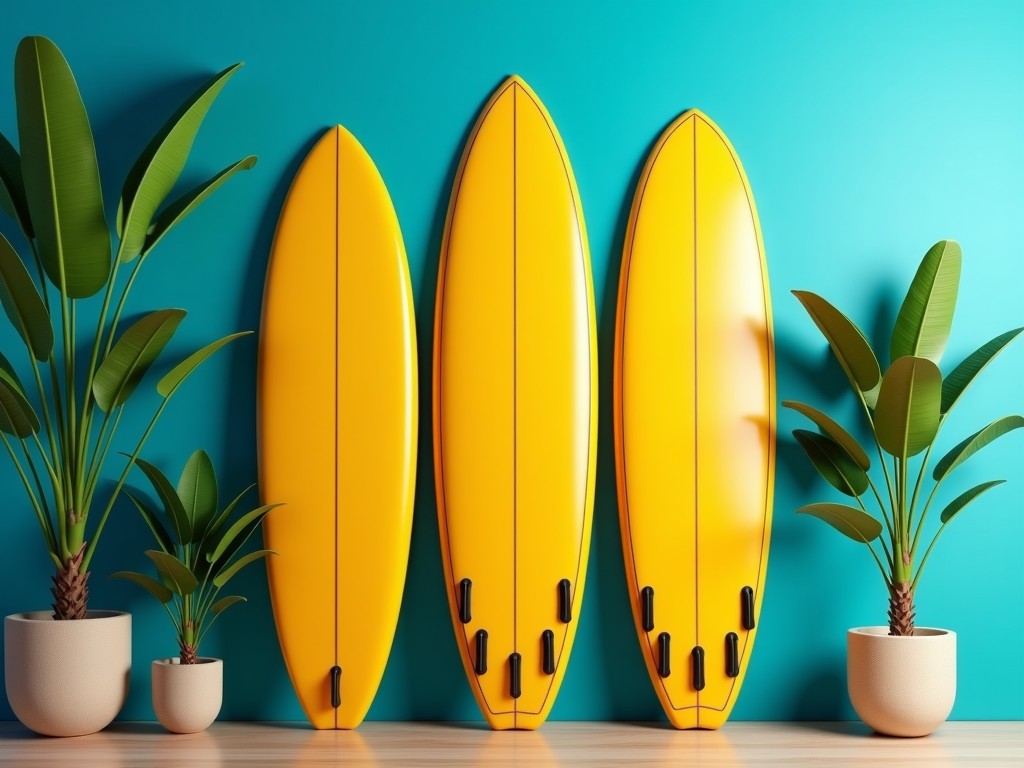
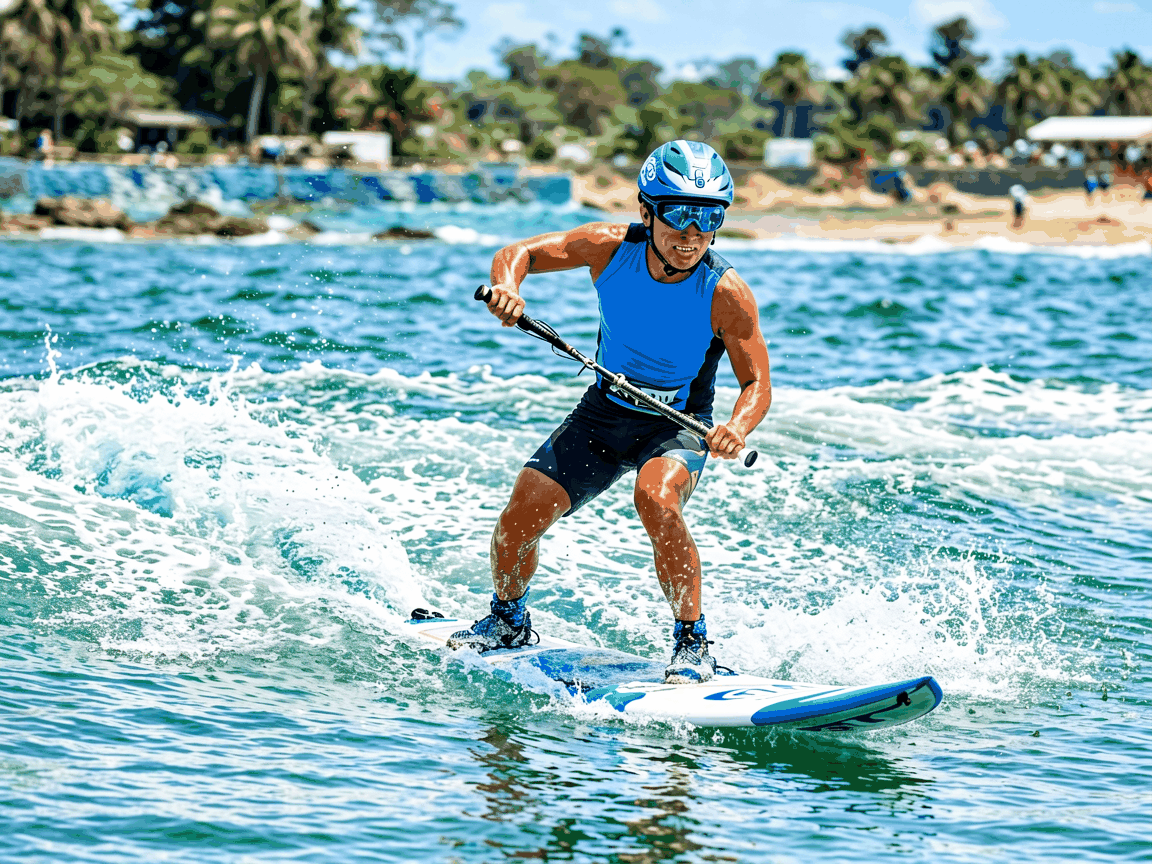
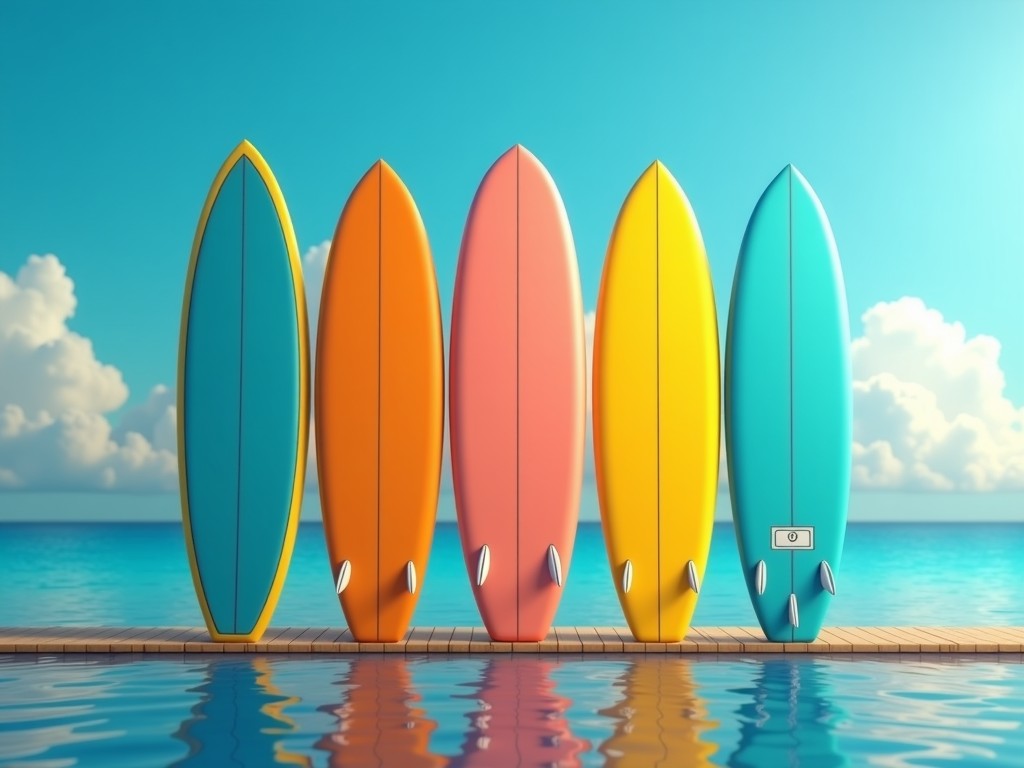
OEM efoil boards serve rental fleets requiring rapid turnaround and minimal maintenance, where modular motor mounts reduce downtime during service cycles. Training centers benefit from standardized flex characteristics that allow consistent student progression across multiple units. Resort operators select custom colorways and logo integration via hydrotransfer printing to align with brand identity while maintaining hydrodynamic purity. Military and coastal patrol units utilize low-signature variants with non-metallic fasteners and radar-absorbent surface treatments.
| Parameter | Typical Value | Customization Option |
|---|---|---|
| Board Length | 1650 mm | 1500–1800 mm (in 50 mm increments) |
| Width (Max) | 600 mm | 550–650 mm |
| Thickness (Center) | 100 mm | 80–120 mm |
| Weight (Unfinished) | 12.5 kg | ±15% based on layup |
| Max Rider Weight | 120 kg | Up to 150 kg with reinforced core |
| Motor Mount Torque Limit | 120 Nm | Up to 200 Nm with steel insert |
Ordering and Technical Support
Quotations require submission of CAD files (STEP or IGES) for motor pod interface, desired layup schedule, and surface finish specification. Lead time for first article is 4–6 weeks after design freeze, with production tooling amortized over minimum order quantities of 50 units. Samples are available for hydrodynamic validation upon NDA execution, including lift curve data and flex profile measurements. Technical support includes DFM review, material substitution analysis, and packaging optimization for containerized shipment.
To initiate an OEM efoil board development project, share your performance requirements and integration constraints with our engineering team.