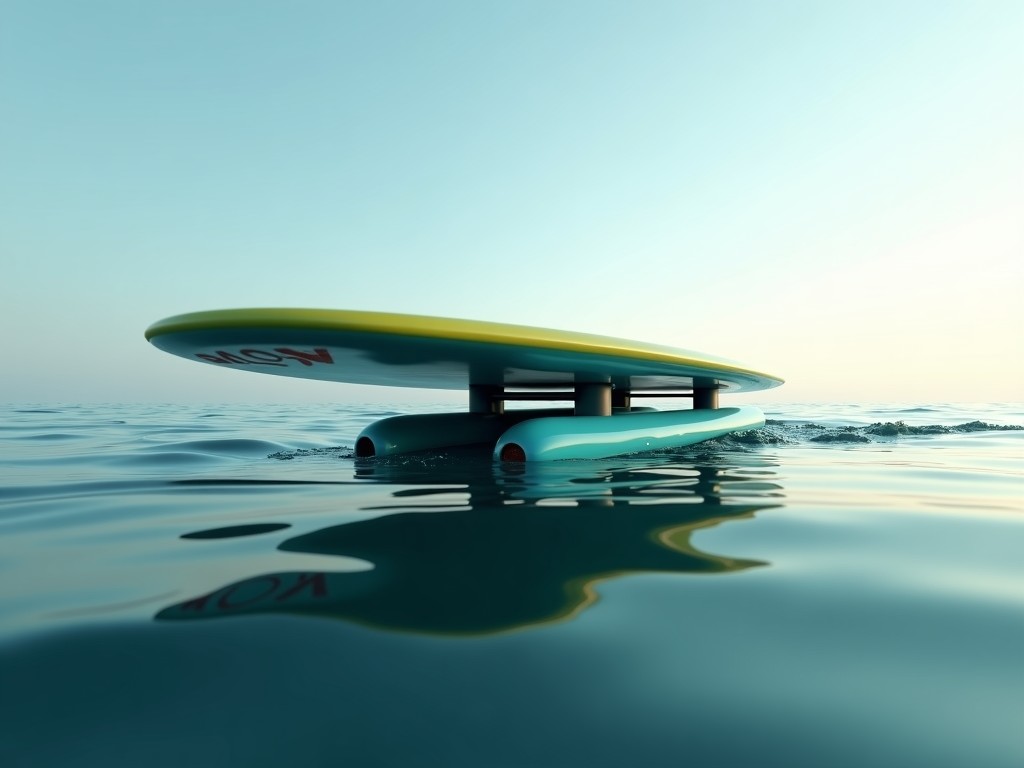
Rechargeable Electric Hydrofoil Surfboard
Rechargeable Electric Hydrofoil Surfboard
Rechargeable electric hydrofoil surfboards combine battery-powered propulsion with submerged foil technology to enable planing above the water surface at low speeds. This eliminates dependence on wave conditions or wind, allowing consistent operation in flat water, lakes, rivers, and protected coastal areas. The system integrates a sealed lithium-ion battery pack, waterproof motor controller, and carbon-fiber-reinforced hydrofoil to deliver silent, zero-emission performance for recreational, training, and light commercial use.
Core System Architecture
The board consists of three primary subsystems: the buoyancy hull, the electric drive unit, and the hydrofoil assembly. The hull, typically constructed from EPS foam core with fiberglass or carbon fiber laminate, provides sufficient volume to support rider weight while minimizing drag. The drive unit, mounted internally or on a pod beneath the hull, includes a brushless DC motor (typically 5–15 kW) connected to a propeller via a sealed shaft. Power and control signals are transmitted through waterproof penetrations to the motor controller, which regulates torque based on throttle input from a wireless handheld or handlebar-mounted throttle.
The hydrofoil assembly comprises a front wing, rear stabilizer, and vertical mast, all fabricated from pre-preg carbon fiber with aerospace-grade epoxy resin. The front wing generates lift at speeds as low as 8–12 km/h, allowing the hull to clear the water and reduce wetted surface area by over 70%. Mast length (typically 60–90 cm) determines the maximum ride height above water, while wing aspect ratio and camber influence efficiency, stability, and turning radius. All submerged components are designed for corrosion resistance in both fresh and saltwater environments.
Battery and Energy System
Energy storage is provided by a sealed lithium-ion battery pack, commonly configured as 48V or 72V nominal with capacities ranging from 20Ah to 40Ah (960–2880 Wh). The pack is housed in a watertight enclosure rated IP68, featuring passive cooling via thermal conduction to the hull or active cooling with internal heat sinks. Battery management systems (BMS) monitor cell voltage, temperature, and current to prevent overcharge, over-discharge, and thermal runaway. Charging is conducted via a dedicated port using either AC mains (100–240V, 50/60Hz) or DC fast-charging options, with typical charge times of 2–4 hours for full capacity.
Range depends on speed, rider weight, water conditions, and foil efficiency. At cruising speeds of 15–20 km/h, a 2880 Wh pack typically provides 60–90 minutes of continuous operation. Regenerative braking is not commonly implemented due to low energy recovery potential and complexity in water environments. Instead, energy efficiency is optimized through propeller pitch selection, motor KV rating matching, and hull-foil alignment to minimize induced and profile drag.
Performance and Control Characteristics
Throttle response is linear and progressive, with torque delivery managed to prevent sudden acceleration that could destabilize the rider. Most systems offer multiple riding modes—such as Eco, Cruise, and Sport—each limiting maximum power output and top speed (typically capped at 25–35 km/h for safety and regulatory compliance). Steering is achieved through weight shift and handlebar input (if equipped), which alters the angle of attack of the hydrofoil via a linkage system or direct mast tilt.
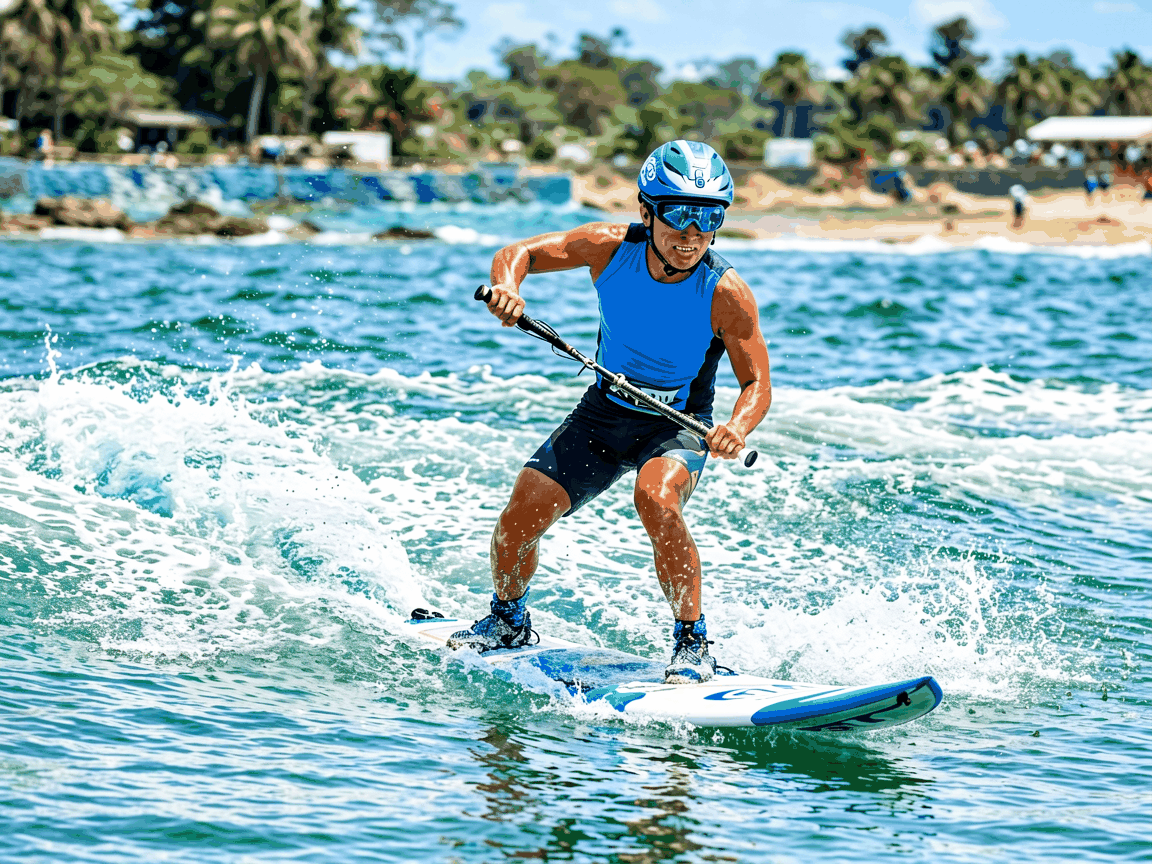
Stability is enhanced by the inherent pendulum effect of the submerged foil, which acts as a stabilizing fin below the center of buoyancy. However, roll sensitivity increases at higher speeds and during turns, requiring rider skill to maintain balance. Some models include optional gyroscopic sensors and electronic stability assist to dampen oscillations, though these add complexity and potential failure points. Launch procedures typically involve kneeling or lying prone on the board until sufficient speed is achieved for foil lift, after which the rider stands.
Materials and Construction
Hull materials vary by model and intended use. Entry-level boards often use fiberglass-reinforced polyester over EPS foam for cost-effectiveness and ease of repair. Performance-oriented models employ carbon fiber laminates with epoxy resin to achieve higher stiffness-to-weight ratios, improving responsiveness and reducing inertia. The hydrofoil mast and wings are almost exclusively carbon fiber due to the critical need for high tensile strength and fatigue resistance under cyclic loading. Metal components (e.g., motor mounts, propeller shafts) are typically marine-grade stainless steel (AISI 316) or titanium to resist galvanic corrosion.
Sealing techniques are critical for long-term reliability. Motor shafts use double-lip mechanical seals with carbon/ceramic faces and nitrogen-purged cavities. Electrical connectors are molded polyurethane or silicone-filled to prevent water ingress. All external fasteners are either encapsulated or made from non-corrosive alloys. Surface finishes include UV-stabilized clear coats or marine-grade gelcoat to protect against degradation from sunlight and salt exposure.
Typical Applications
These boards are used in environments where traditional surfing or wind-dependent foiling is impractical. Common applications include flat-water recreation on lakes and rivers, guided tours in calm coastal zones, and training platforms for hydrofoil skills before transitioning to unpowered foiling. Their quiet operation and lack of emissions make suitable for use in protected marine areas, wildlife reserves, and urban waterways where noise and pollution restrictions apply. Some commercial operators use them for short-distance passenger shuttles or scenic rentals in resort settings.
Unlike fuel-powered personal watercraft, electric hydrofoil boards produce no exhaust, oil leaks, or noise pollution, reducing environmental impact and regulatory barriers. They also require minimal maintenance compared to internal combustion engines—no oil changes, fuel system cleaning, or winterization. This makes them attractive for rental fleets, training schools, and municipal programs seeking low-operational-cost water access solutions. However, their range and speed limitations prevent use in open-ocean conditions or long-distance transit.
Comparison of Key Parameters
| Parameter | Typical Range | Notes |
|---|---|---|
| Motor Power | 3–15 kW | Dependent on hull size and intended speed |
| Battery Capacity | 960–2880 Wh | 48V or 72V systems; affects range and weight |
| Max Speed | 25–35 km/h | Often limited by software for safety and compliance |
| Operating Time | 45–90 minutes | At mixed cruise/sport usage; varies with rider weight |
| Mast Length | 60–90 cm | Longer masts allow greater height but increase drag and inertia |
| Weight (Ready-to-Ride) | 20–35 kg | Includes board, battery, foil, and motor; affects portability |
Customization and Integration Options
Manufacturers commonly offer options to tailor the system to specific use cases. Battery capacity can be increased within hull volume constraints, though this increases weight and may require structural reinforcement. Motor KV rating and propeller diameter/pitch can be adjusted to prioritize either top speed or low-end torque—higher KV with smaller propellers favors speed, while lower KV with larger propellers improves efficiency and acceleration. Foil geometry is also customizable: aspect ratio, wing area, and stabilizer size can be modified to optimize for stability, maneuverability, or efficiency based on rider skill and water conditions.
Control interfaces vary from basic thumb throttles to handlebar-mounted twist grips with integrated displays showing speed, battery level, and mode selection. Some models support Bluetooth connectivity for firmware updates or data logging via smartphone apps. Mounting points for accessories such as action cameras, GPS trackers, or rescue flags are often available as factory options. For commercial operators, optional features include reinforced hulls, increased freeboard for rougher water, and simplified battery swap systems to minimize downtime between rentals.
Quality and Testing Considerations
Critical quality checks focus on waterproofing integrity, structural strength, and electrical safety. Each assembled unit undergoes hydrostatic testing of the battery enclosure and motor pod to IP68 standards, typically involving submersion at 1 meter depth for 30 minutes. Electrical systems are tested for insulation resistance (>100 MΩ) and ground fault protection. Hull and foil components are inspected for laminate voids, delamination, and fiber alignment using tap testing or ultrasonic methods. Final assembly includes a functional test in water to verify throttle response, steering, lift-off speed, and stability under load.
Long-term durability is assessed through accelerated cycling tests: repeated charge/discharge cycles (500+ cycles for battery), salt spray exposure (per ASTM B117), and UV exposure (per ISO 4892-2). Fatigue testing of the hydrofoil mast and wing joints simulates 100+ hours of riding stress. Manufacturers typically provide a limited warranty covering defects in materials and workmanship for 1–2 years, with battery capacity guarantees often set at 80% retention after 300 cycles. Documentation includes user manuals, maintenance schedules, and safety guidelines covering PPE requirements, launch procedures, and emergency shutdown protocols.
For detailed specifications, configuration options, or inquiries regarding integration into rental fleets, training programs, or specialty applications, contact our technical team to discuss your operational requirements.