15Kw Electric Surfboard Manufacturer
15kW Electric Surfboard Manufacturer
A 15kW electric surfboard integrates a high-torque brushless motor, sealed battery pack, and hydrodynamically optimized hull to deliver consistent thrust in varied water conditions. Manufacturers focus on thermal management, ingress protection, and power-to-weight ratio to ensure operational reliability in marine environments.
Industrial buyers evaluate these systems based on measurable engineering parameters: continuous power output, battery energy density, controller efficiency, and sealing effectiveness against saltwater intrusion.
Core System Architecture
The propulsion system centers on a 15kW permanent magnet synchronous motor (PMSM) with sensorless field-oriented control (FOC), enabling precise torque delivery across 0–30 km/h speed ranges. Motor windings are impregnated with Class H insulation to withstand sustained thermal loads, while the rotor uses neodymium magnets graded N35SH for resistance to demagnetization at elevated temperatures.
Power is supplied by a lithium-ion battery pack configured in 20s7p arrangement, delivering 740Wh nominal capacity with a continuous discharge rating of 150A. Each cell is monitored by a distributed BMS with cell balancing, overcurrent protection, and temperature sensing at 10ms intervals.
The motor controller operates at 20kHz PWM frequency with SiC MOSFETs to minimize switching losses, achieving >92% peak efficiency. Liquid cooling channels integrated into the motor housing maintain stator temperatures below 80°C under continuous 15kW load, verified via infrared thermography during dynamometer testing.
Hull Design and Hydrodynamics
The hull is fabricated from CNC-machined EPS foam core laminated with unidirectional carbon fiber and epoxy resin, achieving a flexural modulus of 45 GPa and impact resistance of 18 kJ/m². External surfaces are coated with a UV-stabilized polyurethane finish to reduce hydrodynamic drag and prevent osmotic blistering.
Bottom contours feature a 5-degree rocker profile and double concave channels to promote planing efficiency at low speeds while maintaining directional stability in chop. Rail geometry incorporates a 3mm bevel to reduce spray and improve grip during turning maneuvers.
Internal compartments are sealed using IP68-rated gaskets and potting compounds, with all cable penetrations featuring strain relief and secondary barriers. Buoyancy distribution is calculated to maintain a 15mm freeboard at maximum rider weight (120kg), ensuring self-righting capability after capsizing.
Performance and Operational Parameters
Under standard test conditions (22°C water, 75kg rider, calm water), the system achieves a top speed of 38 km/h with a 15-minute sustained runtime at 80% throttle. Range varies between 12–18 km depending on rider input, water conditions, and battery state of health.
Acceleration from 0 to 25 km/h occurs in 4.2 seconds, limited by controller torque ramp settings to prevent cavitation. Regenerative braking recovers up to 15% of kinetic energy during deceleration, extending effective range in stop-and-go scenarios.
Motor temperature rise is limited to 55°C above ambient after 20 minutes of continuous operation, validated via thermocouple arrays embedded in stator windings. Battery voltage sag remains under 8% at 150A discharge, confirming low internal resistance and adequate cell quality.
Material Selection and Durability
Structural components use marine-grade aluminum alloys (6061-T6) for motor mounts and battery enclosures, offering 310 MPa yield strength and resistance to galvanic corrosion when isolated with PTFE washers. Stainless steel fasteners (A4-80) are used throughout to prevent crevice corrosion in saline environments.
Battery cells are selected based on nickel-manganese-cobalt (NMC) chemistry with a specific energy of 220 Wh/kg and cycle life exceeding 500 cycles at 80% depth of discharge. Electrolyte formulations include additives to suppress HF formation and improve low-temperature performance.
Sealing materials include EPDM rubber for dynamic seals and silicone-based potting compounds for static joints, both validated for 1000-hour salt spray exposure per ASTM B117. All materials undergo outgassing testing to ensure compatibility with enclosed electronic systems.
Customization and Integration Options
Motor power can be adjusted between 10kW and 20kW by modifying winding turns and controller current limits, allowing adaptation to different rider weights or regional speed regulations. Battery capacity is scalable in 100Wh increments through parallel cell additions, with BMS firmware updated accordingly.
Hull geometry can be altered via CAD adjustments to rocker, concave, and width dimensions, enabling optimization for specific use cases such as surf training, flatwater touring, or rescue operations. Custom foot strap configurations and handlebar mounts are available upon request.
Control interfaces support Bluetooth LE for telemetry logging and CAN bus integration for third-party display units. Optional accessories include GPS speedometers, water temperature sensors, and removable fin systems, all designed to maintain IP68 integrity when installed.
| Parameter | Typical Value | Customizable Range |
|---|---|---|
| Motor Power (Continuous) | 15 kW | 10–20 kW |
| Battery Capacity | 740 Wh | 500–1000 Wh |
| Top Speed | 38 km/h | 30–45 km/h |
| Runtime (80% Throttle) | 15 min | 10–25 min |
| Charge Time (0–100%) | 90 min | 60–120 min |
| Operating Temperature | 0–40°C | -10–50°C (with thermal management) |
Quality Control and Testing Protocols
Each unit undergoes a 100% functional test sequence including insulation resistance measurement (>100 MΩ at 500V DC), high-pot testing (1500V AC for 1 minute), and dynamic load verification on a waterbrake dynamometer. Motor torque ripple is measured to ensure smooth operation below 5% variation across the operating range.
Battery packs are subjected to thermal cycling (-20°C to 60°C), overcharge protection validation, and short-circuit testing per IEC 62133 standards. Water ingress testing is conducted at 1.5m depth for 30 minutes with internal humidity sensors confirming <5% RH increase.
Final inspection includes dimensional verification of critical interfaces (motor mount alignment, battery tray tolerance <0.2mm), surface finish assessment, and functional validation of all user controls. Test data is retained for traceability and linked to serial numbers via QR code labeling.
Applications in Commercial and Specialized Use
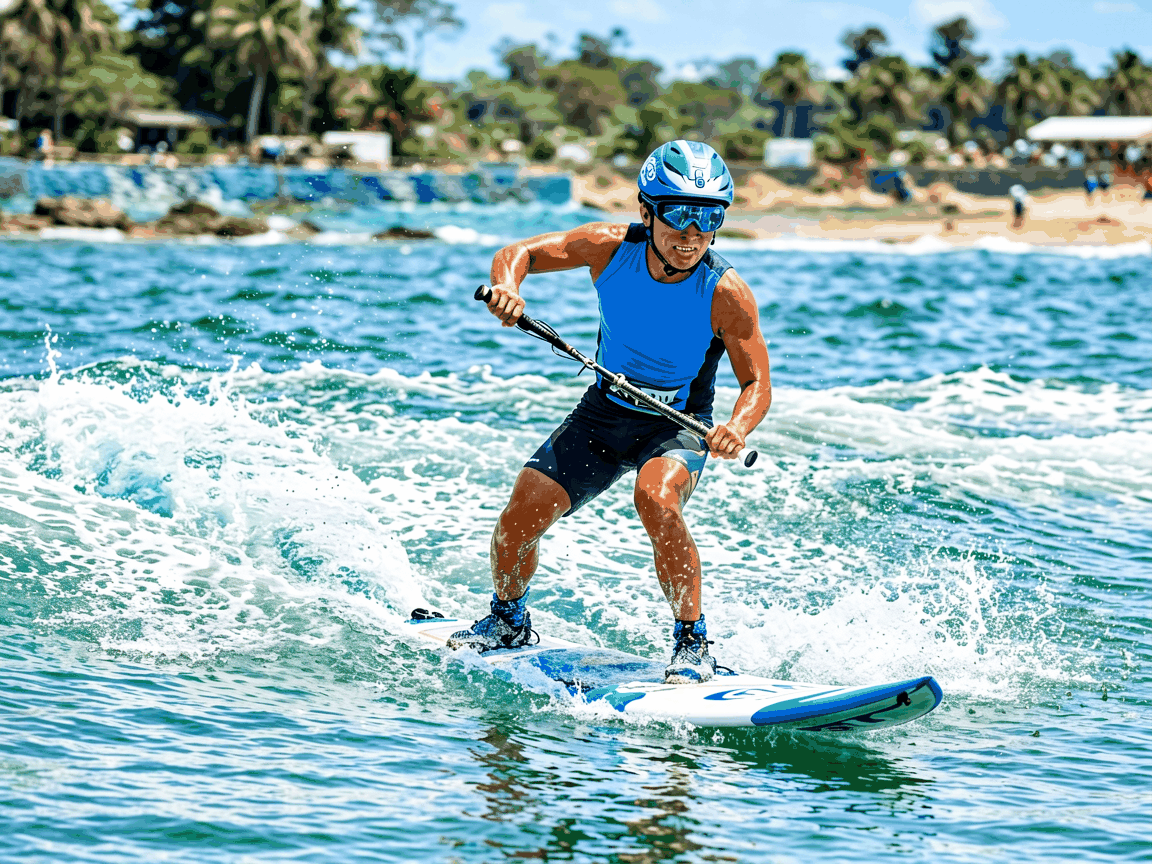
Beyond recreational use, 15kW electric surfboards are deployed in lifeguard operations for rapid response in surf zones where conventional watercraft cannot operate due to depth or obstacles. The zero-emission, quiet operation allows approach without disturbing marine life or alerting distressed swimmers.
Marine research institutions utilize these platforms for sensor deployment in coastal zones, integrating water sampling devices and underwater cameras via standardized mounting points. The stable platform and precise speed control enable repeatable transects for environmental monitoring.
Resort operators integrate them into guided tour fleets, benefiting from low maintenance requirements compared to internal combustion alternatives. Training centers use adjustable power models to accommodate skill progression, limiting novice riders to lower power settings while allowing advanced users full access.