Carbon Fiber Electric Surfboard For Adults
Carbon Fiber Electric Surfboard for Adults
This product page details the engineering specifications, material composition, and performance characteristics of a carbon fiber electric surfboard designed for adult recreational and light commercial use. The information is structured to support technical evaluation by procurement engineers, product managers, and industrial buyers assessing long-term value, durability, and operational suitability.
Structural Composition and Material Properties
The surfboard’s primary structure utilizes a unidirectional carbon fiber reinforced polymer (CFRP) layup with an epoxy resin matrix, optimized for high tensile strength and fatigue resistance under dynamic loading. The core consists of a closed-cell, high-density PVC foam (density: 80 kg/m³) shaped via CNC milling to achieve precise hydrodynamic contours. This combination yields a flexural modulus of approximately 45 GPa and a specific strength exceeding that of marine-grade aluminum alloys, while maintaining a total board weight under 12 kg including battery and motor housing.
The outer laminate features a UV-stabilized, clear coat finish with a nominal thickness of 150 microns to resist saltwater degradation and micro-abrasion from sand and debris. All mechanical fasteners are grade 316 stainless steel, and sealing interfaces use EPDM gaskets rated for continuous immersion in saline environments up to 35 ppt. These material choices are selected to minimize galvanic corrosion and ensure dimensional stability over a 5-year service life under typical coastal operating conditions.
Electric Propulsion System Specifications
The integrated electric drive system comprises a brushless DC motor with a peak power output of 5 kW and continuous rating of 3.5 kW, liquid-cooled via a passive aluminum heat exchanger embedded in the board’s tail section. Motor efficiency exceeds 88% across 20–80% load range, as determined by dynamometer testing under simulated load profiles. The propulsion unit drives a single, fixed-pitch composite propeller (diameter: 180 mm, pitch: 120 mm) housed in a ducted flow channel to reduce cavitation and improve thrust efficiency at planing speeds.
Energy is supplied by a lithium-ion nickel manganese cobalt (NMC) battery pack with a nominal capacity of 5.2 kWh and voltage of 48 V DC. The pack is housed in a watertight, impact-resistant enclosure (IP68 rated) located beneath the standing deck, with active cell balancing and thermal management via phase-change material layers. Charging is conducted via a proprietary waterproof connector (M12, 5-pin) supporting 3.3 kW AC input, enabling a full charge from 20% to 100% in approximately 90 minutes under standard conditions.
Performance Characteristics and Operational Envelope
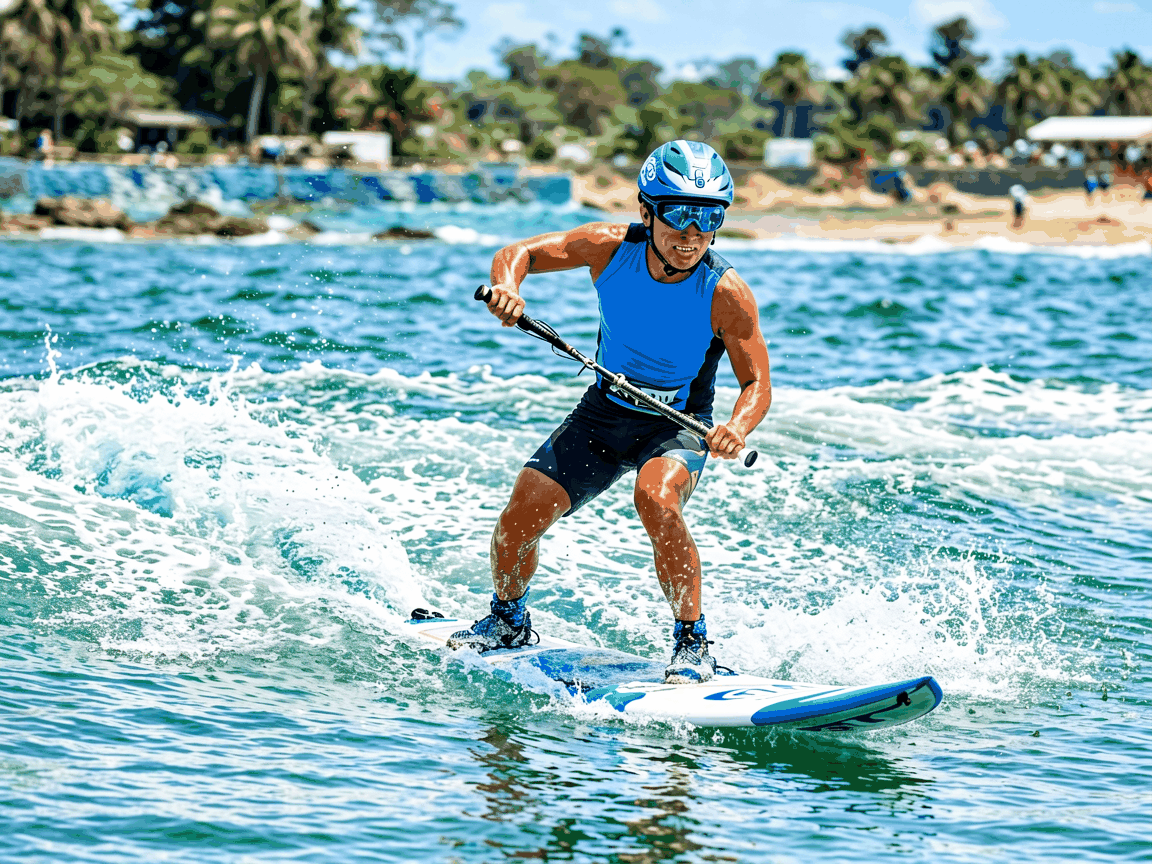
Under typical operating conditions (75 kg rider, calm water, 20°C ambient), the surfboard achieves a maximum speed of 38 km/h with a sustained cruising range of 25–30 minutes at 70% throttle. Range varies non-linearly with speed due to the cubic relationship between hydrodynamic drag and velocity; at 25 km/h, endurance extends to approximately 45 minutes. Acceleration from 0 to 25 km/h occurs in under 4 seconds, limited by motor controller torque ramp settings to ensure rider stability during launch.
The board’s hydrodynamic shape incorporates a 5-stage rocker profile and beveled rails to optimize planing efficiency and stability during turns. Center of gravity is positioned 120 mm anterior to the motor unit to maintain neutral trim at planing speeds. Maximum recommended rider weight is 100 kg; beyond this, dynamic instability increases due to reduced freeboard and altered wetted surface area. Minimum operating water depth is 0.6 m to prevent seabed impact and propeller damage.
Environmental and Safety Considerations
The system operates with zero direct emissions and produces underwater noise levels below 85 dB re 1 μPa at 50 m distance, measured under ISO 17208-1 standards for marine craft. All electrical components are designed to fail-safe: motor controller includes overcurrent, overvoltage, and undervoltage protection with automatic shutdown and diagnostic fault coding. The battery pack incorporates multiple independent safety layers, including cell-level PTCs, vent valves, and a microprocessor-controlled battery management system (BMS) that monitors temperature, voltage, and impedance per cell.
Safety features include a magnetic kill switch lanyard that instantly cuts power upon detachment, and a buoyancy aid integrated into the nose block providing 150 N of static lift. The product complies with the essential requirements of the EU Recreational Craft Directive (2013/53/EU) for personal watercraft under 4 m in length, though it is not classified as a vessel under SOLAS. Users are advised to wear personal flotation devices and operate within designated zones per local maritime regulations.
Customization and Configuration Options
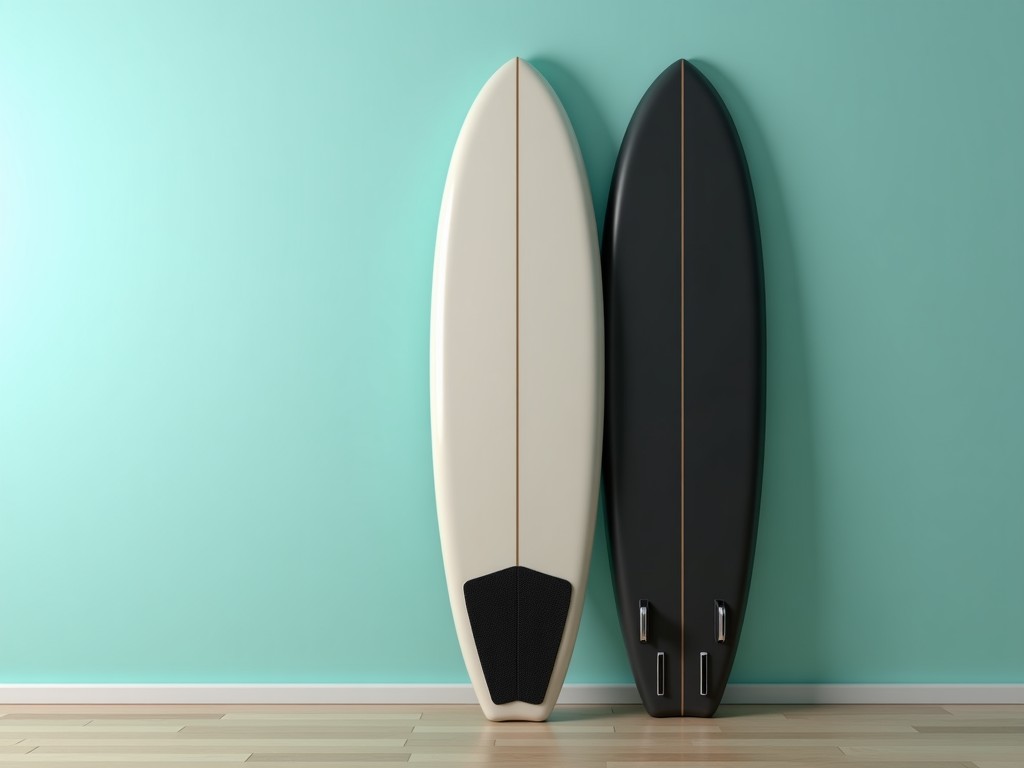
Board dimensions are available in three standard lengths: 180 cm (entry-level stability), 200 cm (all-around performance), and 220 cm (advanced maneuverability), with corresponding width and thickness scaling to maintain consistent volume-to-weight ratios. Custom lengths between 175 cm and 230 cm are feasible upon engineering review, subject to adjustments in layup schedule and motor placement to preserve hydrodynamic balance. Deck surface finishes include options for textured EVA foam (shore A 45), cork composite, or bare carbon fiber with non-slip laser etching.
Motor power can be derated to 2.5 kW continuous for rental fleet applications requiring extended range over top speed, or increased to 6.5 kW peak for performance variants with upgraded cooling and battery chemistry (NMC 811). Battery capacity is scalable in 1.3 kWh increments up to a maximum of 7.8 kWh, enabling range extensions to 60+ minutes at cruising speed. All customizations require validation of center of gravity, structural integrity, and waterproofing integrity prior to production release.
| Parameter | Standard Value | Customizable Range |
|---|---|---|
| Board Length | 200 cm | 175–230 cm |
| Motor Power (Continuous) | 3.5 kW | 2.5–6.5 kW |
| Battery Capacity | 5.2 kWh | 5.2–7.8 kWh |
| Max Speed | 38 km/h | 30–45 km/h |
| Operating Range (70% throttle) | 25–30 min | 20–50 min |
Quality Control and Manufacturing Process
Each board undergoes non-destructive testing via ultrasonic A-scan to detect delamination or voids in the CFRP laminate, with acceptance criteria based on ISO 11543:2022 for fiber-reinforced plastics. Dimensional accuracy is verified using laser scanning against CAD nominals, with tolerances held to ±2 mm for critical hydrodynamic surfaces. Motor and battery assemblies are subjected to 48-hour salt fog testing (ASTM B117) and thermal cycling (−10°C to +50°C) to validate environmental sealing performance before final assembly.
Final acceptance includes a 30-minute operational test cycle in controlled water conditions, logging motor temperature, battery voltage drop, and thrust output. Boards are packaged in double-wall corrugated inserts with molded polyethylene foam corners and desiccant packs, then sealed in UV-stabilized polyethylene bags to prevent moisture ingress during storage and transport. Traceability is maintained via unique serial numbers linked to material batch records, layup logs, and test data accessible through a secure portal for OEM and distributor quality audits.