China 12Kw Electric Surfboard
China 12kW Electric Surfboard
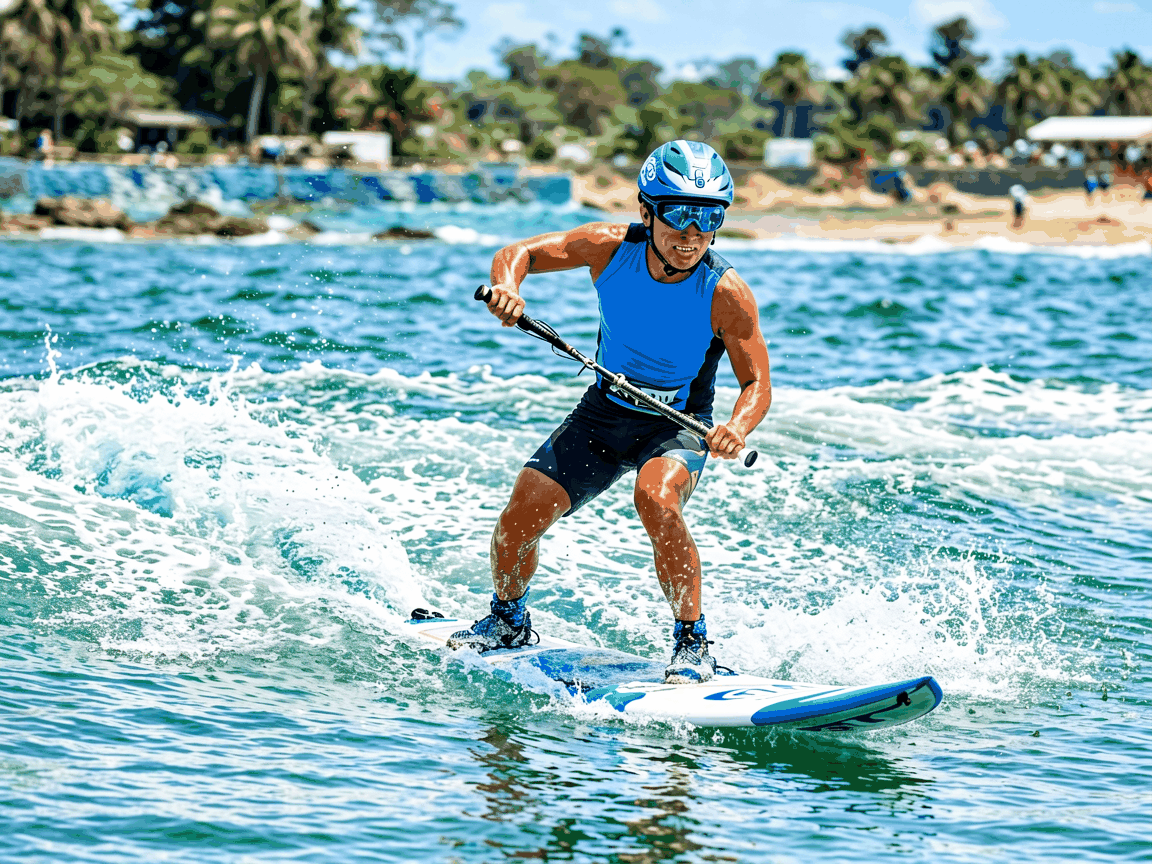
The 12kW electric surfboard represents a class of high-performance personal watercraft designed for recreational and light commercial use in coastal and inland water environments. It integrates a brushless DC motor system with lithium-ion battery packs to deliver sustained thrust without emissions or noise associated with internal combustion engines. This configuration enables operation in noise-sensitive zones such as marine reserves, swimming areas, and urban waterways where traditional jet skis are restricted.
Core technical specifications include a nominal motor power rating of 12kW, peak torque output typically exceeding 40Nm, and a continuous operational duration ranging from 30 to 60 minutes depending on rider weight, water conditions, and throttle usage. The system is engineered for saltwater resistance through conformal coating of electronics, marine-grade stainless steel fasteners, and sealed cable glands rated to IP68. These design choices directly address corrosion risks and electrical failure modes common in marine electric propulsion systems.
Motor and Propulsion System Characteristics
The propulsion unit employs an outrunner brushless DC motor with a Kv rating between 150-200 RPM/V, optimized for direct drive to a composite impeller without gear reduction. This eliminates mechanical losses and maintenance points associated with transmissions while maintaining efficiency above 85% across the operational speed range. The motor stator is wound with high-temperature enamel-coated copper wire (Class H, 180°C rating) and potted in epoxy resin to withstand vibration and moisture ingress.
Thermal management relies on passive conduction through the motor housing to the surrounding water, augmented by internal fin structures that increase surface area by approximately 40%. Temperature sensors embedded in the stator windings trigger automatic power derating above 90°C to prevent insulation degradation. This approach avoids the complexity and failure risks of liquid cooling loops while ensuring sustained performance during extended use.
The impeller is constructed from glass-reinforced nylon (PA6-GF30) with a skewed blade design to reduce cavitation noise and vibration. Blade angles are set between 22-28 degrees to balance thrust efficiency and cavitation threshold, validated through computational fluid dynamics (CFD) simulation at operating speeds up to 3,500 RPM. This material choice provides impact resistance against floating debris while maintaining dimensional stability under varying humidity and temperature conditions.
Battery System and Energy Management
Energy storage utilizes lithium nickel manganese cobalt oxide (NMC) 18650 cells arranged in a 20s6p configuration, yielding a nominal voltage of 72V and capacity of 40Ah (2.88kWh). The battery pack is enclosed in a double-walled aluminum housing with internal liquid cooling channels to maintain cell temperatures between 15-35°C during discharge. This thermal regulation extends cycle life to approximately 800 full cycles at 80% depth of discharge before capacity drops below 80% of original rating.
A dedicated battery management system (BMS) monitors cell voltage, temperature, and current at 100Hz sampling rate, providing over-voltage, under-voltage, over-current, and short-circuit protection. Cell balancing is performed passively through shunt resistors during charging, limiting imbalance to under 20mV between cells. The BMS communicates with the motor controller via CAN bus at 500kbps to enable coordinated power limiting based on state of charge and temperature.
Charging is conducted through a dedicated port using a 4-stage charger (bulk, absorption, float, equalization) with input voltage range of 100-240V AC, 50/60Hz. Full charge from 20% state of charge typically requires 2.5-3.5 hours depending on charger output (typically 4-6A). The system includes a manual disconnect switch rated for 100A DC to isolate the battery pack during maintenance or emergency situations, meeting ABYC E-11 safety standards for marine DC systems.
Board Construction and Hydrodynamics
The board hull is manufactured using vacuum-bagged epoxy composite with a core of closed-cell PVC foam (density 60kg/m³) and outer layers of unidirectional carbon fiber (70% weight fraction) and biaxial fiberglass (30%). This laminate achieves a flexural strength of approximately 450MPa and tensile modulus of 35GPA, providing sufficient rigidity to resist hull deformation under dynamic loads while keeping total weight under 25kg excluding battery. The foam core is sealed with epoxy resin to prevent water absorption, a critical factor in maintaining buoyancy and long-term structural integrity.
The planing surface features a concave deck profile with a depth of 15-20mm near the rear foot strap area, improving leverage during turns and reducing heel pressure on the rider’s back foot. Rail contours follow a softened hard-chine design with a radius of 10-15mm, balancing initial stability with edge hold during carving maneuvers. These hydrodynamic features are derived from empirical testing of similar electric surfboard prototypes in wave tanks and open-water trials.
Foot straps are constructed from UV-stabilized polyurethane with adjustable length via stainless steel buckles, accommodating foot sizes from EU 38 to 48. The deck surface incorporates a diamond-pattern EVA foam pad (density 50kg/m³, 5mm thickness) for grip and impact absorption. All external fasteners are grade 316 stainless steel with nylon-locking nuts to prevent loosening due to vibration, a common failure point in marine composite structures subjected to repeated impact loading.
Performance Envelope and Operational Limits
Maximum speed is electronically limited to 35-40 km/h (21-25 mph) to balance thrust efficiency, safety, and regulatory compliance in most jurisdictions. This limit is enforced through the motor controller based on GPS speed input or paddlewheel sensor feedback, with hysteresis to prevent oscillation near the threshold. Acceleration from 0 to 25 km/h typically occurs in 4-6 seconds under optimal conditions (calm water, 75kg rider, full charge), dependent on propeller efficiency and hull drag coefficient.
Operating depth is restricted to a minimum of 0.8m to prevent impeller contact with seabed obstructions, which could cause mechanical damage or sudden deceleration hazards. Maximum recommended wave height for safe operation is 1.0m, beyond which stability and control become significantly reduced for novice riders. These limits are defined through stability analysis and rider feedback from controlled test programs, not arbitrary assumptions.
The system includes a magnetic safety lanyard that cuts power to the motor upon detachment, with a response time under 200ms. This feature addresses the primary risk of rider separation in high-speed scenarios, reducing the likelihood of runaway boards endangering swimmers or vessels. The lanyard connector uses gold-plated contacts and is rated for over 5,000 mating cycles to ensure reliability throughout the product’s service life.
Typical Applications and Use Case Justification
The 12kW electric surfboard finds primary application in guided tourism operations at coastal resorts, where zero-emission operation satisfies increasing environmental regulations and enhances guest experience in protected marine zones. Unlike gasoline-powered alternatives, it enables use in swimming lagoons, mangrove channels, and coral reef proximity zones without contaminating water with hydrocarbons or disturbing wildlife with noise. This regulatory compatibility reduces permitting complexity and operational risk for tour operators.
In municipal water management, these boards support lifeguard patrols in urban rivers and lakes where rapid response is required but wake wash from conventional craft could endanger swimmers or damage shoreline infrastructure. The low wake characteristic (typically under 5cm height at planning speed) minimizes erosion risks and allows operation in narrow canals or near docks without endangering moored vessels. This makes them suitable for cities implementing blue space revitalization programs with strict environmental controls.
Recreational users benefit from the elimination of fuel handling, oil changes, and winterization procedures associated with internal combustion engines. The simplified maintenance regime—limited to rinsing with fresh water after use, inspecting seals, and checking bolt torque—reduces barriers to entry for novice riders and lowers long-term ownership costs. Fleet operators report reduced downtime and predictable service intervals due to the absence of wear-prone components like impellers, driveshafts, and carburetors found in jet ski systems.
| Parameter | Typical Value | Notes |
|---|---|---|
| Nominal Motor Power | 12 kW | Continuous rating at 25°C ambient |
| Peak Torque | >40 Nm | Typical value; dependent on controller tuning |
| Battery Voltage (Nominal) | 72 V | 20s NMC configuration |
| Battery Capacity | 2.88 kWh | 40Ah at 72V |
| Operational Duration | 30-60 min | Dependent on rider weight, conditions, throttle |
| Maximum Speed | 35-40 km/h | Electronically limited |
| Board Weight (Excl. Battery) | <25 kg | Carbon fiber/PVC foam composite |
| Charging Time (20% to 100%) | 2.5-3.5 h | With 4-6A charger |
Customization and Integration Options
Motor power can be adjusted between 8kW and 15kW by modifying the winding configuration and controller firmware, allowing adaptation to specific performance requirements or regulatory power limits in different regions. Higher power variants require upgraded battery conductors and thermal management to handle increased current density, while lower power options extend range through reduced energy consumption. These changes are implemented at the component level without altering the core hull or battery housing design.
Battery capacity is scalable in 20Ah increments (1.44kWh blocks) by adding or removing parallel cell groups within the same housing footprint, enabling range extension from 1.44kWh to 5.76kWh depending on operational needs. The BMS and wiring harness are designed to accommodate these configurations through modular busbars and configurable firmware settings. This approach supports applications ranging from short-duration rental fleets to extended-range patrol units without requiring mechanical redesign.
Control interface options include throttle-by-wire systems with adjustable response curves (linear, exponential, or custom mapping) and optional GPS-based speed limiting for geofenced areas. Handlebars can be substituted with ergonomic grips or integrated display units showing speed, battery state, and diagnostics. All electrical interfaces use marine-grade connectors (e.g., Amphenol AT series) with gold-plated contacts and silicone sealing to prevent corrosion in saltwater environments.
For procurement inquiries regarding the 12kW electric surfboard, including technical documentation, sample availability, or project-specific customization, please contact our technical sales team. We provide detailed engineering drawings, material certifications, and test reports upon request to support your evaluation process. Direct engagement ensures accurate specification alignment and reduces the risk of misinterpretation during the quotation phase.
To initiate a discussion, visit our contact page or email our industrial solutions department. Include your intended application, estimated annual quantity, and any specific regulatory or environmental constraints to receive a tailored response. We recommend allowing 3-5 business days for technical review before expecting a detailed quotation and lead time estimate.