Electric Jetboard For Sale
Electric Jetboard for Sale
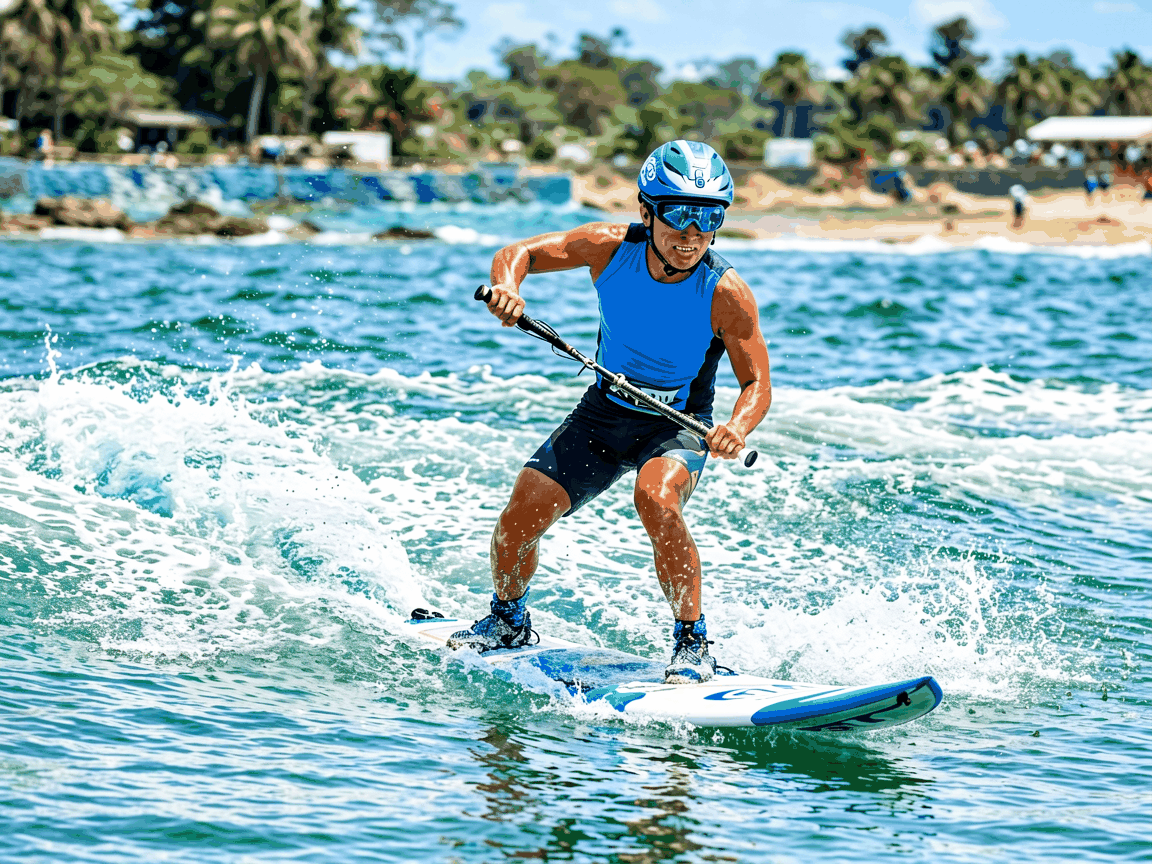
An electric jetboard is a self-propelled personal watercraft that uses an electric motor and jet propulsion system to move across the water surface without the need for waves or wind. Unlike traditional surfboards or gasoline-powered personal watercraft, it operates silently, produces zero emissions during use, and offers precise throttle control for maneuvering in calm lakes, rivers, or coastal zones. These characteristics make it suitable for recreational use, water patrol, tourism operations, and aquatic training programs where noise, emissions, and maintenance complexity are operational concerns.
Core Propulsion and Power System
The propulsion system centers on a sealed, water-cooled electric motor rated between 5 kW and 15 kW continuous output, depending on model configuration. This motor drives a single-stage impeller housed in a corrosion-resistant polymer or stainless steel jet tunnel, generating thrust by accelerating water through a nozzle at the rear. Power is supplied by a lithium-ion battery pack, typically configured as a 48V to 72V system with capacities ranging from 20 Ah to 40 Ah, providing 30 to 60 minutes of runtime at moderate throttle. The battery is enclosed in a pressure-rated, impact-resistant casing with IP68 rating, mounted securely to the board’s internal frame to maintain balance and protect against water ingress.
Motor efficiency exceeds 85% under typical operating loads due to permanent magnet synchronous design and electronic commutation. Thermal management relies on direct water cooling via the jet intake, eliminating the need for external radiators or fans. The electronic speed controller (ESC) uses field-oriented control (FOC) to deliver smooth torque response, regenerative braking capability, and real-time monitoring of voltage, current, and temperature. Safety cutoffs engage automatically if motor temperature exceeds 80°C, battery voltage drops below safe thresholds, or immersion sensors detect unintended submersion of the control housing.
Board Construction and Hydrodynamics
The board’s hull is manufactured using vacuum-bagged epoxy composite layers over a foam core, typically combining EPS (expanded polystyrene) or PVC foam with carbon fiber or fiberglass reinforcement. This construction achieves a tensile strength of 300–500 MPa and a flexural modulus exceeding 10 GPa, providing sufficient rigidity to resist torsional flex during high-thrust operation while keeping overall weight between 25 and 35 kg. The bottom contour features a slight concave tunnel design to enhance jet intake efficiency and reduce cavitation at speeds above 20 km/h.
Deck surfaces are fitted with molded EVA foam or rubberized non-slip padding, covering approximately 60% of the top surface area to ensure rider foot placement stability. Foot strap inserts are molded into the deck during layup, allowing adjustable positioning for different rider stances. The nose and tail sections incorporate reinforced impact zones using additional fiberglass layers to resist damage from dock contact or floating debris. All external fasteners are marine-grade stainless steel (AISI 316) to prevent galvanic corrosion in saltwater environments.
Control System and User Interface
Rider input is handled via a wireless handheld throttle/trigger unit operating on 2.4 GHz frequency with FHSS (Frequency Hopping Spread Spectrum) technology to minimize interference. The throttle uses a Hall-effect sensor with 0.1% resolution, providing proportional control from 0% to 100% power. The unit is rated IP67, floats if dropped in water, and includes a lanyard-activated kill switch that cuts power to the motor within 0.2 seconds of detachment.
Real-time feedback is displayed on a small, sunlight-readable LCD mounted on the throttle housing, showing speed (0–40 km/h), battery state of charge (%), power draw (kW), and system status. Data is transmitted via low-latency Bluetooth 5.0 from the board’s central control unit, which logs ride data for post-session analysis. Optional GPS modules can be integrated to track route, distance, and speed over ground, with data exportable via USB-C when the board is docked for charging.
Performance Characteristics and Operational Envelope
Under standard test conditions (flat freshwater, 75 kg rider, 20°C ambient), the electric jetboard achieves a top speed of 35–45 km/h, depending on motor power and propeller pitch. Acceleration from 0 to 20 km/h occurs in under 4 seconds for 10 kW+ systems. The planing threshold—the speed at which the board lifts sufficiently to reduce hull drag—typically occurs between 12 and 16 km/h, after which power efficiency improves by 20–30% compared to displacement mode.
Turning radius is influenced by rider weight distribution and fin configuration; dual rear stabilizing fins (80–100 mm depth) allow turns as tight as 3 meters at 15 km/h with active rider input. In reverse, the jet nozzle can be redirected via a movable deflector, enabling low-speed maneuvering in confined spaces, though reverse thrust is limited to 30% of forward power for safety and mechanical stability. Maximum recommended operating depth is 2 meters to ensure adequate jet intake clearance and prevent debris ingestion.
Battery System and Charging Infrastructure
The battery pack uses lithium nickel manganese cobalt oxide (NMC) chemistry, selected for its balance of energy density (160–200 Wh/kg), cycle life (800–1000 cycles to 80% capacity), and thermal stability. Each pack includes a built-in battery management system (BMS) that monitors cell voltage, temperature, and state of charge, providing passive balancing and active protection against overcharge, over-discharge, short circuit, and cell reversal. The BMS communicates with the ESC via CAN bus to enable power limiting based on thermal conditions.
Charging is performed via a dedicated IP65-rated port using a Mode 2 AC charger (16A, 230V input) or optional DC fast charger (up to 32A). Full charge from 20% to 100% takes 2.5 to 4 hours with AC charging, depending on pack size and charger output. The system supports opportunity charging—topping up during breaks—without memory effect degradation. For fleet operations, multi-bank charging stations are available, allowing simultaneous charging of 4–8 units with load balancing to prevent circuit overload.
Applications and Operational Suitability
Electric jetboards are deployed in environments where internal combustion engines are restricted due to noise ordinances, emissions regulations, or safety concerns. Examples include inland waterways near residential zones, protected marine sanctuaries, and indoor aquatic centers with heated pools. Their silent operation (under 65 dB at full throttle) allows use in early morning or evening hours without disturbing wildlife or nearby occupants, supporting guided eco-tours or wildlife observation programs.
In professional settings, lifeguard and water patrol units utilize jetboards for rapid response in swimming zones, where their shallow draft (<15 cm) and maneuverability enable access to areas unreachable by larger rescue craft. Training centers use them for instructor-led water sports education, benefiting from immediate throttle response and predictable handling characteristics. Rental operations favor them for low maintenance—no oil changes, spark plugs, or winterization—and reduced liability due to absence of hot exhaust components and fuel storage risks.
Material Selection and Environmental Resistance
External surfaces are coated with a two-part polyurethane marine finish, offering UV stability (ASTM G154 Cycle 1, 1000 hours) and resistance to salt spray (ASTM B117, 500 hours). The jet nozzle and impeller are molded from glass-reinforced nylon (PA6-GF30) to resist abrasion from sand and silt while maintaining dimensional stability under prolonged water exposure. Internal wiring uses tinned copper conductors with cross-linked polyethylene (XLPE) insulation, rated for continuous submersion and flex resistance.
All plastic components exposed to prolonged UV or hydrolysis are formulated with stabilizers (hindered amine light stabilizers, UV absorbers) to prevent embrittlement. Metallic fasteners and inserts use passivated stainless steel to avoid crevice corrosion in chloride-rich environments. The design avoids dissimilar metal contact where possible, and any necessary galvanic couples are isolated using dielectric barriers or selected for compatible potential differences (e.g., titanium fasteners with aluminum housings).
Quality Control and Manufacturing Considerations
Hull layup follows a standardized vacuum bagging process with resin infusion to ensure consistent fiber-to-resin ratio and void content below 2%. Each board undergoes hydrostatic testing at 1.5x operational pressure (0.3 bar gauge) to verify seal integrity of the battery and motor compartments. Post-cure, dimensional checks are performed using laser scanning to confirm rocker, concave, and rail dimensions within ±2 mm tolerance.
Electrical systems are subjected to 100% continuity and insulation resistance testing (>500 MΩ at 500V DC) before motor coupling. The final assembly includes a 30-minute operational test cycle in a test tank, verifying throttle response, speed limit enforcement, cutoff functionality, and battery communication. Units are then dried, inspected for condensation, and packaged with desiccant packs and humidity indicators to monitor transit conditions.
Customization Options and Configuration Flexibility
Motor power can be selected from 5 kW, 8 kW, 10 kW, or 15 kW variants, each paired with a corresponding impeller pitch optimized for either acceleration (higher pitch) or top speed (lower pitch). Battery capacity is scalable in 5 Ah increments from 20 Ah to 40 Ah, allowing runtime tuning based on intended use case—shorter, high-intensity sessions versus extended patrol or training loops. Deck geometry (length, width, rocker) can be adjusted within a 150–180 cm length and 50–60 cm width range to suit different rider sizes or stability requirements.
Foot strap systems offer multiple mounting patterns (single, double, or asymmetric) and can be replaced with front-binding configurations for wake-style riding. Color options are available through gelcoat pigmentation or vinyl wrapping, with non-slip deck textures offered in varying grit levels. For commercial users, optional accessories include tow-points for inflatable devices, GPS mounting brackets, and removable storage pods for equipment or supplies.
Comparison Table: Standard Configurations
| Parameter | Entry Model | Standard Model | Performance Model |
|---|---|---|---|
| Motor Power (Continuous) | 5 kW | 10 kW | 15 kW |
| Battery Capacity | 20 Ah (48V) | 30 Ah (60V) | 40 Ah (72V) |
| Estimated Runtime | 20–30 min | 30–45 min | 40–60 min |
| Top Speed | 25–30 km/h | 35–40 km/h | 40–45 km/h |
| Charge Time (AC) | 2.0–2.5 hrs | 3.0–3.5 hrs | 3.5–4.0 hrs |
| Board Weight | 25 kg | 28 kg | 32 kg |
Values represent typical performance under standard test conditions (freshwater, 75 kg rider, 20°C ambient). Actual range and speed vary with rider weight, water conditions, throttle usage, and temperature. Custom configurations are available upon request for specialized operational requirements.
Inquiry and Procurement Information
For detailed specifications, configuration options, or quotation requests, contact our technical sales team. Provide your intended use case, expected operating environment (freshwater/saltwater, temperature range), rider profiles, and any required accessories (e.g., training fins, GPS modules, charging infrastructure). We will respond with a tailored configuration sheet, lead time estimate, and compliance documentation including IP ratings, material safety data sheets, and test reports.
To begin the procurement process, visit our inquiry page or email your requirements to our sales department. All inquiries receive a technical response within one business day, including clarification questions to ensure the proposed solution matches your operational needs, safety standards, and budget constraints.
Request Technical Specification