Electric Powered Surfboard Supplier
Electric Powered Surfboard Supplier
Electric powered surfboards integrate compact lithium-ion battery systems with waterproof brushless motors to deliver thrust for wave-independent water sports. These systems require sealed enclosures rated IP68, corrosion-resistant materials for saltwater exposure, and precise electronic speed controllers to manage power delivery under variable load conditions. As a supplier, we focus on providing components and assemblies that meet marine environmental standards while supporting OEM integration into board designs.
Key technical considerations include energy density of battery packs (typically 150–250 Wh/kg), motor efficiency (>85% at cruising speed), and thermal management to prevent overheating during extended operation. Buyers evaluate suppliers based on ability to supply pre-certified subsystems, provide IP67/IP68 test documentation, and offer modular designs that accommodate varying board volumes and rider weights. Supply chain reliability for marine-grade connectors, potting compounds, and conformal coatings is also critical.
Core System Components
The propulsion system consists of three primary subsystems: energy storage, motor drive, and control interface. Battery packs are typically constructed from lithium nickel manganese cobalt oxide (NMC) or lithium iron phosphate (LFP) cells arranged in series-parallel configurations to achieve 36–72V nominal voltage. Enclosures use marine-grade aluminum or reinforced polycarbonate with epoxy potting to achieve IP68 rating at 1.5m depth for 30 minutes.
Brushless DC motors are selected for their high power-to-weight ratio, with common specifications ranging from 5–15 kW peak power and 80–120 mm diameter stator. Sensored or sensorless trapezoidal or FOC (field-oriented control) drives regulate torque based on throttle input from a wireless handheld controller or pressure-sensitive footpad. Motor housings incorporate sacrificial zinc anodes and undergo salt spray testing per ASTM B117.
Control systems include waterproof CAN bus or UART communication between throttle, battery management system (BMS), and motor controller. BMS provides cell balancing, over-voltage/under-voltage protection, temperature monitoring, and state-of-charge estimation. Wireless remotes operate on 2.4 GHz FHSS with failsafe motor cutoff upon signal loss, meeting marine radio regulations.
Performance Characteristics
Typical performance metrics for electric surfboard systems are defined by battery capacity, motor power, and hydrodynamic efficiency. A 5 kWh battery pack paired with an 8 kW motor can deliver 30–45 minutes of ride time at 25–35 km/h, depending on rider weight (70–100 kg) and water conditions. Peak acceleration from 0 to 20 km/h occurs in 3–5 seconds, limited by motor torque and propeller cavitation thresholds.
Energy consumption averages 120–180 Wh/km at cruising speed, influenced by board drag coefficient (CdA ~0.3–0.5 m²) and propeller efficiency (60–75%). Regenerative braking is rarely implemented due to low energy recovery potential and complexity in water. Thermal derating may occur after 20+ minutes of continuous high-power use, requiring forced or passive cooling via board-mounted heat sinks or internal fluid channels.
Charging systems use onboard or offboard chargers with CC/CV profiles, typically 2–4 kW AC input, achieving 80% charge in 1.5–2.5 hours. Chargers include ground fault circuit interrupters (GFCI) and are rated for use in damp environments. All electrical connections utilize marine-grade, gold-plated pins with silicone seals to prevent galvanic corrosion.
Material Selection and Environmental Resistance
Material choices prioritize long-term durability in saline, UV-exposed, and thermally cycling environments. External housings use 6061-T6 aluminum anodized to 15–25 μm thickness or UV-stabilized polycarbonate (PC) with hydrophobic coating. Internal PCBs conformal-coated with acrylic or urethane to withstand 95% RH at 40°C per IPC-CC-830B. Connectors are gold-plated brass or stainless steel with IP68-rated overmolding.
Propellers and drive shafts are fabricated from glass-reinforced nylon or corrosion-resistant alloys like titanium grade 5 to avoid galvanic coupling with aluminum housings. Shaft seals use dual-lip nitrile or FKM rubber with spring energizers to maintain sealing under pressure differentials. Potting compounds are selected for low exotherm during cure, flexible modulus after curing, and resistance to hydrolysis and fungal growth.
Suppliers provide material data sheets, salt spray test reports (ASTM B117, 500+ hours), and UV exposure data (QUV or Xenon arc) upon request. Design validation includes thermal cycling (-20°C to +60°C), immersion testing, and vibration profiles simulating boat wake and transport. Documentation supports CE, FCC, and IP rating compliance for target markets.
Customization and Integration Support
OEM buyers require scalable solutions that align with board geometry, weight distribution, and target performance. Battery packs can be customized in voltage (24V–80V), capacity (3–8 kWh), and form factor—cylindrical, prismatic, or pouch cells arranged to fit within board cavities or mounted externally in streamlined pods. Motor kv rating, propeller pitch, and stator lamination stacks are adjusted to match desired speed-torque curves.
Controller firmware allows customization of acceleration curves, throttle response, low-voltage cutoff, and regenerative settings (if applicable). Wireless remotes can be reprogrammed for different communication protocols or ergonomic shapes. Cable harnesses and connectors are specified with custom lengths, strain relief, and overmolding colors to match board aesthetics.
Engineering support includes STEP files for enclosure mockups, thermal simulation data, and wiring diagrams. Prototyping services offer 3D-printed housings for fit validation before tooling. We provide DFM (design for manufacturability) feedback to reduce assembly time, minimize failure points, and ensure serviceability. Volume pricing applies to orders exceeding 50 units annually with blanket PO options.
Quality Control and Validation
Quality assurance begins with incoming component screening: battery cells are tested for capacity matching (<2% variance), internal resistance, and self-discharge rate. Motor windings undergo hipot testing (1.5kV AC for 1 second) and insulation resistance checks (>100 MΩ). PCB assemblies receive automated optical inspection (AOI) and X-ray for solder joint integrity, particularly under BGAs and QFNs.
Finished assemblies undergo functional testing: no-load motor speed verification, throttle linearity, BMS fault simulation (over-temp, over-current, short circuit), and wireless link reliability. Environmental testing includes 48-hour salt spray, thermal shock (-20°C to +60°C, 10 cycles), and IP68 verification at 2m depth for 1 hour. Vibration testing follows ISTA 3A or MIL-STD-810G standards to simulate transport and operational stresses.
Each unit receives a unique serial number linked to test logs, material certificates, and firmware version. Traceability extends to cell lot numbers, motor stator batches, and connector supplier data. We provide batch test reports, compliance declarations (RoHS, REACH), and customer-specific test protocols upon request. Field failure analysis is supported through returned material authorization (RMA) processes with root cause reporting.
Applications in Water Sports and Recreation
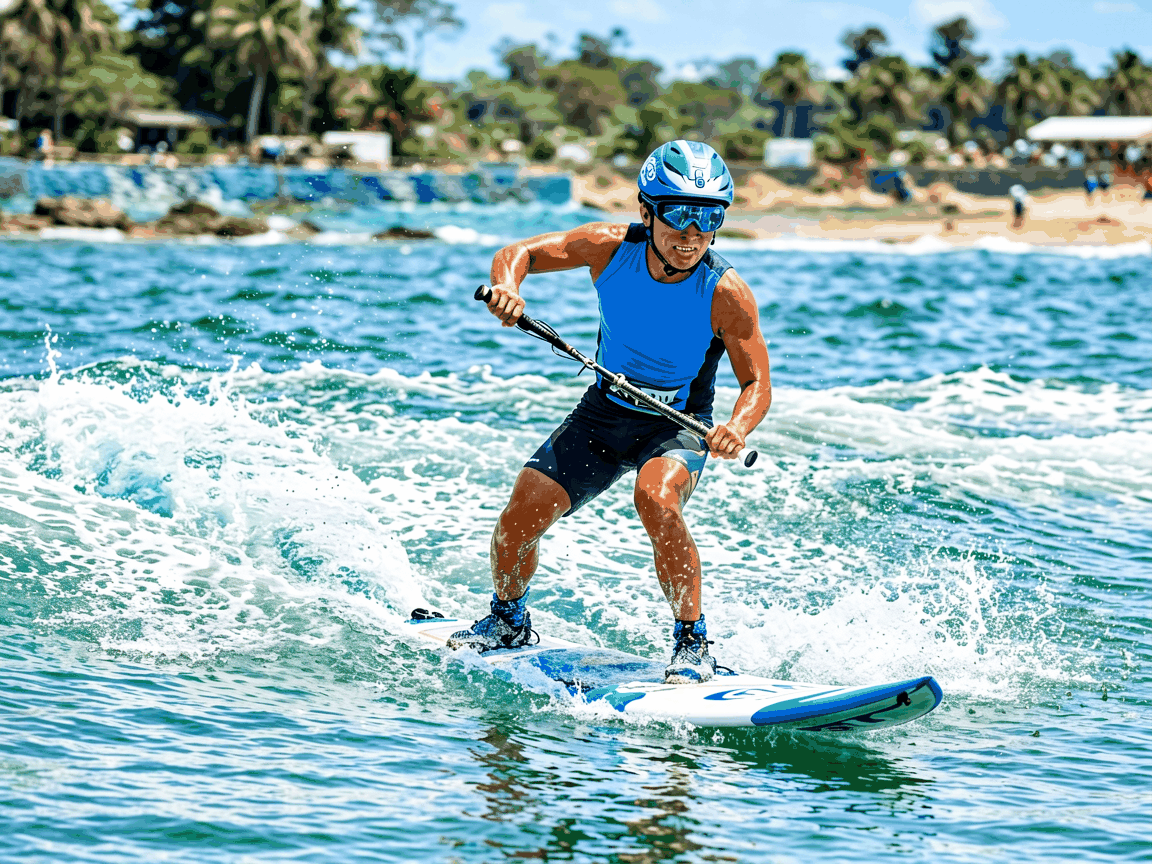
Electric surfboards enable wave-independent riding in flat water, lakes, rivers, and coastal areas with inconsistent swell. This expands accessibility for beginners learning balance and throttle control without requiring paddling strength or wave timing. Advanced users utilize the boards for tow-in foiling, aerial tricks, and long-distance cruising where traditional surfing is impractical due to distance or conditions.
Commercial applications include rental operations at resorts and marine parks, where standardized battery swapping and quick-charge systems reduce downtime. Lifeguard and patrol services use modified versions for rapid response in calm waters, benefiting from quiet operation and zero emissions. Training institutions integrate electric boards into curricula for jet ski transition or adaptive sports programs.
The quiet operation (<65 dB at 5m) and lack of exhaust make these boards suitable for environmentally sensitive zones where internal combustion engines are restricted. Regulatory compliance with local watercraft laws (e.g., speed limits, licensing) remains the operator’s responsibility, but suppliers provide documentation on power output, classification as electric personal watercraft, and CE marking for EU markets.
| Parameter | Typical Range | Notes |
|---|---|---|
| Battery Voltage | 36–72V DC | Determined by series cell count; affects motor speed and controller rating |
| Motor Power (Peak) | 5–15 kW | Limited by thermal dissipation and propeller cavitation |
| Energy Capacity | 3–8 kWh | Scales with ride time; higher capacity increases weight and volume |
| Top Speed | 35–45 km/h | Dependent on propeller efficiency, board drag, and rider weight |
| Charge Time (80%) | 1.5–2.5 hours | Based on 2–4 kW AC charger; DC fast charging available upon request |
| Operating Temperature | -10°C to +45°C | Beyond this range, battery performance and safety controls may activate |
| IP Rating | IP68 (1.5m, 30 min) | Standard for submersion; higher depths available with custom housings |
Supply Chain and Logistics
We maintain inventory of standardized battery packs, motor controllers, and sealed enclosures for lead times of 2–4 weeks. Custom configurations require 6–10 weeks for prototyping and validation, followed by 4–6 weeks for initial production run. Components are sourced from Tier 1 suppliers with automotive and marine qualifications, including ISO/TS 16949 and IATF 16949 certifications where applicable.
Packaging uses double-wall corrugated boxes with custom-cut EVA foam inserts to protect against impact and vibration during transit. Each unit includes desiccant packs, humidity indicators, and a torque-sealed outer wrap for moisture barrier. Shipments comply with UN 38.3 for lithium batteries and are labeled as Class 9 hazardous goods. Documentation includes MSDS, battery test summary, and declaration of conformity.
For international orders, we provide full customs documentation (commercial invoice, packing list, certificate of origin) and support DDP or FOB terms. Expedited air freight is available for urgent AOG situations, though ground or sea freight is recommended for cost efficiency on bulk orders. Real-time tracking and proactive delay notifications are standard for all shipments.
Technical Support and Lifecycle Management
Post-sale support includes firmware updates via USB or wireless OTA (where enabled), troubleshooting guides, and spare parts availability for 5+ years after product discontinuation. Critical spares include battery management boards, motor phase cables, throttle remotes, and sealing kits. We offer battery health monitoring services that log charge cycles, depth of discharge, and temperature exposure to predict end-of-life.
End-of-life options include battery recycling partnerships with certified facilities that recover lithium, cobalt, and nickel. Motor housings and aluminum components are designed for disassembly and material separation. We provide disassembly guides and material composition reports to support circular economy initiatives. Customers may opt for trade-in programs when upgrading to newer models with higher energy density or improved cooling.
Technical documentation is maintained in a secure portal accessible via customer login, including schematics, BOMs, test procedures, and software tools. Training sessions (virtual or on-site) are available for assembly, maintenance, and warranty procedures. All support interactions are tracked via ticketing system with SLA-defined response times for severity levels.
To discuss your electric surfboard system requirements, request a quotation, or review technical documentation, contact our engineering team. We provide detailed responses within one business day, including compatibility assessments, sample availability, and lead time estimates based on your specifications.