Electric Surfboard For Rental Business And Resorts
Electric Surfboard for Rental Business and Resorts
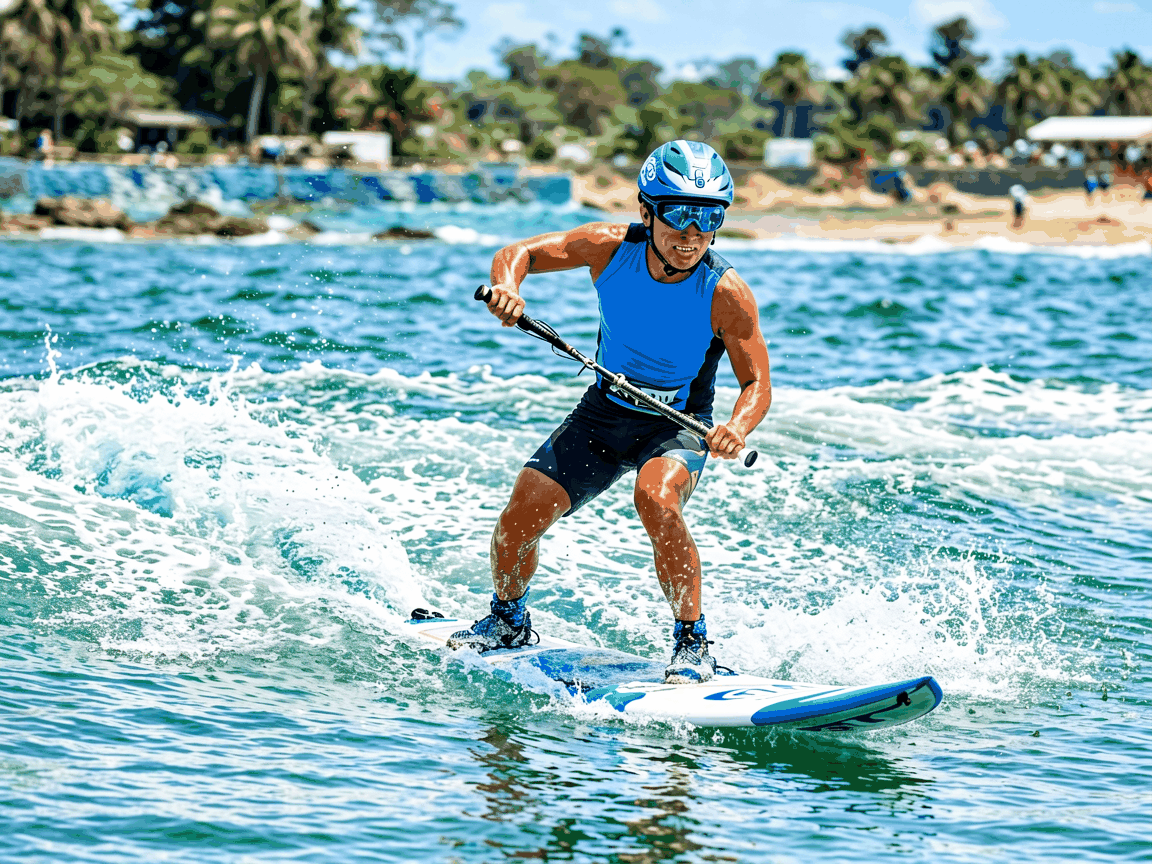
Electric surfboards designed for rental operations must balance durability, ease of maintenance, and user safety while delivering consistent performance across varying skill levels and water conditions. Unlike recreational models built for occasional personal use, commercial-grade units require reinforced components, standardized interfaces for quick battery swaps, and systems that minimize downtime between rentals. The following details the engineering considerations critical for high-utilization environments where equipment faces frequent handling, exposure to saltwater, and diverse user proficiency.
Key performance factors include motor efficiency under sustained load, battery thermal management during repeated charge cycles, and impact resistance of the board’s hull and propulsion unit. Rental fleets benefit from modular designs that allow technicians to replace batteries, fins, or control modules without specialized tools, reducing service time and operational costs. Safety systems such as automatic shutoff upon detachment, waterproof remote controls with limited range, and buoyancy aids integrated into the board’s structure are essential for minimizing liability and ensuring compliance with resort safety protocols.
Core Technical Specifications
The following table outlines typical technical parameters for electric surfboards configured for commercial rental use. Values represent common configurations based on industry demands for reliability and serviceability; actual specifications may vary according to specific resort requirements, battery chemistry choices, or regional safety regulations.
| Parameter | Typical Value | Notes |
|---|---|---|
| Motor Power (Continuous) | <5–8 kW | Sufficient for planing in chop to 0.5m waves; avoids overheating during 30-min rental cycles |
| Battery Capacity | 2–3 kWh (Lithium-ion NMC) | Provides 45–60 minutes of mixed-use runtime; supports 80% depth of discharge for longevity |
| Charge Time (80%) | 1.5–2.5 hours | Enables same-day turnover with dual-battery systems; requires Level 2 charger (240V) |
| Max Speed | 35–45 km/h | Electronically limited; adjustable via fleet management software for beginner zones |
| Board Length | 180–200 cm | Optimized for stability and maneuverability; accommodates users 150–190 cm tall |
| Weight (with battery) | 25–30 kg | Manageable for two-person handling; includes reinforced grab handles |
| Ingress Protection | IP68 (electronics), IP67 (motor) | Ensures resilience to prolonged submersion and high-pressure washing |
| Hull Construction | Rotomolded PE or carbon-reinforced EPS core | Impact-resistant; repairable with standard kits; UV-stabilized for tropical exposure |
Operational Advantages for Rental Fleets
Commercial deployment introduces operational constraints absent in consumer markets, necessitating design choices that prioritize throughput, reduce labor intensity, and extend service life. The following aspects directly influence return on investment in high-turnover environments where boards may see 6–8 rental cycles per day.
- Hot-swappable battery systems allow staff to exchange depleted units in under 90 seconds, eliminating charging bottlenecks during peak hours.
- Tool-free fin and leash attachments reduce pre-rental setup time and minimize parts loss or misplacement.
- Integrated GPS and usage tracking (optional) enables fleet managers to monitor runtime, location, and impact events for maintenance scheduling.
- Standardized charging docks with automatic alignment simplify overnight replenishment and reduce connector wear.
- Corrosion-resistant fasteners and marine-grade seals prevent saltwater degradation, extending service intervals between overhauls.
These features collectively reduce the operational burden on resort staff while improving asset utilization. For example, a fleet of 10 boards with dual batteries can support up to 16 rentals per day assuming 45-minute average use and 90-second swap times, significantly increasing revenue potential compared to single-battery configurations requiring longer downtime.
Safety and Compliance Considerations
Rental operations assume liability for user safety, making fail-safe mechanisms and clear operational boundaries critical design inputs. Electric surfboards for commercial use must incorporate layered safety systems that function reliably under minimal user training and adverse conditions.
- Magnetic kill switches attached to the rider’s wrist or life jacket trigger immediate motor cutoff upon detachment, preventing runaway boards.
- Remote controls feature buoyant, waterproof housings with limited range (typically 10–15m) to prevent loss and unauthorized use beyond designated zones.
- Speed limiting via geofencing or onboard software allows resorts to enforce lower speeds in beginner areas or near swimmers.
- High-visibility color options (e.g., safety orange, yellow) improve detectability in water, reducing collision risks with other watercraft or swimmers.
- Built-in diagnostics alert users and staff to low battery, motor faults, or seal breaches through LED indicators or app notifications.
These systems are not optional add-ons but integral to the board’s architecture, designed to meet or exceed guidelines from bodies such as the American Boat and Yacht Council (ABYC) and local maritime authorities overseeing water sports activities at resorts.
Maintenance and Serviceability
Long-term value in rental fleets depends on predictable maintenance intervals, access to spare parts, and the ability to perform repairs with minimal specialized training. Design choices around modularity, material selection, and sealing directly affect total cost of ownership.
Common service points include battery connectors, propeller shafts, sealing glands, and control electronics. Boards designed for rental use often feature:
- Quick-disconnect motor mounts allowing propeller inspection or replacement in under 5 minutes.
- Accessible battery compartments with tool-less latches and clear polarity markings.
- Modular control units that can be swapped as complete units, reducing troubleshooting time.
- Sacrificial anodes on metal components to mitigate galvanic corrosion in saltwater environments.
- Drain plugs and vent valves to prevent internal condensation buildup after washing or submersion.
Preventive maintenance schedules typically recommend rinsing with fresh water after each use, monthly inspection of seals and fasteners, and quarterly battery health checks. Spare part availability and manufacturer support responsiveness are key factors in minimizing fleet downtime.
Environmental and Operational Adaptability
Resort locations vary widely in water conditions, from calm lagoons to exposed coastal breaks, requiring equipment that performs reliably across spectra of salinity, temperature, and wave action. Electric surfboards must maintain consistent thrust and handling characteristics whether operating in 25°C tropical waters or 15°C temperate lakes.
Thermal management systems regulate battery and motor temperatures during prolonged use, preventing performance degradation in high-heat environments. Conversely, low-temperature battery chemistries and insulated enclosures ensure adequate range in cooler climates. Hull designs often incorporate rocker profiles and concave decks tailored to typical resort wave conditions—flatter rocks for flatwater stability, increased nose lift for chop handling.
Additionally, UV-stabilized materials and salt-resistant coatings prevent surface degradation and discoloration from prolonged sun exposure, preserving both aesthetics and structural integrity over multiple seasons.
For technical consultations, customization inquiries, or fleet-specific configuration details, contact our engineering team to discuss your resort’s operational requirements, safety protocols, and expected utilization patterns.
Request Technical Specification Sheet