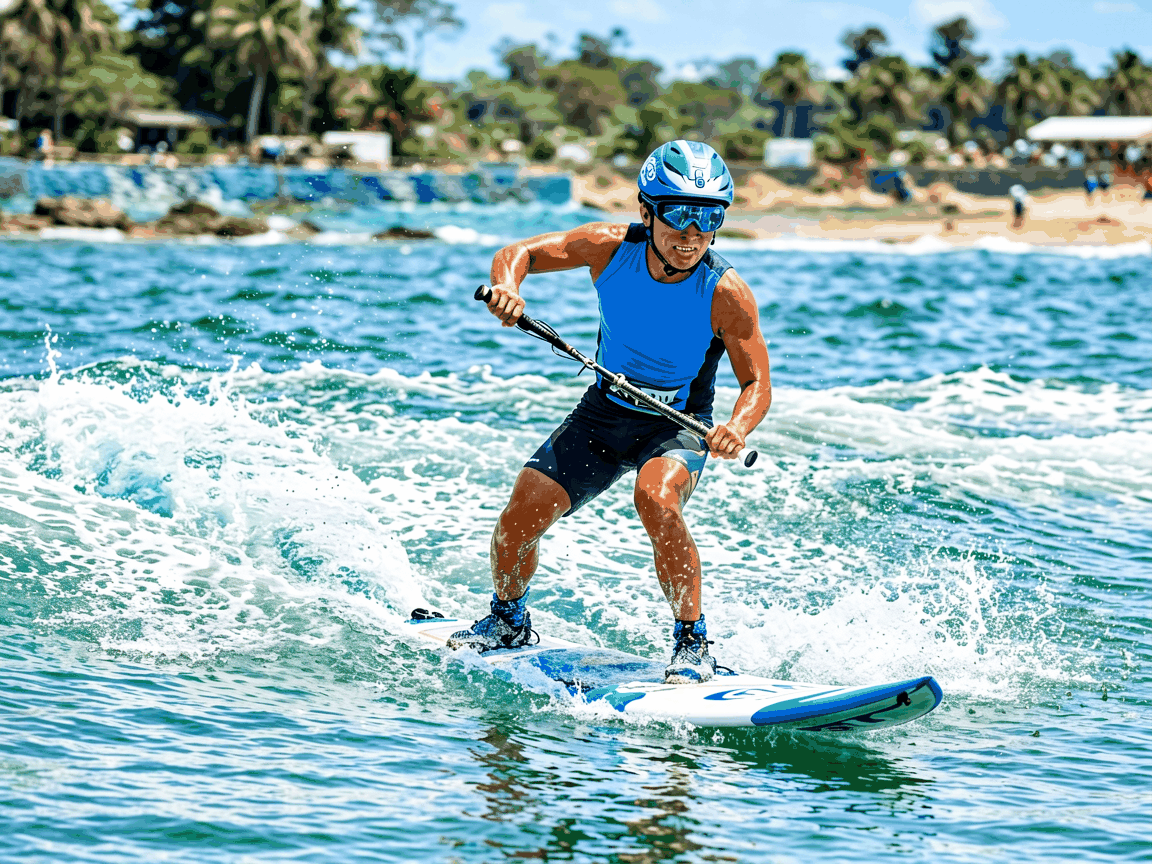
Electric Surfboard For Sale
Electric Surfboard for Sale
Electric surfboards represent a significant advancement in personal watercraft technology, combining hydrodynamic design with electric propulsion systems to enable rider-controlled movement independent of wave conditions. Unlike traditional surfboards reliant on ocean swells, these systems utilize rechargeable battery packs and jet-driven thrust mechanisms to generate forward motion, allowing operation in flat water, lakes, rivers, or coastal zones with minimal swell.
The core value proposition lies in extending ride time and accessibility—users are no longer constrained by tidal patterns, wind direction, or geographic location. For industrial and commercial applications, this translates into predictable operational windows for training, tourism fleets, or lifeguard response units, where consistent performance and low environmental impact are critical decision factors.
When evaluating electric surfboards for procurement, engineers prioritize measurable specifications over subjective claims. Key parameters include battery energy density (Wh/kg), thrust-to-weight ratio (N/kg), ingress protection rating (IP), and cycle life under saltwater exposure. These metrics directly influence total cost of ownership, safety compliance, and suitability for intended use cases—whether recreational rental, patrol operations, or specialized aquatic sports programs.
Technical Specifications
| Parameter | Typical Value | Notes |
|---|---|---|
| Motor Power (Peak) | 5–8 kW | Brushless DC, water-cooled |
| Battery Capacity | 2–4 kWh | Lithium-ion, NMC or LFP chemistry |
| Operating Voltage | 48–72 V DC | System-dependent, affects efficiency |
| Max Speed | 35–45 km/h | Dependent on rider weight and water conditions |
| Runtime (Typical) | 30–60 minutes | At 70% throttle; varies with load and temperature |
| Charge Time | 2–4 hours | Using Level 2 AC charger (220V) |
| Ingress Protection | IP68 (motor and battery) | Continuous submersion to 1.5m for 30 min |
| Board Dimensions | 180–200 cm L × 50–60 cm W × 10–15 cm T | Includes fin and jet housing |
| Total Weight (with battery) | 20–28 kg | Impacts portability and launch requirements |
Material and Construction
The structural integrity of an electric surfboard depends on the synergy between core material, outer laminate, and sealing methodology. Most high-performance models utilize an expanded polystyrene (EPS) or polyurethane (PU) foam core, chosen for its buoyancy-to-weight ratio and ease of shaping. This core is then encapsulated in a composite shell, typically fiberglass-reinforced epoxy or carbon fiber-reinforced polymer, to resist impact loads and torsional flex during high-speed maneuvering.
Sealing is critical—any breach in the enclosure risks water ingress into the battery or motor compartment, potentially causing short circuits or corrosion. Manufacturers employ multi-stage sealing: primary gaskets at cable penetrations, secondary potting of electronic assemblies, and tertiary surface coatings with marine-grade polyurethane. The jet pump housing, often made from molded nylon or PEEK, must withstand abrasive sand and debris while maintaining precise impeller clearance.
Thermal management is another key design consideration. Continuous high-power operation generates heat in both motor windings and battery cells. Effective solutions include water jackets around the motor stator, phase-change thermal pads between cells, and passive convection channels in the board’s underside. Boards lacking adequate thermal dissipation may experience power derating after 10–15 minutes of use, reducing usable runtime.
Performance and Operational Characteristics
Thrust response is not instantaneous due to the inertia of the water column in the jet pump. Riders experience a slight delay—typically 0.3–0.5 seconds—between throttle input and acceleration, a factor that requires adaptation compared to gasoline-powered personal watercraft. This characteristic affects low-speed maneuverability in confined spaces, such as docks or swimming zones, where precise control is essential.
Energy efficiency varies significantly with speed. At displacement speeds (below 15 km/h), hydrodynamic drag dominates, requiring disproportionate power for minimal gain. Efficiency peaks in the planing regime (20–30 km/h), where the board rides on top of the water, minimizing wetted surface area. Operating consistently above 35 km/h increases drag exponentially, cutting runtime by up to 40% compared to moderate cruising speeds.
Stability is influenced by width, rocker profile, and fin configuration. Wider boards (55–60 cm) offer greater initial stability, beneficial for beginners or payload-heavy applications like carrying rescue equipment. Narrower profiles (50–52 cm) reduce drag and improve agility but demand higher rider skill. Most commercial models feature a single rear fin or twin stabilizers to balance tracking and turn responsiveness, with some offering adjustable fin systems for mission-specific tuning.
Applications in Industrial and Commercial Settings
Beyond recreation, electric surfboards serve specific operational niches where traditional boats or jet skis are impractical due to size, noise, or emissions. In lifeguard operations, their quiet operation allows approach to distressed swimmers without alerting them via noise, reducing panic. Rapid deployment from shore or pier enables faster response times than swimming, particularly in rip currents or offshore winds where lifeguards may struggle to reach victims.
Tourism operators utilize fleets for guided excursions in calm coastal areas, lagoons, or reservoir systems where motorized vessels are restricted. The zero-emission profile aligns with eco-tourism certifications, and the lack of exhaust or fuel spillage permits use in protected marine zones. Training programs for water sports instructors benefit from standardized performance—unlike wave-dependent surfing, electric boards provide consistent power delivery for skill progression drills.
Industrial inspection teams in offshore wind farms or underwater pipeline projects use modified versions equipped with sensor mounts to conduct visual surveys of submerged structures. The low signature and maneuverability allow close approach to pilings or cable routes without disturbing sediment or marine life. Battery endurance supports multiple survey runs per charge, reducing the need for frequent vessel repositioning.
Customization and Integration Options
Procurement teams often require adaptations beyond standard configurations to meet organizational protocols or environmental constraints. Common customization points include battery capacity scaling—for example, upgrading from 2 kWh to 4 kWh to extend runtime for patrol loops—or modifying the thrust vector via nozzle angle adjustment to optimize for either speed or low-speed torque.
Communication integration is another frequent request. Boards can be fitted with Bluetooth-enabled handlebar controls that transmit diagnostics (battery state, motor temperature, error codes) to a wrist-mounted display or central monitoring station. For fleet management, GPS tracking modules and geofencing alerts help supervisors monitor rider location and enforce operational boundaries, particularly in public swimming areas or regulated zones.
Safety enhancements include automatic shutoff lanyards that cut power if the rider falls off, LED navigation lights for low-visibility operation, and impact-resistant bumpers molded into the rails. Some clients specify corrosion-resistant fasteners (grade 316 stainless or titanium) for saltwater environments, or alternative battery chemistries like lithium iron phosphate (LFP) for improved thermal stability and longer cycle life, albeit at a slight weight penalty.
Quality Assurance and Testing
Industrial buyers require assurance that each unit meets defined performance and safety thresholds before deployment. Quality control begins at the material stage—foam cores are density-tested, composite laminates are inspected for void content via ultrasonic scanning, and battery cells undergo impedance matching and capacity grading. Assembly involves torque-controlled fastening of critical joints, followed by dielectric strength testing of all electrical connections to ground.
Functional validation includes wet testing in controlled water tanks to verify jet thrust, steering response, and seal integrity under dynamic load. Boards are subjected to accelerated corrosion cycles (salt fog per ASTM B117) and thermal shock tests (-20°C to +60°C) to simulate seasonal extremes. Battery packs undergo overcharge, short-circuit, and nail penetration testing per UN 38.3 to validate safety under abuse conditions.
Final acceptance testing often includes a standardized endurance run: maintaining 20 km/h for 45 minutes while logging voltage, temperature, and vibration data. Any deviation beyond 10% from baseline triggers investigation. Documentation packs include test certificates, material safety data sheets (MSDS) for batteries, and conformity declarations to relevant directives (e.g., RED, RoHS, or local marine equipment regulations).
Purchase Considerations
When sourcing electric surfboards for commercial use, total cost of ownership extends beyond the unit price. Factors such as battery replacement cycle (typically 300–500 full cycles before 80% capacity retention), charger infrastructure needs, and staff training time must be budgeted. Saltwater exposure accelerates wear on seals and connectors, necessitating more frequent inspection intervals than freshwater use—often monthly versus quarterly.
Spare parts availability is a practical concern. Proprietary motor controllers or battery management systems may have long lead times, so buyers should confirm whether critical components are stocked locally or require overseas shipment. Modular design—where the battery, motor, and electronics are accessible via tool-free hatches—reduces downtime during maintenance compared to fully potted or glued assemblies.
Regulatory compliance varies by jurisdiction. Some regions classify electric surfboards as “personal watercraft” requiring registration, operator licensing, or insurance coverage. Others treat them as recreational devices akin to kayaks. Buyers must verify local maritime authority requirements before deployment, particularly for commercial training or rental operations where liability exposure is higher.
For technical inquiries, customization requests, or bulk procurement details, contact our engineering team to discuss your specific operational requirements.
Request Technical Consultation