High Quality 15Kw Surfboard Suppliers
High Quality 15kW Surfboard Suppliers
Selecting a supplier for 15kW electric surfboard systems requires evaluating technical capabilities beyond general claims. Industrial buyers prioritize measurable performance, consistent manufacturing tolerances, and documented validation processes. This page outlines the engineering considerations, material specifications, and quality controls relevant to sourcing high-performance 15kW surfboard propulsion systems.
Technical Specifications of 15kW Surfboard Systems
A 15kW surfboard propulsion system integrates a brushless DC motor, sealed power electronics, and a lithium-ion battery pack designed for marine environments. Continuous power output is maintained at 15kW under load, with peak capabilities reaching 18–20kW for short durations. Voltage typically ranges from 48V to 72V DC, depending on battery configuration and motor winding design. Efficiency targets exceed 90% at cruising load, minimizing thermal buildup during extended operation.
Motor housings are constructed from marine-grade aluminum alloy (typically 6061-T6 or equivalent) with anodized surfaces for corrosion resistance. Sealing achieves IP68 rating for submersion beyond 1.5 meters. Propeller designs use composite materials (carbon fiber-reinforced polymer) optimized for cavitation resistance and thrust efficiency at planing speeds between 25–35 km/h. Control systems include field-oriented control (FOC) algorithms with real-time temperature and current monitoring.
Material Selection and Manufacturing Considerations
Material choices directly impact durability, weight, and performance consistency. Motor stators use laminated silicon steel with copper windings rated for Class H insulation (180°C tolerance). Rotors incorporate neodymium magnets (N35SH or higher) secured with titanium sleeves to prevent displacement under centrifugal forces. Battery enclosures use vacuum-formed ABS or polycarbonate with internal foam padding for vibration damping.
Manufacturing processes include CNC machining for motor housings, precision winding for stator coils, and automated potting for electronics encapsulation. Each unit undergoes pressure testing, insulation resistance measurement (>100MΩ at 500V DC), and functional validation under simulated load cycles. Traceability is maintained via laser-etched serial numbers linking to material certificates and test records.
Performance Validation and Testing Protocols
Suppliers validate 15kW systems through standardized test sequences: no-load speed verification, load torque mapping, thermal run duration (minimum 30 minutes at 15kW), and ingress protection confirmation. Vibration testing follows IEC 60068-2-6 standards, simulating ocean chop and transport conditions. Electromagnetic compatibility (EMC) testing ensures compliance with IEC 61000-4-2 for electrostatic discharge and radiated immunity.
Battery systems undergo capacity retention testing (80% minimum after 300 cycles at 0.5C), overcharge/overdischarge protection validation, and short-circuit resilience checks. Thermal management effectiveness is verified via infrared thermography during sustained operation. All test data is archived and available for review upon request, supporting due diligence for OEM integration.
Customization Options for Industrial Applications
Standard 15kW configurations serve as a baseline for adaptation to specific board designs, rider weight profiles, and operational requirements. Shaft length, propeller pitch, and mounting interface dimensions are adjustable to match hull integration points. Control firmware can be tuned for throttle response curves, regenerative braking levels, and speed limiting per regional regulations.
Battery capacity scalability allows range extension from 20 to 45+ minutes of continuous use through parallel cell arrangements or higher energy-density chemistry. Connector types (e.g., XT90, M12, or custom waterproof variants) and communication protocols (CANopen, UART, or analog) are selectable. Cosmetic finishes include matte black anodizing, grayscale powder coating, or custom gelcoat-matched surfaces for seamless board integration.
| Parameter | Typical Range | Notes |
|---|---|---|
| Continuous Power | 15kW ±5% | At 25°C ambient, stabilized |
| Voltage Range | 48–72V DC | Dependent on battery series count |
| Motor Efficiency | >90% at 75% load | Measured at shaft output |
| IP Rating | IP68 (1.5m, 30min) | Motor and electronics housing |
| Weight (Motor + Controller) | 4.5–6.0kg | Excludes battery and propeller |
| Operating Temp. | -10°C to 45°C | With derating above 40°C |
Quality Control Philosophy and Traceability
Quality assurance begins with incoming material inspection: magnet flux testing, winding continuity checks, and housing dimensional verification. In-process controls include stator winding resistance measurement, encoder alignment validation, and potting viscosity monitoring. Final acceptance testing combines electrical performance, mechanical integrity, and environmental sealing checks against defined acceptance criteria.
Non-conformance triggers root cause analysis using 8D or DMAIC methodologies, with corrective actions documented and verified for effectiveness. Statistical process control (SPC) tracks critical parameters like air gap consistency and insulation resistance over production batches. Suppliers maintain ISO 9001 certification as a baseline, with additional compliance to ISO 14001 for environmental management and ISO 45001 for occupational health and safety where applicable.
Applications in Marine Recreation and Professional Use
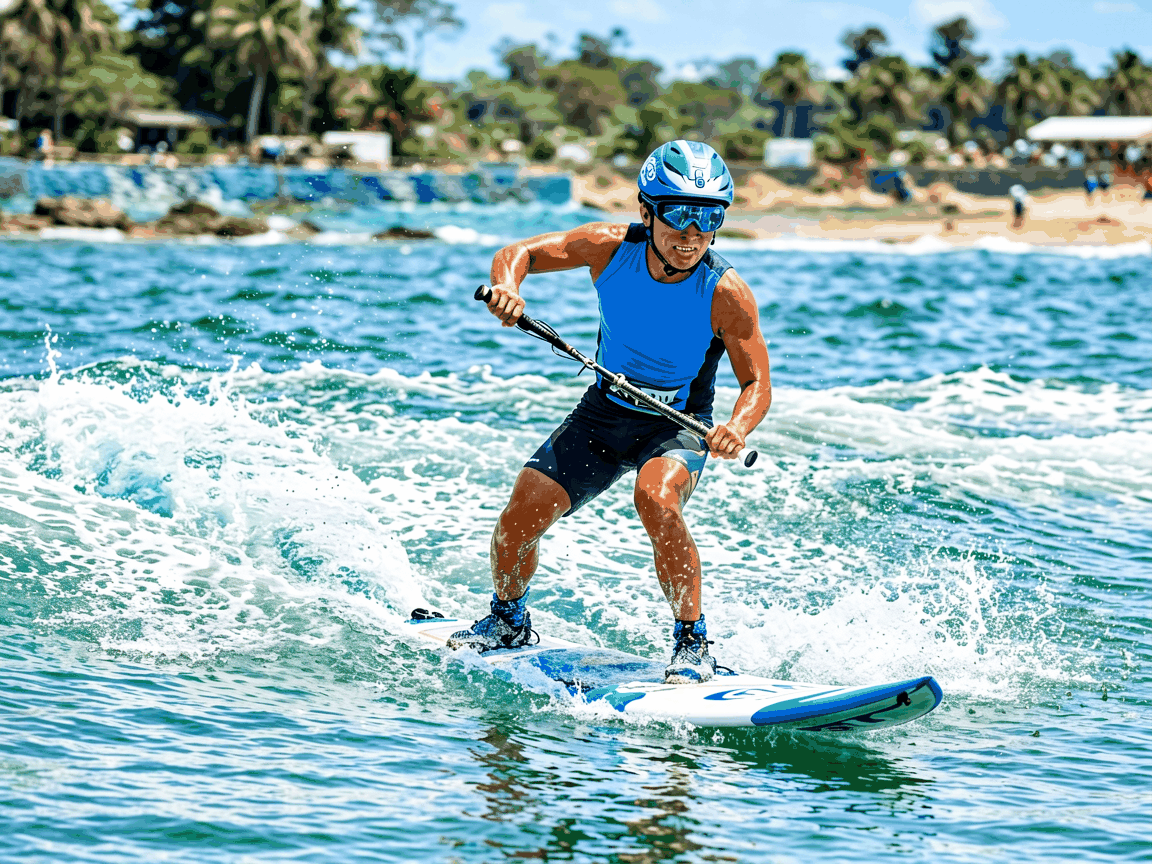
15kW systems are selected for high-performance electric surfboards where rapid acceleration and sustained planing are required. Typical users include advanced riders seeking wave-independent propulsion, lifeguard agencies for rapid response in calm waters, and rental operators needing durable, low-maintenance fleets. The power-to-weight ratio enables quick takeoffs from flat water and consistent speed maintenance against chop or light wind.
In professional training environments, consistent power delivery allows repeatable technique development without wave variability. Rescue applications benefit from instant thrust and quiet operation, minimizing disturbance to victims or marine life. Commercial tour operators value the reduced noise profile and zero emissions compared to internal combustion alternatives, supporting access to regulated waterways.
Integration considerations include weight distribution effects on board stability, cooling system placement to avoid flow obstruction, and wireless safety lanyard compatibility. Suppliers provide CAD models, wiring schematics, and installation guides to facilitate OEM adoption. Field serviceability is designed into the system through modular connectorization and accessible fastener points.
Inquiry and Technical Support Process
Technical evaluation begins with submission of application details: intended use case, rider weight range, desired runtime, board dimensions, and environmental conditions (freshwater/saltwater, temperature extremes). This information enables accurate system sizing, battery configuration recommendation, and validation of cooling adequacy. Response includes a preliminary specification document, lead time estimate, and sample availability options.
Sample units are available for validation testing, typically shipped with instrumented data logging capability to record temperature, current, voltage, and speed profiles during trials. Feedback from sample testing informs final production specifications. Volume pricing is structured around annual forecast quantities, with tooling amortization discussed separately for custom mechanical interfaces.
To initiate a technical discussion or request a quotation, please use the contact form below. Provide your project specifics to receive a tailored engineering response.
Request Technical Consultation