High Quality Carbon Fiber Electric Surfboard
High Quality Carbon Fiber Electric Surfboard
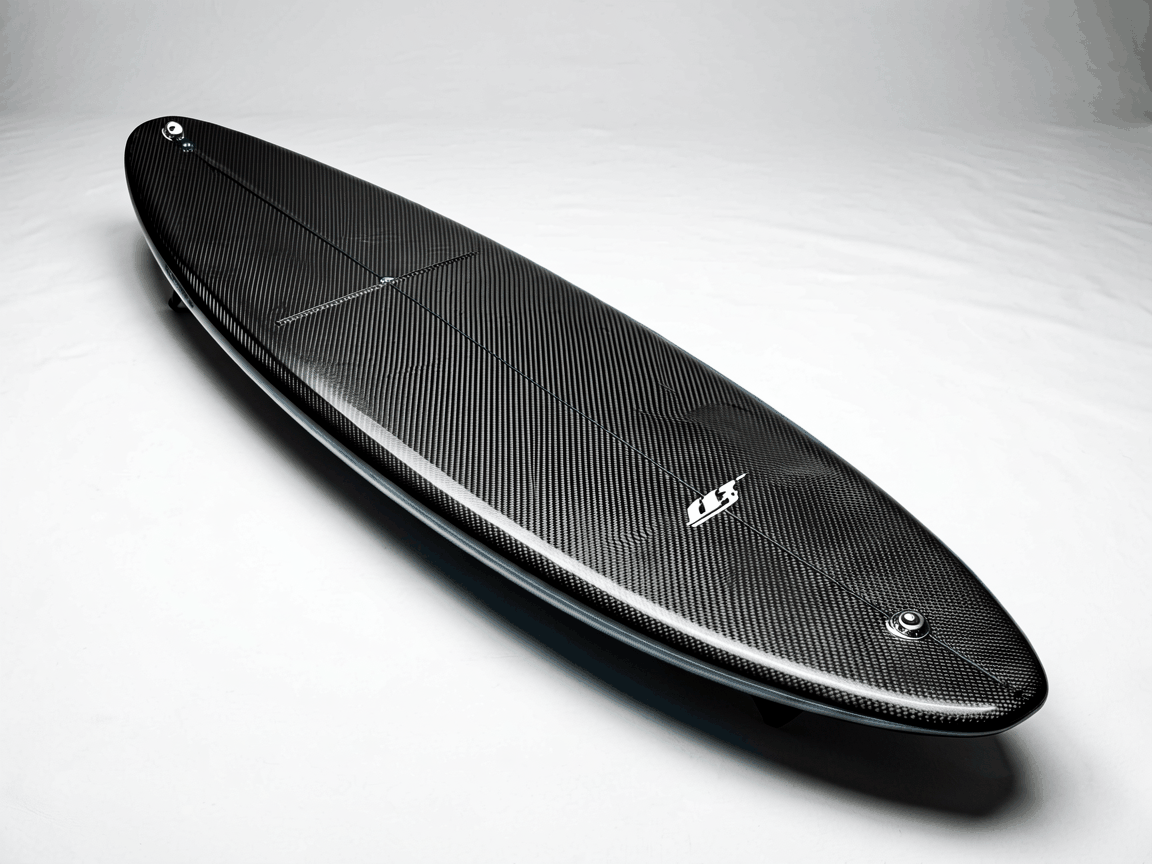
Carbon fiber electric surfboards combine lightweight composite materials with integrated electric propulsion systems for personal watercraft applications. The core structure utilizes unidirectional and woven carbon fiber reinforcements impregnated with epoxy resin, cured under vacuum pressure to achieve high strength-to-weight ratios. This construction method minimizes weight while maintaining sufficient rigidity to withstand dynamic hydrodynamic loads during operation.
The electric propulsion system consists of a sealed brushless DC motor, lithium-ion battery pack, and electronic speed controller housed in watertight compartments. Motor placement is typically rear-mounted to optimize thrust efficiency and reduce cavitation. Battery capacity ranges from 2 to 5 kWh depending on model, providing operational durations between 30 and 90 minutes at cruising speeds of 20 to 35 km/h.
Control interfaces include handheld wireless throttles and optional smartphone connectivity for performance monitoring. Safety features encompass automatic motor cutoff upon detachment, leak detection sensors, and thermal management systems for battery protection. All electrical components meet IP68 ratings for continuous submersion.
Structural Design and Material Specification
The board’s hull employs a sandwich construction with carbon fiber skins over a closed-cell PVC foam core. Core density typically ranges from 60 to 80 kg/m³, selected to balance buoyancy, impact resistance, and weight. Skin thickness varies between 1.2 and 2.0 mm based on load distribution analysis, with increased thickness in high-stress zones such as the motor mount and footstrap areas.
Fiber orientation follows a quasi-isotropic layup: 0°/90° for axial and torsional stiffness, supplemented with ±45° layers to manage shear loads from turning maneuvers. Resin content is maintained between 35% and 40% by weight to ensure proper fiber wet-out without excess brittleness. Post-cure thermal cycling at 80°C for 2 hours enhances glass transition temperature and long-term dimensional stability.
Surface finish includes a UV-resistant gelcoat or polyurethane topcoat to prevent resin degradation from solar exposure. Edge protection utilizes reinforced rubber or thermoplastic strips to mitigate damage from impacts with debris or docks. Drainage channels are integrated into the deck design to prevent water accumulation in footwells.
Propulsion System Performance Characteristics
Motor power output ranges from 5 to 15 kW continuous, with peak ratings up to 20 kW for acceleration bursts. Efficiency exceeds 85% across the operating range due to permanent magnet design and optimized winding configuration. Kv rating (RPM per volt) is selected between 150 and 250 to match propeller characteristics and desired speed range.
Propellers are typically three-blade, composite or stainless steel, with diameters between 180 and 220 mm and pitch ranging from 50 to 80 mm. Clearance between propeller tip and hull is maintained at minimum 15 mm to prevent ventilation and cavitation erosion. Propeller shaft seals use dual-lip nitrile rubber with stainless steel retainers to withstand saltwater exposure.
Battery systems use lithium nickel manganese cobalt oxide (NMC) or lithium iron phosphate (LFP) chemistries. NMC offers higher energy density (180–220 Wh/kg) for extended range, while LFP provides superior thermal stability and cycle life (2000+ cycles). Battery management systems monitor cell voltage, temperature, and state of charge with passive balancing and overcurrent protection.
Typical Specifications Table
| Parameter | Typical Range | Notes |
|---|---|---|
| Overall Length | 1800–2200 mm | Dependent on model and intended use |
| Width (Max) | 600–800 mm | Measured at widest point of deck |
| Thickness (Center) | 100–150 mm | Includes core and skin layers |
| Weight (No Battery) | 12–18 kg | Carbon fiber hull only |
| Battery Weight | 8–15 kg | Varies with capacity and chemistry |
| Max Speed | 30–45 km/h | Dependent on motor, prop, and rider weight |
| Operating Time | 30–90 min | At 20–25 km/h cruising speed |
| Charge Time | 2–4 hours | Using Level 2 AC charger (220V) |
| Operating Temperature | -10°C to 40°C | Ambient water and air range |
Customization Options and Engineering Considerations
Board dimensions can be adjusted within structural limits to accommodate rider weight, height, and intended use case. Length modifications affect planing characteristics and stability; increasing length improves tracking but reduces maneuverability. Width adjustments influence initial stability and turning radius, with wider boards offering greater stability at low speeds but increased drag.
Motor and battery configurations are scalable based on performance requirements. Higher voltage systems (48V vs 36V) reduce current draw for equivalent power, improving efficiency and reducing thermal losses. Battery capacity can be increased in modular increments, though this affects center of gravity and requires repositioning to maintain trim.
Footstrap and handle placements are customizable based on ergonomic studies and rider preference. Strap angles and positions are adjusted to optimize leverage during turns and jumps. Deck surface textures vary from diamond grip to smooth finishes, selected based on intended use (e.g., racing vs recreational).
Quality Control and Manufacturing Process
Layup precision is maintained through CNC-cut fabric templates and laser-guided placement tools. Vacuum bagging pressure is monitored at 0.8 bar ±10% during cure to ensure consistent consolidation. Temperature logs are recorded throughout the cure cycle to validate resin polymerization and Tg achievement.
Post-cure inspection includes ultrasonic thickness mapping to detect resin-rich or resin-deficient zones. Spark testing identifies pinholes in the gelcoat layer. Motor housings undergo hydrostatic pressure testing at 1.5 times rated depth for 10 minutes to verify seal integrity. Battery packs are subjected to vibration and thermal cycling tests per IEC 62619 standards.
Final assembly includes torque verification of motor mounts and propeller nuts using calibrated wrenches. Electronics undergo functional testing across throttle range and communication protocols. Each unit receives a unique serial number linked to material batch records, cure logs, and test data for traceability.
Applications in Commercial and Recreational Sectors
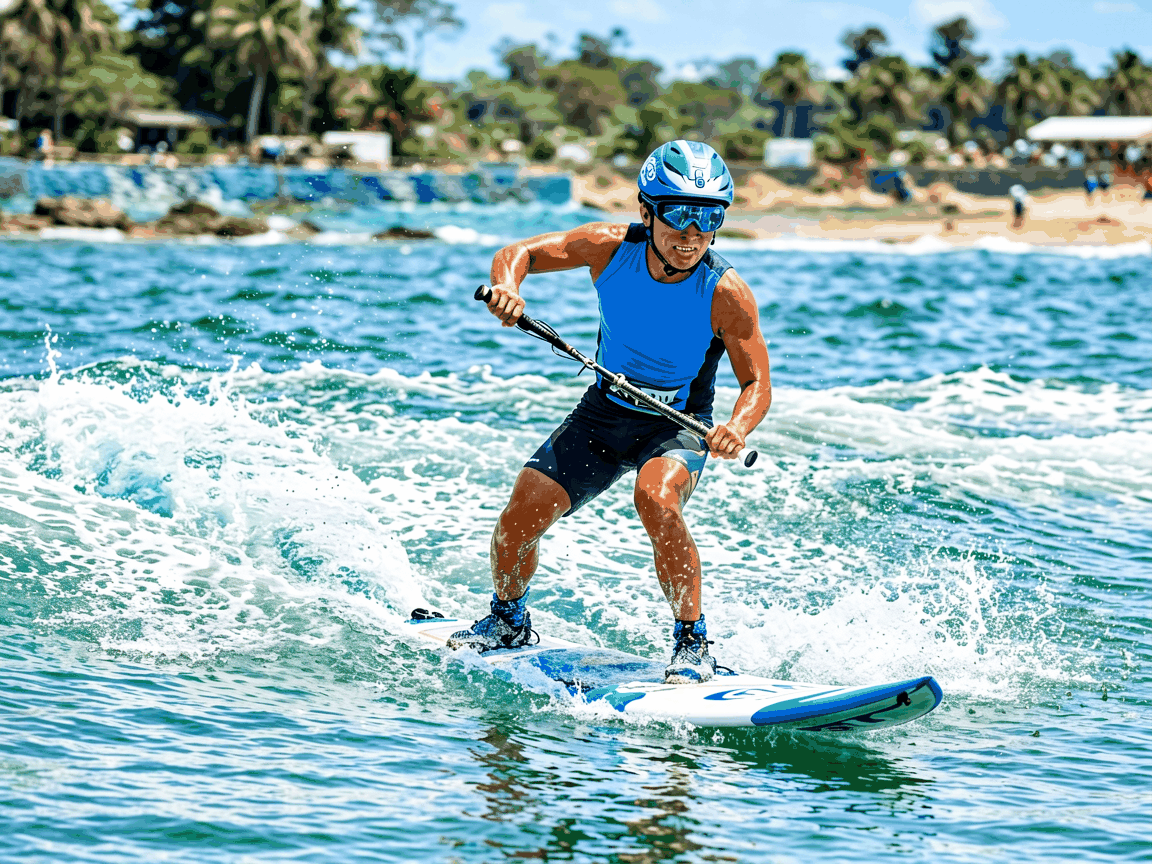
In commercial operations, these boards serve as efficient patrol tools for lifeguards and marine conservation teams, enabling rapid response in shallow or congested waters where traditional vessels are impractical. Their low noise profile and zero emissions allow operation in protected zones without disturbing wildlife or violating noise ordinances.
For rental and tourism businesses, the modular battery system supports quick swap operations, minimizing downtime between uses. Standardized charging infrastructure allows multiple units to be serviced simultaneously. The durable construction withstands frequent use in saltwater environments with minimal maintenance requirements beyond rinsing and visual inspection.
In competitive racing, the high stiffness-to-weight ratio enables precise handling at speed, while the instant torque delivery allows rapid acceleration out of turns. Customizable foil compatibility (where applicable) further enhances performance in specialized disciplines. Training programs benefit from consistent performance characteristics across units, reducing variability in skill assessment.
For detailed specifications, customization requests, or technical consultation regarding high quality carbon fiber electric surfboards, please contact our engineering team.
Request Technical Specification Sheet