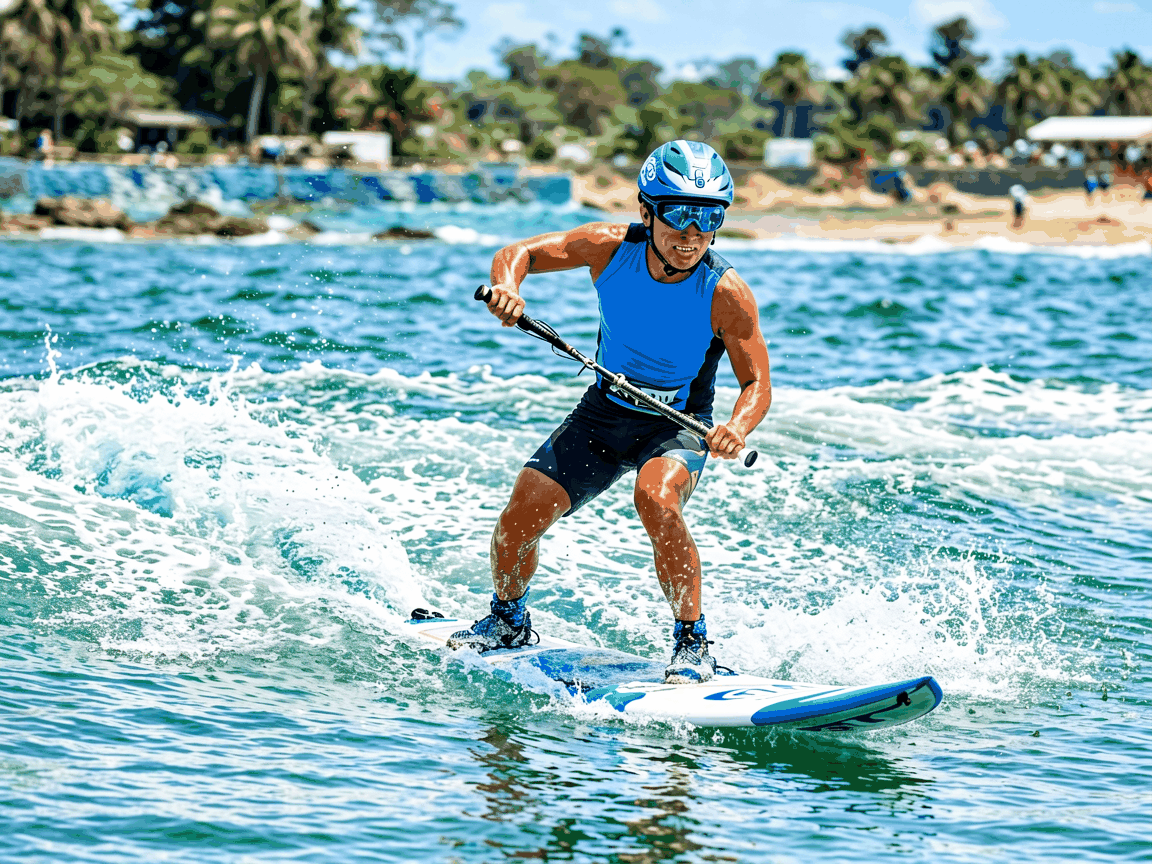
High Quality Epp Surfboard Factory
High Quality EPP Surfboard Factory: Technical Specifications and Manufacturing Capabilities
Expanded polypropylene (EPP) surfboards represent a specialized segment of composite water sports equipment where material consistency, impact resistance, and weight-to-strength ratio directly influence performance and longevity and user safety. Manufacturing these boards requires precise control over foam density, cell structure uniformity, and bonding integrity between core and skin layers. This page details the technical parameters, production processes, and quality validation methods employed in EPP surfboard fabrication to support informed procurement decisions.
Material Properties and Performance Characteristics
EPP foam used in surfboard cores typically ranges from 30 to 60 kg/m³ density, with 45 kg/m³ being the most common for performance-oriented models. This density range provides sufficient compressive strength (>180 kPa at 10% strain) to withstand repeated impact loads while maintaining buoyancy characteristics. The closed-cell structure (>95% closed cells) limits water absorption to less than 2% by volume after 24-hour submersion, critical for maintaining consistent weight and flex patterns during extended use.
Thermal stability is another key parameter; EPP retains 90% of its mechanical properties after exposure to 80°C for 72 hours, making it suitable for storage in hot climates or vehicle interiors. The material’s inherent energy absorption capacity (approximately 25 kJ/m³) reduces ding formation from rail impacts compared to traditional polystyrene cores, though this benefit varies with skin thickness and layup schedule.
Skin materials are typically applied via vacuum bagging or compression molding to ensure uniform resin distribution. Common options include:
- 6 oz fiberglass cloth with epoxy resin (tensile strength ~350 MPa)
- 4 oz carbon fiber fabric (tensile strength ~4000 MPa, stiffness 230 GPa)
- Bamboo veneer overlays (specific stiffness 45 GPa/(g/cm³))
- Innegra S hybrid fabrics (impact resistance improvement ~30% vs fiberglass alone)
Skin thickness generally ranges from 0.8 to 1.5 mm per side, directly affecting flexural stiffness and impact resistance. Thicker skins increase resistance to localized damage but reduce torsional flex, altering board feel during turns.
Manufacturing Process and Dimensional Control
Core fabrication begins with mold filling using steam-chest molding of EPP beads. Precise control over steam pressure (typically 0.8–1.2 bar) and dwell time (90–180 seconds) determines final density distribution and weld strength between beads. Inhomogeneous heating can cause density variations exceeding ±8%, leading to unpredictable flex patterns or weak spots prone to compression set.
After molding, cores undergo CNC machining to achieve final contours. Tolerances are maintained within ±0.5 mm for critical dimensions (width, thickness at key stations) and ±1.0 mm for overall length. Rocker profiles are verified using laser profilometry with 0.1 mm resolution to ensure symmetry within 0.3 mm deviation between port and starboard sides.
Skin application follows a controlled layup schedule. Resin content is monitored via weight gain measurements, targeting 40–45% resin by weight for fiberglass skins. Vacuum pressure is maintained at 0.8–0.9 bar during cure to prevent void formation; void content exceeding 2% significantly reduces interlaminar shear strength.
Post-cure machining includes fin box installation and leash plug routing. Fin boxes are typically installed using epoxy-based adhesives with shear strength >20 MPa after 24-hour cure at 25°C. Leash plugs incorporate stainless steel inserts (316 grade) molded into the deck to prevent pull-out under loads exceeding 1.5 kN.
Final shaping includes rail blending and bottom contour finishing. Rail thickness is measured at 100 mm intervals using digital calipers, with target variance <0.3 mm between symmetrical points. Bottom contours (single concave, double concave, or vee) are validated against CAD templates using coordinate measuring machines with 0.05 mm precision.
Quality Validation and Testing Protocols
Quality assurance incorporates both in-process checks and final product testing. Density verification occurs at three points (nose, midsection, tail) using gravimetric methods, with acceptance criteria of ±5% from target value. Cell structure uniformity is assessed via micro-CT scanning on sample cores, requiring >90% of cells to fall within 0.5–2.0 mm diameter range for consistent performance.
Flexural testing follows a modified three-point bend setup with support span of 1000 mm and load applied at 500 mm from nose. Load-deflection curves are recorded, with stiffness (slope of initial linear region) required to match ±10% of baseline model. Recovery ratio after 50% strain cycling (1000 cycles) must exceed 85% to ensure long-term resilience.
Impact resistance is evaluated using drop-weight testing (1 kg mass from 1.5 m height onto deck center). Acceptable damage is limited to surface resin cracking without core penetration or delamination exceeding 10 mm radius from impact point. Water absorption testing follows ISO 2896-2, with maximum allowable gain of 1.5% by weight after 72-hour submersion.
Visual inspection includes UV fluorescence detection for resin inhomogeneity and holographic interferometry for debonding detection. All boards undergo flexural resonance testing (5–500 Hz sweep) to detect internal delaminations or voids through shifts in natural frequency modes. Final weight is measured to within ±20 g of target, as deviations affect paddling efficiency and swing weight.
Packaging for shipment uses double-wall corrugated boxes with corner protectors and foam end caps. Internal stabilization prevents longitudinal shifting during transit; acceleration limits are set to <1.5 G vertical and <0.8 G lateral to avoid impact damage. Each unit includes a desiccant packet to control humidity during storage and transport.
Customization Options and Application Engineering
EPP surfboards are commonly specified for applications requiring high durability in rental fleets, training programs, or rocky shoreline environments where impact resistance outweighs ultimate performance characteristics. The material’s buoyancy stability allows consistent performance across varying water temperatures and salinity levels, unlike some thermoplastic cores that exhibit measurable density shifts.
Length customization typically ranges from 5’0” to 10’6” in 2-inch increments, with width and thickness scaled proportionally to maintain intended volume and stability characteristics. For example, a 6’0” shortboard may start at 18.5” width and 2.25” thickness, scaling to 20.5” width and 2.75” thickness for an 8’0” funboard to preserve similar paddling dynamics.
Rocker profiles can be adjusted within ±15 mm of baseline without compromising structural integrity, though extreme modifications (>20 mm tail lift) may require increased skin thickness or additional carbon reinforcement in high-stress zones. Concave depth is generally limited to 12 mm to avoid excessive stress concentrations at the stringer equivalent (though EPP cores lack stringers, the bend stiffness axis remains critical).
Fin systems are interchangeable via standard US base or Futures mounts, with installation torque specifications of 1.2–1.5 Nm to prevent insert stripping. Leash plug placement is typically 300 mm from tail for shortboards and 400–450 mm for longer models, adjusted based on intended stance width and leverage requirements.
Color options are limited to surface-resin tinting or laminated veneers due to EPP’s thermal sensitivity; temperatures above 100°C can cause core deformation. Available pigments include iron oxide-based tones (UV stable) and select organic dyes with <5% fading after 500 hours UV exposure (QUV-B testing).
For OEM clients, we provide CAD-compatible STEP files of core geometries and layup schedules upon NDA execution. Tooling fees apply for custom rocker outlines or concave profiles, typically amortized over orders exceeding 50 units.
Typical Specifications Table
| Parameter | Typical Value | Customizable Range | Testing Standard |
|---|---|---|---|
| Core Density | 45 kg/m³ | 30–60 kg/m³ | ISO 845 |
| Water Absorption (24h) | <1.5% vol | <1.0% vol (with barrier coating) | ISO 2896-2 |
| Flexural Stiffness | 180 N/mm² | ±20% via skin/core adjustment | ASTM D790 |
| Impact Resistance | No core penetration @ 1J/mm² | Upgradeable with Innegra/S-glass | ASTM D5420 |
| Weight (6’0” model) | 2.8 kg | ±0.3 kg | Gravimetric |
| Max Operating Temp | 80°C | 60°C (without skin degradation) | TMA |
*Values represent typical production standards. Actual properties vary based on specific formulation, layup schedule, and post-cure conditions. Custom requirements subject to engineering review.
Applications in Commercial and Recreational Settings
EPP surfboards are particularly suited for institutional use where board longevity reduces lifecycle costs. In surf school environments, boards experience frequent handling, stacking, and impacts with sandy bottoms or piers. The material’s resistance to saltwater degradation and UV-induced embrittlement (when properly coated) extends service life beyond 18 months under daily use, compared to 6–12 months for traditional EPS cores in similar conditions.
Rental operations benefit from consistent flex characteristics across a fleet, ensuring uniform customer experience. Unlike waterlogged cores that gain weight and alter balance, EPP boards maintain predictable paddling and turning behavior throughout their service life. This consistency reduces customer complaints related to equipment variability and simplifies inventory management.
For coastal rescue agencies, the high buoyancy retention (>95% after 30-day submersion) and impact resistance provide reliable flotation equipment in rough conditions. Boards can be deployed from jet skis or rescue craft without concern for core compromise from handling or wave impacts, a critical factor in time-sensitive operations.
In recreational markets, EPP boards appeal to beginners and intermediate riders prioritizing durability over ultimate performance. The forgiving nature of the material reduces injury risk during learning phases, while the consistent flex pattern aids in developing proper technique. Travel surfers also select EPP for checked baggage transport, where the material withstands handling stresses that would crack more brittle cores.
Environmental considerations include recyclability; EPP can be granulated and reprocessed into new foam products, though food-contact applications require virgin material. End-of-life boards are accepted by specialized foam recyclers in regions with appropriate infrastructure, reducing landfill burden compared to non-recyclable alternatives.
We do not claim biodegradability or compostability, as EPP is a closed-loop thermoplastic requiring specific recycling streams. Claims of eco-friendliness should be evaluated based on full lifecycle assessment rather than material origin alone.
Ordering Information and Technical Support
Quotations require specification of: intended use (rental, training, personal), target dimensions (LxWxT), preferred skin material, desired rocker profile (baseline or custom dimensions), fin system type, and quantity. For custom shapes, we accept CAD files in STEP or IGES format, or provide a shaping template for manual replication. Lead times are typically 4–6 weeks for standard models and 8–10 weeks for fully customized orders, inclusive of tooling preparation.
Sample boards are available upon request; customers cover production cost and shipping. Samples are produced using the same processes as production units to ensure representative evaluation. We recommend testing samples under actual use conditions for minimum 20 hours before finalizing specifications.
Technical documentation includes material data sheets, layup schedules, and inspection reports upon request. All dimensions are verified before shipment using calibrated equipment traceable to national standards. We do not offer performance guarantees beyond conformance to agreed specifications, as surfing performance is subjective and condition-dependent.
Packaging options include individual boxed units or palletized shipments with interlocking configurations to prevent movement. Export shipments comply with ISPM 15 for wood packaging and include detailed packing lists. We provide fumigation certificates and origin documents as required by destination customs authorities.
Payment terms are typically 30% deposit upon order confirmation, 70% against copy of bill of lading. We accept wire transfer and letters of credit for international transactions. All prices are quoted EXW factory unless otherwise specified.
For technical consultation or to request a formal quotation, please contact our engineering team.