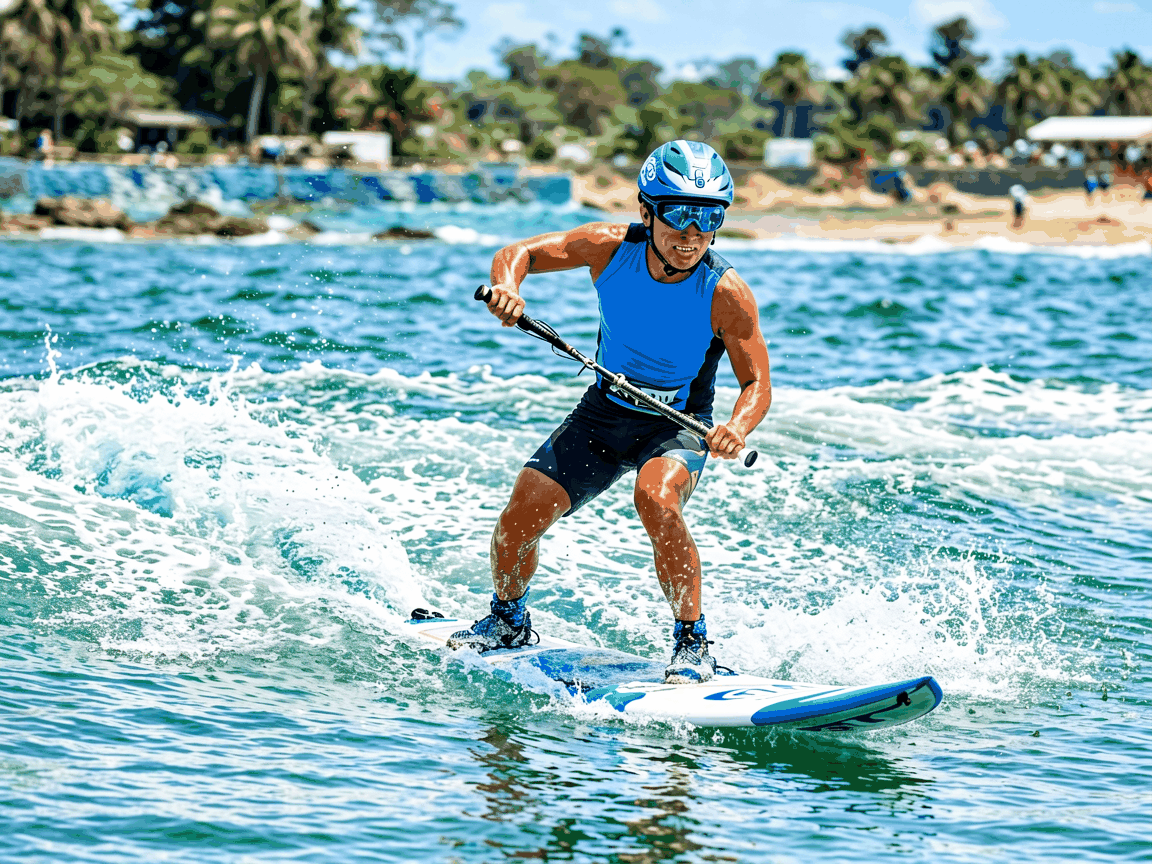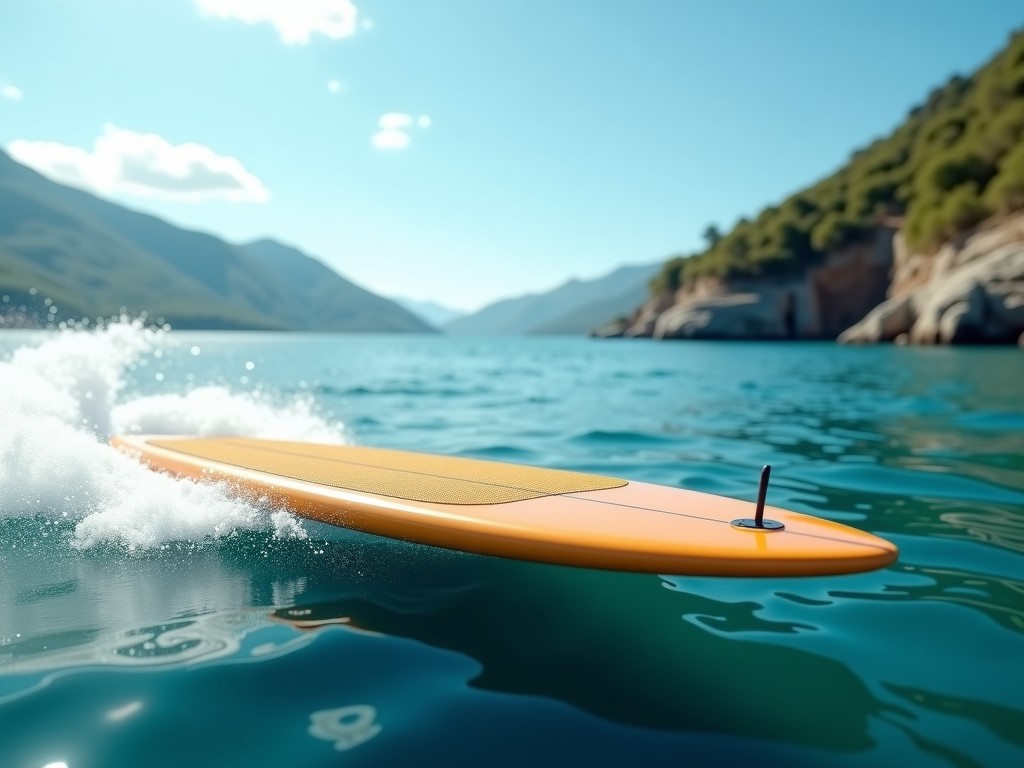
High Speed Electric Surfboard
High Speed Electric Surfboard
This document details the technical specifications, design considerations, and performance characteristics of high speed electric surfboards intended for recreational and light commercial use. The focus is on measurable engineering parameters that influence safety, efficiency, and operational longevity.
Electric surfboards combine hydrodynamic hull design with integrated electric propulsion systems to enable planing speeds without wave dependency. Performance is governed by motor power output, battery energy density, hull resistance, and control system responsiveness.
Buyers should evaluate these systems holistically, as trade-offs between speed, range, weight, and safety directly impact usability and total cost of ownership.
Core Propulsion System
The propulsion unit consists of a sealed, water-cooled brushless DC motor mounted within a streamlined pod beneath the hull. Motor continuous power output typically ranges from 5 kW to 15 kW, with peak power reaching 20 kW for short durations. Torque delivery is managed via electronic speed controller (ESC) to prevent cavitation and motor overheating.
Propeller design is critical for efficiency; most units use a two- or three-blade composite propeller with a pitch diameter ratio optimized for planing hulls. Propeller speed is electronically limited to 3,500 RPM to balance thrust and noise. Water cooling channels are integrated into the motor housing to maintain stator temperatures below 80°C under continuous load.
Ingress protection rating for the motor and ESC assembly is IP68, verified through pressure testing to 2 meters depth for 30 minutes. Saltwater resistance is achieved via marine-grade stainless steel fasteners and potting of internal electronics.
Energy Storage and Management
Lithium-ion battery packs are the standard energy source, configured in series-parallel arrangements to achieve nominal voltages between 36 V and 72 V. Typical usable capacity ranges from 300 Wh to 800 Wh, delivering 10 to 25 minutes of ride time at cruise speed depending on rider weight, water conditions, and throttle usage.
Battery cells are selected for high discharge rates (minimum 3C continuous) and are enclosed in a flame-retardant, impact-resistant housing. Thermal management includes phase-change materials and passive cooling fins to limit cell temperature rise to <10°C above ambient during operation.
An integrated battery management system (BMS) monitors cell voltage, temperature, and current, providing overcharge, over-discharge, over-current, and short-circuit protection. State of charge is estimated via coulomb counting and voltage profiling, with accuracy within ±5%.
Charging is conducted via external DC fast charger (typically 2–4 A) or onboard AC converter. Full charge time ranges from 90 to 180 minutes. Battery cycle life is rated for 300–500 full cycles to 80% capacity retention under recommended charging profiles.
Hull Construction and Hydrodynamics
The hull is designed to achieve and maintain planing at speeds exceeding 25 km/h. Shape is derived from computational fluid dynamics (CFD) simulations to minimize wetted surface area and spray drag while ensuring lateral stability. Typical hull length ranges from 1500 mm to 1800 mm, width from 500 mm to 600 mm, and thickness from 30 mm to 50 mm at the thickest point.
Construction materials vary by model: expanded polystyrene (EPS) core with fiberglass-reinforced polymer (FRP) skin is common for cost-effective models; carbon fiber-reinforced polymer (CFRP) skins are used in premium variants to reduce weight by 20–30% and increase stiffness. Core density is typically 20–30 kg/m³ for EPS.
Surface finish is coated with marine-grade polyurethane or epoxy resin to resist UV degradation and abrasion. Rail edges are chamfered to reduce spray and improve grip during turns. Buoyancy is calculated to support rider weight plus 20% margin for safety in calm water conditions.
Foot strap and handle positions are adjustable via threaded inserts to accommodate different rider stances. Deck texture is non-slip, achieved through sand-integrated coating or molded diamond pattern.
Control and Safety Systems
Rider input is transmitted via a wireless handheld throttle (2.4 GHz or Bluetooth LE) or a wired tethered controller. Signal latency is maintained below 50 ms to ensure responsive control. Throttle response is programmable: linear, exponential, or custom curves to suit skill level.
A magnetic safety lanyard (kill switch) is standard, automatically cutting motor power if the rider falls off. Activation force is set between 15 N and 25 N to prevent accidental disengagement. Backup safety includes motor timeout after 30 seconds of no input and over-temperature derating at 90°C.
LED status indicators show battery level, system faults, and motor temperature. Audible alerts (80 dB at 1 m) signal low battery (<20%) or system faults. All electronics are conformal-coated to resist moisture and salt spray.
Maximum speed is electronically limited to 45–55 km/h depending on model and local regulations. Geo-fencing via optional GPS module can restrict operation to predefined zones.
Performance Characteristics
Typical performance metrics are measured under controlled conditions: calm freshwater, 75 kg rider, full battery, and 25°C ambient. Acceleration from 0 to 20 km/h ranges from 2.8 to 4.0 seconds. Maximum speed is achieved in 6–10 seconds depending on power-to-weight ratio.
Range at cruise speed (20 km/h) varies from 8 to 15 km. Energy consumption averages 12–18 Wh/km. Drag coefficient (CdA) is typically 0.45–0.60 m², measured via tow testing.
Weight (ready-to-ride, including battery) ranges from 12 kg to 18 kg. Static stability is assessed via metacentric height; typical values exceed 80 mm for lateral stability. Turning radius at full throttle is 3.5–5.0 m.
Noise emission at 5 m distance is 65–75 dB(A), primarily from propeller cavitation and motor cooling fans. Vibration levels at handlebars are below 2.5 m/s² RMS across operating range.
Environmental and Operational Considerations
Operating temperature range is –10°C to 40°C. Battery performance declines below 0°C; pre-heating is recommended for cold storage. Storage humidity should be <60% RH to prevent condensation on electronics.
After saltwater use, thorough rinsing with fresh water is required to prevent corrosion. Periodic inspection of propeller shaft seals, hull integrity, and electrical connectors is advised. Maintenance intervals: visual inspection every 10 hours, deep inspection every 50 hours.
Transportation: units should be stored at 50% state of charge for long-term storage. Battery packs are classified as UN 3480, Class 9 hazardous material for air shipment; ground transport follows ADR/IATA regulations.
End-of-life: battery packs must be recycled through certified lithium-ion recycling facilities. Hull materials (FRP, CFRP) are not biodegradable but can be repurposed or incinerated in waste-to-energy facilities.
| Parameter | Typical Range | Unit |
|---|---|---|
| Motor Continuous Power | 5 – 15 | kW |
| Battery Capacity | 300 – 800 | Wh |
| Max Speed | 45 – 55 | km/h |
| Range at Cruise | 8 – 15 | km |
| Weight (Ready-to-Ride) | 12 – 18 | kg |
| Charge Time | 90 – 180 | min |
| Operating Temp | –10 – 40 | °C |
Applications and Use Cases
High speed electric surfboards are used in environments where wave access is limited or inconsistent, such as inland lakes, calm coastal bays, and protected waterways. Their independence from wave conditions enables predictable training schedules for water sports enthusiasts and instructional use in surf schools.
In commercial settings, they are deployed for lifeguard patrol support in flat water zones, allowing rapid response to incidents without reliance on boats or jet skis. Patrol speed and maneuverability enable coverage of 200–300 m shoreline segments per unit.
Recreational rental operations benefit from low noise emissions and zero local emissions, permitting use in noise-sensitive zones such as residential lagoons or eco-tourism reserves. The absence of exhaust and fuel handling simplifies safety training and reduces operational liability.
Military and coastal security units evaluate these platforms for shallow-water reconnaissance and diver transport in areas inaccessible to larger craft. Low acoustic signature and minimal wake reduce detectability during approach.