Inflatable Electric Surfboard
Inflatable Electric Surfboard: Technical Specifications and Industrial Applications
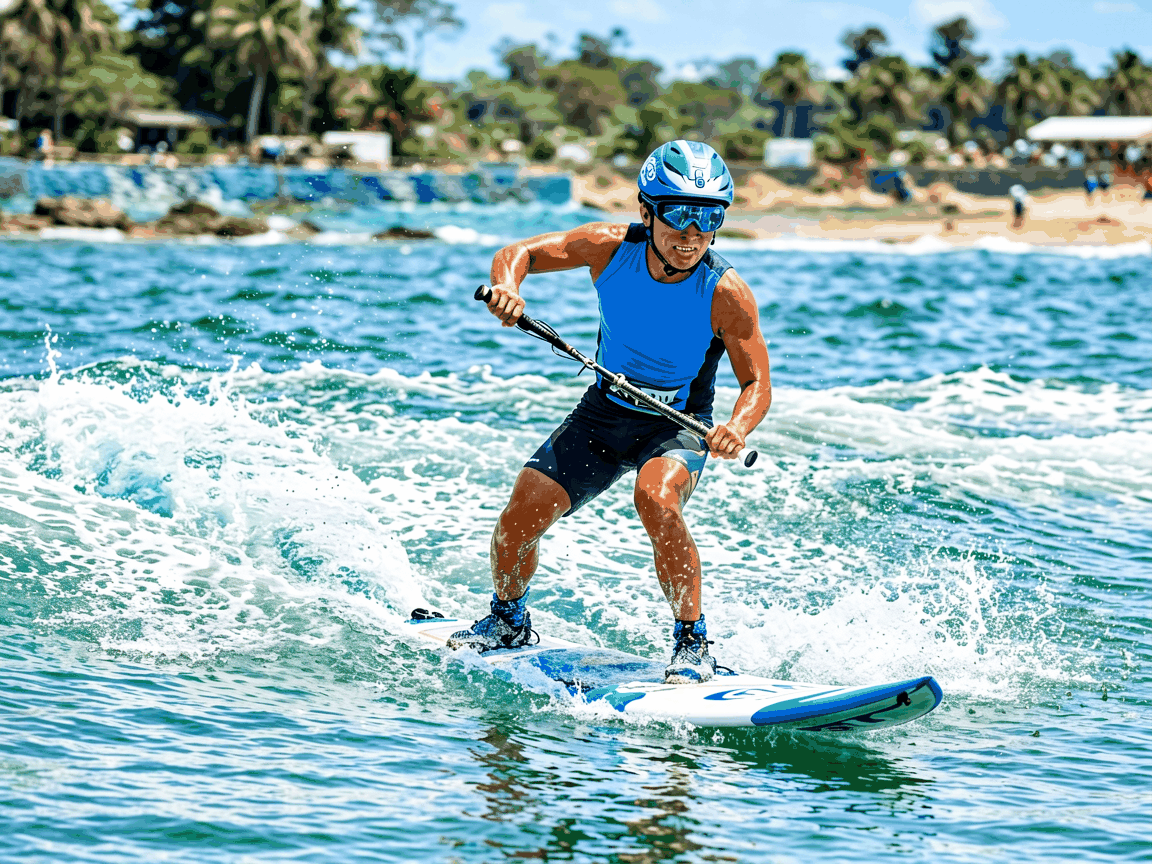
Inflatable electric surfboards combine portable watercraft design with electric propulsion systems, enabling operation in diverse aquatic environments without reliance on wave conditions. This technology integrates battery-powered thrust, structural inflatability, and hydrodynamic shaping to deliver controllable surface mobility for recreation, patrol, and light-duty transport applications.
Unlike rigid electric surfboards, inflatable variants utilize drop-stitch fabric construction reinforced with PVC or TPU coatings, allowing deflation for compact storage and transport. The electric motor, typically mounted beneath the deck, drives a jet propulsion system that draws water through an impeller and expels it aft to generate forward thrust.
Core Technical Characteristics
The structural integrity of inflatable electric surfboards depends on material selection and internal architecture. Drop-stitch construction uses thousands of polyester threads connecting top and bottom fabric layers, maintaining uniform thickness when inflated to pressures between 10 and 15 PSI. This creates a rigid platform comparable to hard-board performance while retaining foldability.
Motor power output typically ranges from 3 to 6 kW continuous, with peak bursts up to 8 kW for acceleration. Battery capacity varies between 2 and 5 kWh, providing operational durations of 30 to 60 minutes at moderate throttle. Charging systems commonly use lithium-ion cells with IP67-rated connectors and integrated battery management systems for thermal and overcharge protection.
Control interfaces include wireless handheld throttles or wrist-mounted units communicating via 2.4 GHz radio frequency. Throttle response is managed through electronic speed controllers that modulate power delivery based on input signals and motor temperature feedback. Steering is achieved through body weight shifting and asymmetric thrust in dual-motor configurations or via a retractable rudder in single-motor designs.
Performance Parameters and Operational Limits
Maximum speed is constrained by hull hydrodynamics and motor torque characteristics. Most inflatable electric surfboards achieve top speeds between 25 and 35 km/h (15.5 to 21.7 mph) under ideal conditions—calm water, optimal rider weight (70–90 kg), and full battery charge. Acceleration from 0 to 20 km/h typically occurs in 4 to 6 seconds, depending on power-to-weight ratio.
Operating depth is limited by jet intake clearance; minimum water depth should exceed 0.5 meters to prevent debris ingestion and cavitation. Saltwater compatibility requires corrosion-resistant motor housings (marine-grade aluminum or stainless steel) and rinsing protocols after use. Operating temperature range for batteries and electronics is generally -10°C to 45°C, with performance degradation outside this band.
Weight capacity varies by model dimensions and buoyancy calculations. Standard models support riders up to 120 kg, with larger variants rated for 150 kg. Total system weight (board, battery, motor) ranges from 18 to 25 kg when deflated and packed, enabling transport in standard vehicle trunks or as checked airline baggage.
Material Composition and Durability Factors
The outer skin consists of laminated PVC or TPU layers over a drop-stitch core. TPU offers superior abrasion resistance, UV stability, and flexibility at low temperatures compared to PVC, though at higher material cost. Seams are thermally welded using precision temperature control to ensure peel strength exceeding 80 N/cm, critical for maintaining air retention under cyclic loading.
Reinforcement patches at high-stress areas—motor mounts, handle attachments, and fin boxes—use additional layers of polyester fabric with adhesive bonding. Drain valves incorporate one-way silicone membranes to allow water expulsion while preventing ingress. Fin systems, when present, use flexible nylon or fiberglass composites to reduce injury risk during impacts.
Air retention is verified through 24-hour pressure decay tests; acceptable loss is less than 0.5 PSI per day at 20°C ambient temperature. Leak detection protocols involve submersion testing at 0.3 bar gauge pressure for 5 minutes. Repair kits typically include PVC/TPU patches, solvent-based adhesive, and valve wrenches for field maintenance.
Industrial and Professional Applications
Beyond recreation, inflatable electric surfboards serve specialized industrial functions where mobility, rapid deployment, and low logistical footprint are essential. Their quiet operation and zero emissions make them suitable for environmentally sensitive zones such as marine reserves, aquaculture perimeters, and inland waterways with noise restrictions.
In coastal patrol and lifeguard operations, these boards enable rapid response to incidents in surf zones or near-shore areas inaccessible to larger vessels. Inflation time under 5 minutes using dual-action hand pumps allows immediate deployment from beach storage. Integrated GPS modules and LED navigation lights support night-time or low-visibility missions.
Aquaculture facilities use them for routine net inspection, feeding monitoring, and predator deterrence. Their low draft permits navigation through shallow pens and around mooring systems without damaging equipment. Some models incorporate modular payload mounts for carrying sensors, cameras, or small sampling devices up to 5 kg.
Resort and rental operations benefit from reduced storage footprint and simplified logistics. A deflated board occupies approximately 0.1 cubic meters, allowing ten units to fit in the space of one rigid board. Maintenance requirements are limited to periodic pressure checks, battery cycling, and freshwater rinsing—no hull polishing or ding repair required.
Comparison: Inflatable vs. Rigid Electric Surfboards
| Parameter | Inflatable Electric Surfboard | Rigid Electric Surfboard |
|---|---|---|
| Transport Volume (Deflated/Packed) | 0.08–0.12 m³ | 0.2–0.3 m³ (requires roof rack or trailer) |
| Setup Time | 3–8 minutes (inflation + battery install) | <1 minute (uncover and go) |
| Impact Resistance | High (flexible surface absorbs energy) | Low to moderate (prone to dents, cracks) |
| Repair Complexity | Field-repairable with patches/adhesive | Requires specialized tools and materials |
| Storage Footprint | Compact (closet or trunk) | Large (wall rack or garage space) |
| Typical Price Range | $1,200–$2,500 | $2,000–$4,000+ |
Customization and Configuration Options
Manufacturers offer scalable configurations to match specific operational needs. Deck length typically ranges from 180 to 220 cm, affecting stability and turning radius. Width varies between 70 and 90 cm, influencing initial stability and payload capacity. Thickness options (10–15 cm) adjust buoyancy and rigidity under load.
Motor placement options include rear-mounted jet drives or dual pod systems under the rails. Battery packs can be internal (sealed within the deck) or external (removable cartridges), affecting accessibility for charging and weight distribution. Control systems may include GPS tracking, speed limiters, or water-activated safety cutoffs.
Accessory integration points are molded into the deck for action cameras, lighting arrays, or communication antennas. Some models feature anchor trolleys or tow bars for light-duty utility tasks. Color schemes are customizable using UV-stable pigments, with options for high-visibility safety orange or low-visibility gray for tactical use.
Quality Assurance and Testing Protocols
Manufacturing quality control begins with material inspection. Incoming fabric rolls are tested for tensile strength, tear resistance, and coating adhesion. Drop-stitch yarn density is verified via optical counting to ensure structural consistency. Seam welds undergo peel and shear testing on production samples to confirm adherence to specification.
Finished boards undergo hydrostatic pressure testing at 1.5 times operating pressure (typically 22.5 PSI) for 3 minutes to validate burst resistance. Electrical systems are subjected to insulation resistance testing (>2 MΩ) and continuity checks. Motor assemblies receive no-load and load testing to verify RPM, current draw, and vibration signatures.
Operational trials include saltwater immersion cycles (4 hours on, 1 hour off) for 5 days to assess corrosion resistance. UV exposure testing follows ASTM G154 standards for 1,000 hours. Battery packs undergo charge/discharge cycling (300 cycles minimum) to confirm capacity retention above 80%. Final inspection includes functional verification of all controls, lights, and safety systems before packaging.
For technical inquiries, customization requests, or application-specific consultations, contact our engineering team to discuss your operational requirements.
Request Technical Specification Sheet