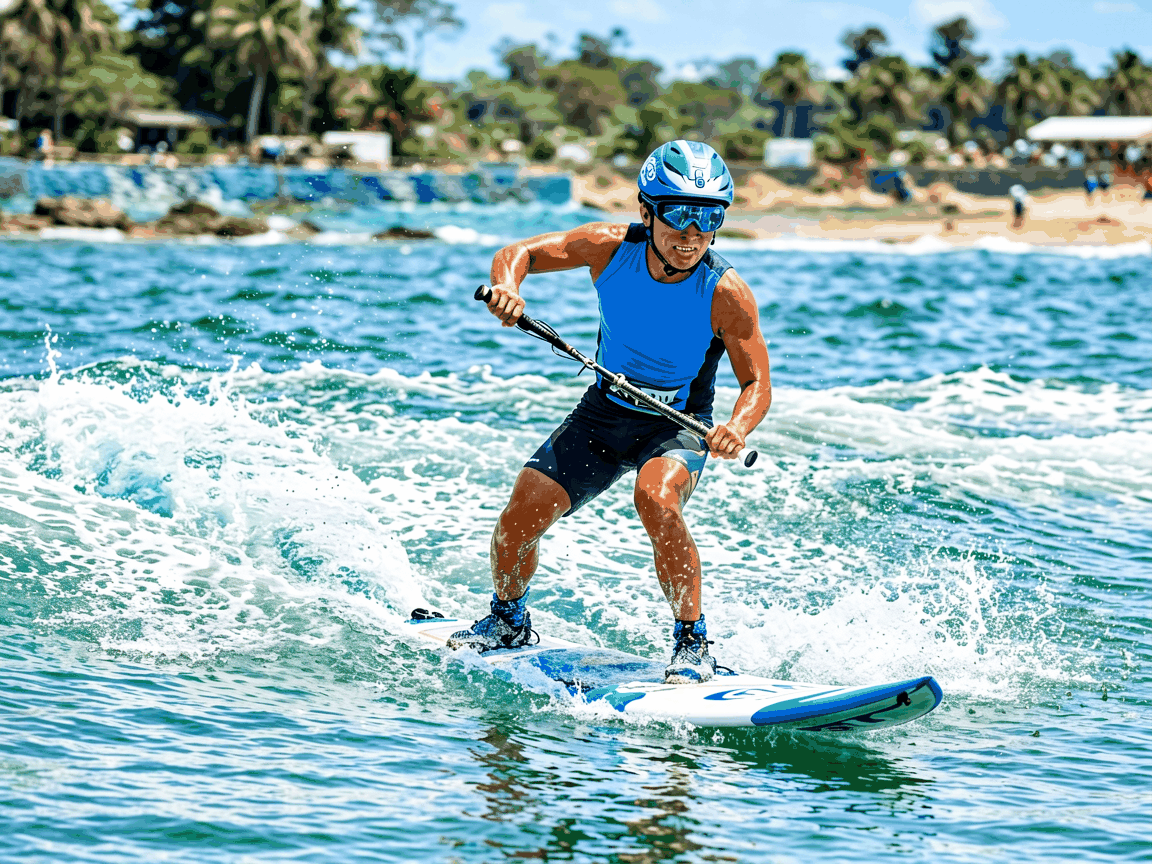
Innovative Electric Surfboard
Innovative Electric Surfboard
This section outlines the technical foundation of electric surfboard propulsion systems, focusing on integrated motor, battery, and control architectures designed for marine environments. Understanding these core subsystems is essential for evaluating performance, safety, and long-term operational viability in commercial or recreational watercraft applications.
Electric surfboards utilize sealed brushless DC motors mounted within hydrodynamic housings to drive a propulsion jet or propeller. Power is supplied by lithium-ion battery packs enclosed in IP68-rated composite casings, typically positioned low and centrally to optimize center of gravity and stability. Electronic speed controllers (ESCs) manage power delivery based on throttle input from a wireless handheld or pressure-sensitive deck sensor, enabling variable thrust from idle to maximum speed.
Thermal management is achieved through passive conduction via the board’s structure and active water cooling channels that route surrounding liquid over motor windings and battery interfaces. This eliminates the need for external fans or exposed heat sinks, preserving sealing integrity. All electrical connections use marine-grade, gold-plated connectors with potting compound to resist corrosion and vibration fatigue.
Core Propulsion and Energy System Specifications
Performance metrics are defined by measurable engineering parameters rather than subjective claims. The following table outlines typical ranges for key subsystems based on current industrial-grade configurations. Actual values vary according to battery chemistry, motor winding design, ESC firmware, and hull displacement targets.
| Parameter | Typical Range | Notes |
|---|---|---|
| Motor Power (Continuous) | 3–6 kW | Sustained output without thermal throttling |
| Peak Power | 8–10 kW | Short-duration bursts for planing and acceleration |
| Battery Capacity | 1.2–2.5 kWh | Lithium NMC or LFP chemistry; affects runtime |
| Voltage System | 48–72 V DC nominal | Determines ESC and motor compatibility |
| Charge Time (80%) | 60–90 minutes | Using Level 2 marine charger (10–15 A) |
| Operating Temperature | -10°C to 45°C | Ambient water and air range |
Hull Construction and Hydrodynamic Design
The hull must simultaneously provide buoyancy, structural rigidity, and minimal drag while protecting internal components from impact and water ingress. Material selection and layup strategy directly influence weight, durability, and repairability in saltwater environments.
Outer skins are typically constructed using vacuum-bagged carbon fiber or fiberglass-reinforced epoxy laminates over a closed-cell PVC or EPS foam core. This sandwich construction achieves high stiffness-to-weight ratios, with typical flex modulus exceeding 1.8 GPa and impact resistance sufficient to withstand repeated beach launches and dock contact. Surface finish is coated with UV-stabilized polyurethane or ceramic-based clear coat to prevent delamination and yellowing.
Hull geometry incorporates a stepped planing surface with concave channels to reduce wetted surface area and improve pitch stability at speeds above 15 km/h. The propulsion unit is integrated into a recessed tunnel at the stern, minimizing cavitation and ensuring clean water inflow to the impeller. Strategic venting ports equalize internal pressure during temperature changes without compromising sealing.
Control System and User Interface
Reliable operation depends on intuitive, fail-safe control logic that prevents unintended acceleration while maintaining responsiveness. Input methods must function reliably when wet, gloved, or submerged briefly. Redundancy in critical signals enhances safety in remote or high-traffic waterways.
Primary control is delivered via a wireless handheld throttle operating on 2.4 GHz FHSS (Frequency Hopping Spread Spectrum) with AES-128 encryption to prevent interference and unauthorized access. The device features a silicone-sealed grip, Hall-effect trigger, and OLED display showing battery level, speed, and fault codes. Fall-off detection uses a tethered lanyard switch that cuts power within 0.2 seconds of separation.
Alternative input options include pressure-sensitive decks with capacitive sensors mapped to zones for forward, neutral, and reverse thrust. These systems require calibration to rider weight and stance but eliminate handheld dependencies. All controllers implement soft-start ramps, overcurrent protection, and low-voltage cutoff (LVC) set at 3.0 V per cell to prevent battery damage.
Applications in Commercial and Recreational Marine Sectors
Electric surfboards serve distinct operational niches where zero-emission, low-noise, and agile personal watercraft are advantageous. Their adoption is driven not by novelty but by specific functional benefits in regulated or sensitive environments where internal combustion engines are restricted or impractical.
In commercial settings, they are used for lifeguard patrol in calm coastal zones, enabling rapid response to swimmers in distress without fuel spills or exhaust emissions. Rescue teams deploy them for shallow-water ingress where traditional boats cannot operate, leveraging their ability to launch from beaches and navigate through surf zones. Rental operations in marine protected areas favor them due to compliance with noise ordinances and zero wake generation at displacement speeds.
Recreational users benefit from reduced physical exertion compared to traditional surfing, allowing longer sessions and access to offshore breaks. Training centers use them for paddle-in skill development, where consistent thrust helps beginners learn wave positioning without fatigue. Fleet operators value the low maintenance profile—no oil changes, winterization, or spark plug replacement—reducing total cost of ownership over 3–5 years.
Customization Options and Integration Considerations
Industrial buyers often require adaptations to meet specific operational profiles, regulatory standards, or fleet commonality needs. Customization is feasible across mechanical, electrical, and ergonomic domains without compromising core safety or performance architecture.
Battery packs can be reconfigured for alternative chemistries (e.g., LFP for enhanced cycle life) or adjusted in capacity to match duty cycles—higher energy for extended patrols, higher power for rescue sprints. Motor KV rating and propeller pitch are tuned to target top speed versus acceleration trade-offs. Hull length and width are adjustable within hydrodynamic limits to accommodate different rider statures or gear loads.
Control interfaces support CAN bus expansion for integration with GPS tracking, emergency beacons, or remote diagnostics systems. Mounting points are standardized for accessories such as rescue boards, communication radios, or sensor pods. All custom variants undergo the same validation sequence: static load testing, water ingress verification (IP68), thermal cycling, and impact resistance per ISO 12215-5 standards for small craft.
For detailed specifications, configuration options, or to discuss integration into your marine operations, contact our technical team.
Request Technical Consultation