Jetsurf Sport Electric Surfboard
JetSurf Sport Electric Surfboard
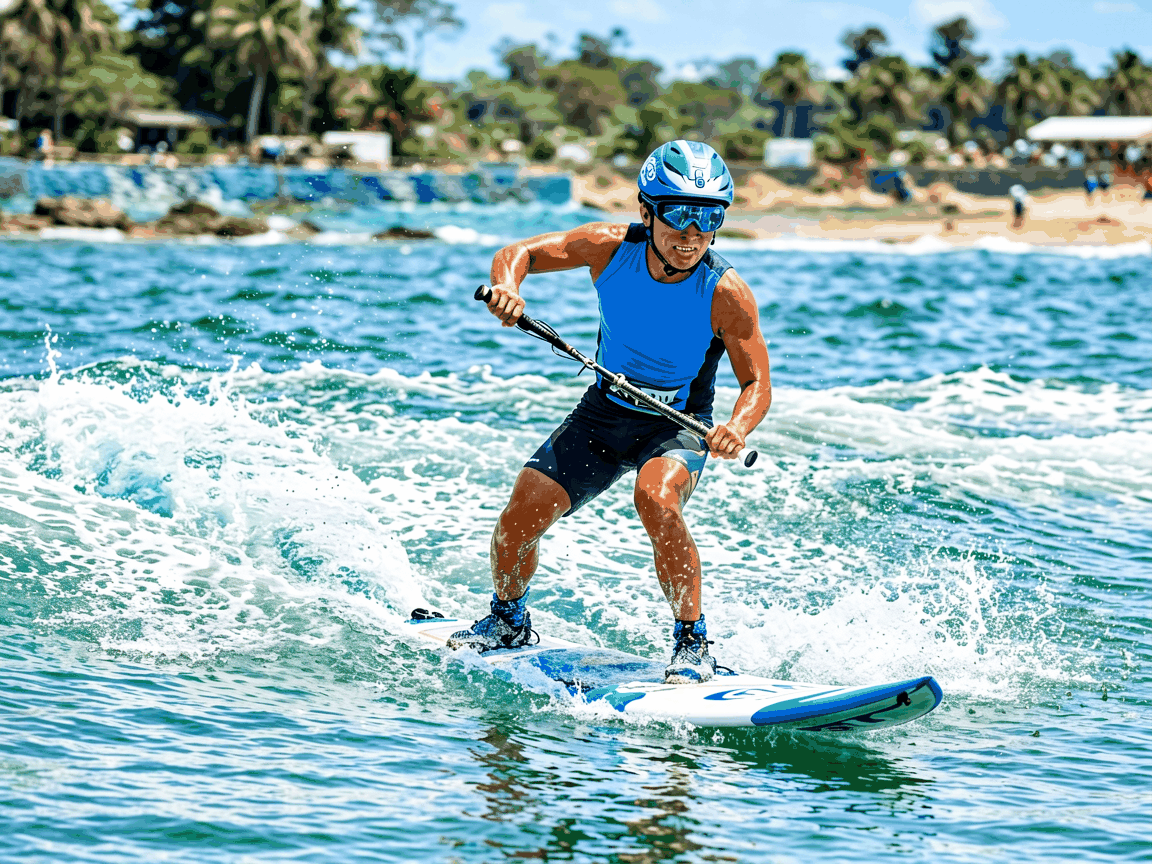
The JetSurf Sport electric surfboard integrates a sealed lithium-ion battery pack, brushless direct-drive motor, and hydrodynamically optimized composite hull into a single watertight unit designed for recreational and training use in inland and coastal waters. Unlike traditional paddle or wind-powered boards, propulsion is delivered through a submerged jet pump system controlled via a wireless handheld throttle, enabling consistent speed independent of wave or wind conditions. This section outlines the core subsystems, material choices, and operational boundaries that define its performance envelope.
Powertrain and Energy Storage
The propulsion system centers on a 5 kW peak brushless DC motor directly coupled to a mixed-flow impeller housed in a duct molded from glass-reinforced nylon. Motor cooling is achieved through passive water jacketing, eliminating the need for external fans or seals that could fail under prolonged submersion. Torque is modulated via a sensorless field-oriented controller that reads throttle input from a 2.4 GHz RF remote and adjusts current delivery in real time to maintain smooth acceleration without cogging.
Energy is supplied by a 48 V nominal lithium nickel manganese cobalt oxide (NMC) battery pack encapsulated in a double-walled ABS enclosure with internal flame-retardant epoxy potting. The pack delivers 840 Wh usable capacity, corresponding to approximately 30–45 minutes of continuous operation at 70% throttle depending on rider weight, water temperature, and hull drag. Cell balancing and over-discharge protection are managed by an integrated battery management system (BMS) with CAN bus communication to the motor controller for coordinated shutdown under fault conditions.
Hull Construction and Hydrodynamics
The board’s hull is fabricated using a vacuum-bagged sandwich structure: an outer layer of woven carbon fiber fabric, a core of closed-cell PVC foam (60 kg/m³ density), and an inner layer of unidirectional carbon fiber for stiffness. This layup yields a flexural modulus of approximately 18 GPa and a ultimate tensile strength of 450 MPa in the longitudinal direction, sufficient to withstand repeated impact loads from chop and rider movement without permanent deformation. The outer surface is coated with a UV-stabilized polyurethane clear coat to resist saltwater degradation and micro-scratching.
Hydrodynamic shaping was derived from computational fluid dynamics (CFD) simulations targeting minimal drag at planing speeds between 15–25 km/h. The hull features a stepped bottom design with two longitudinal ridges that reduce wetted surface area by disrupting boundary layer cohesion, combined with a slightly concave deck to lower the rider’s center of gravity. Rocker profile (25 mm nose lift, 10 mm tail lift) balances early planing with stability during turns, while the width distribution (480 mm at tail, 580 mm at waist) provides lateral resistance against sideways slip during carving maneuvers.
Control System and User Interface
Rider input is captured by a wireless throttle trigger housed in a buoyant, impact-resistant polycarbonate casing rated IP68 for continuous submersion. The throttle uses a Hall-effect sensor to measure displacement, transmitting PWM-encoded signals to a receiver module sealed within the board’s nose compartment. Signal latency is under 20 ms, ensuring immediate response to changes in throttle position. The system includes three programmable power modes—Eco (50% max power), Sport (75%), and Race (100%)—selectable via a long-press combination on the throttle, allowing adaptation to skill level or environmental conditions.
Feedback is delivered through four RGB LEDs embedded in the deck near the rider’s front foot, indicating battery state of charge in 25% increments and flashing red during low-voltage or over-temperature events. An internal buzzer provides audible alerts for critical faults such as motor stall, water ingress detection, or communication loss with the remote. All electronics are conformal-coated with acrylic resin to mitigate corrosion from conductive water ingress, and connectors are gold-plated to maintain low contact resistance over time.
Performance Characteristics
| Parameter | Typical Value | Condition / Note |
|---|---|---|
| Maximum Speed | 35 km/h | Sport mode, 75 kg rider, flat water |
| Acceleration (0–20 km/h) | 4.2 seconds | Race mode, optimal trim |
| Operating Range | 12–18 km | Eco mode, steady speed |
| Charge Time (0–100%) | 90 minutes | Using 4 A charger, 25°C ambient |
| Maximum Rider Weight | 100 kg | Beyond this, planing threshold increases significantly |
| Operating Temperature Range | 0–40°C | Battery performance degrades below 5°C |
Performance metrics are derived from standardized testing in controlled freshwater environments with minimal current and wind. Real-world values may vary due to factors such as salinity (increasing drag by ~2% in seawater), temperature-induced battery capacity loss, and hull fouling. The board is not rated for use in whitewater, surf zones with breaking waves over 1 m height, or areas with submerged obstacles due to risk of impact damage to the jet intake or stator blades. Regular inspection of the impeller duct for debris and verification of seal integrity after each use are recommended to maintain efficiency and prevent water ingress.
Maintenance and Serviceability
Routine maintenance involves rinsing the exterior with fresh water after each use, particularly focusing on the jet nozzle and intake grate to prevent sand or organic matter accumulation. The battery compartment seals should be inspected quarterly for signs of wear or compression set; replacement kits are available containing dual-durometer EPDM O-rings and silicone lubricant. Motor bearings are sealed for life and require no lubrication, but the impeller shaft should be checked annually for play indicating wear. Firmware updates for the motor controller and BMS are delivered via USB-C port located under the rear deck plate, accessible with a 5 mm hex key.
In the event of impact damage to the hull, repair is feasible using standard epoxy resin and carbon fiber patch kits, provided the core remains dry and uncontaminated. Structural repairs should restore the original layup schedule to maintain flexural properties. Battery module replacement requires factory service due to the need for precise cell balancing and re-encapsulation to maintain IP68 rating. End-of-life battery packs are accepted for recycling through certified partners, with documentation available upon request for corporate sustainability reporting.