Lightweight Electric Water Board
Lightweight Electric Water Board
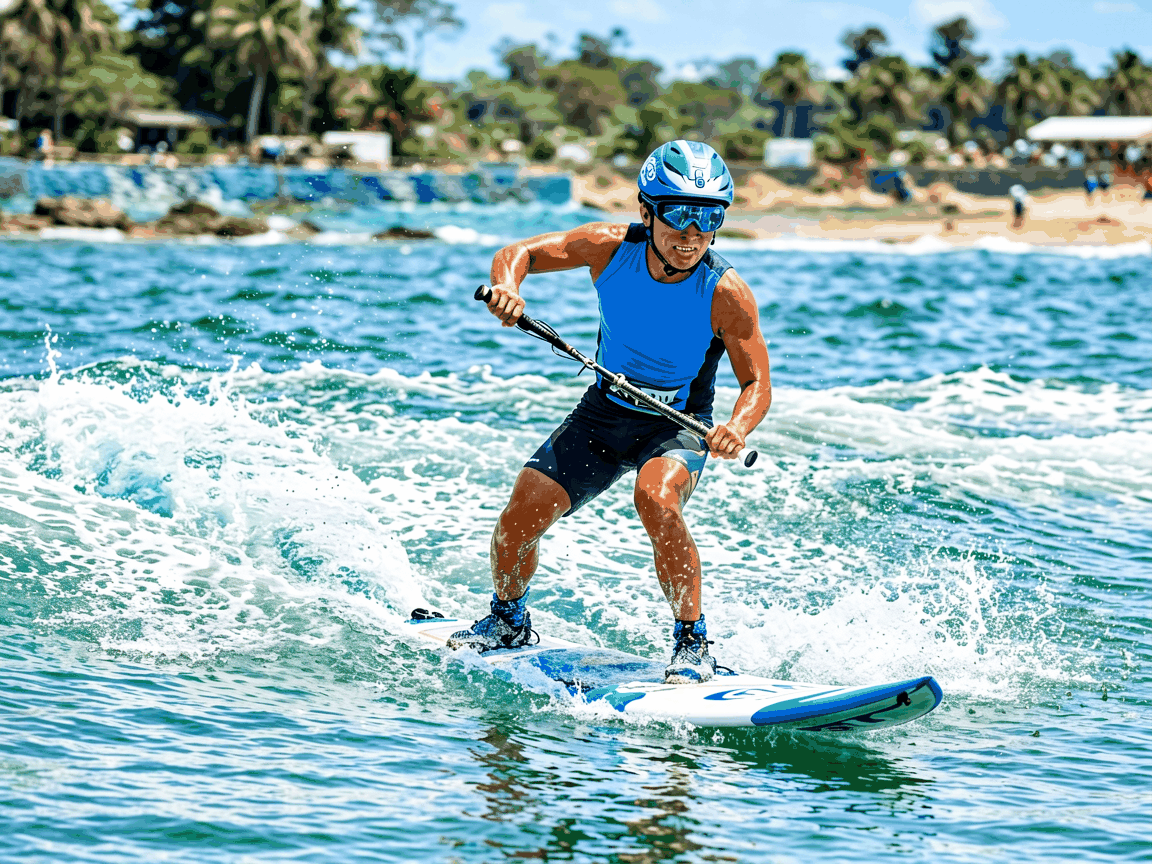
A lightweight electric water board is a compact, battery-powered personal watercraft designed for propulsion across calm water surfaces using an integrated electric motor and hydrofoil or planing hull system. Unlike traditional jet skis or paddleboards, it combines electric drive technology with reduced mass construction to improve maneuverability, transport efficiency, and energy endurance. These boards are engineered for individual recreational use, training, or light-duty utility operations where portability and quiet operation are prioritized over high-speed performance or heavy payload capacity.
The core design principle centers on minimizing structural mass without compromising hydrodynamic stability or electrical system integrity. This is achieved through strategic material selection, optimized component layout, and integrated sealing techniques that protect electrical subsystems from water ingress while maintaining buoyancy and structural rigidity. The result is a platform that balances portability with functional reliability in variable aquatic environments.
Key Technical Characteristics
Mass distribution is a critical factor in handling and transport. Typical lightweight electric water boards range from 12 to 18 kilograms in total weight, depending on battery capacity, motor size, and hull materials. This weight class enables single-person carrying and roof-rack or trunk storage without mechanical assistance, significantly reducing logistical barriers compared to heavier alternatives exceeding 25 kg.
Hull construction commonly utilizes high-density polyethylene (HDPE), reinforced fiberglass composites, or marine-grade epoxy-coated foam cores with carbon fiber or fiberglass skins. These materials provide a balance of impact resistance, UV stability, and water tightness while contributing to low overall density. Core thicknesses typically range from 20 to 40 mm, engineered to resist deformation under rider weight and wave impact while maintaining neutral buoyancy characteristics.
Electric propulsion systems integrate a sealed brushless DC motor (typically 3–5 kW peak) with a lithium-ion battery pack (commonly 36V or 48V, 10–20 Ah). Motor placement is usually rear-mounted or under-deck to optimize center of gravity and reduce spray interference. Propulsion is delivered via a submerged propeller or jet pump, enclosed within a protective shroud to prevent entanglement and improve safety. Average continuous runtime ranges from 45 to 90 minutes at moderate throttle, depending on rider weight, water conditions, and assist level.
Design and Integration Considerations
Electrical systems are fully encapsulated using IP67 or IP68-rated enclosures for the motor controller, battery management system (BMS), and wiring harnesses. Connectors are marine-grade, corrosion-resistant, and often feature twist-lock or bayonet mechanisms to prevent accidental disconnection. Throttle and brake controls are typically handlebar-mounted or wrist-strap actuated, using Hall-effect sensors sealed against moisture and salt exposure.
Buoyancy is carefully calibrated through internal foam displacement and hull volume to ensure the board floats level with the rider’s center of mass near the midpoint. This prevents nose-diving or tail-sinking during acceleration and deceleration. Many models incorporate adjustable ballast compartments or foam inserts to fine-tune trim for different rider weights or water salinity levels.
Thermal management is addressed through passive conduction via the hull and active cooling channels in high-power models. Battery packs are often mounted in ventilated compartments or wrapped in thermal interface materials to mitigate heat buildup during extended use. Over-temperature protection is standard in the BMS to prevent cell degradation or shutdown under load.
Typical Applications
Lightweight electric water boards are particularly suited for environments where access is limited, noise must be minimized, or rapid deployment is essential. Their low mass and electric operation make them ideal for use in protected marine areas, inland lakes, and calm coastal zones where internal combustion engines are restricted due to emissions or noise regulations.
They are commonly used in recreational resorts for guest activities, lifeguard patrols for rapid shoreline response, and marine research teams for quiet approach to wildlife observation zones. In training facilities, they serve as low-impact platforms for balance and coordination drills, especially for beginners transitioning to traditional surfing or paddleboarding.
Utility applications include shoreline inspection, environmental monitoring, and light cargo transport over short distances in harbor or marina settings. Their ability to operate in shallow water (as little as 15 cm depth) and launch from beaches or docks without ramps enhances operational flexibility compared to trailer-launched craft.
Material and Configuration Options
- Hull Materials: HDPE (rotomolded), fiberglass-reinforced polymer, carbon fiber sandwich foam core, marine plywood with epoxy coating
- Motor Power: 2.5 kW (entry-level), 4.0 kW (standard), 5.5 kW (performance)
- Battery Capacity: 36V 10Ah (360Wh), 48V 12Ah (576Wh), 48V 20Ah (960Wh)
- Control Interface: Thumb throttle, twist-grip, wrist-mounted remote, smartphone app via Bluetooth
- Fin/Hydrofoil Options: Fixed planing fins, retractable hydrofoil, detachable skeg system
Customization is frequently available for OEM or institutional buyers, including hull color, deck padding (EVA foam or rubberized grip), integrated lighting (LED navigation lights), and cargo attachment points. Motor controllers may be programmed for adjustable acceleration curves, speed limits, or regenerative braking profiles based on use case requirements.
Battery systems are often designed for quick-release or hot-swap configurations, enabling extended operational cycles through spare pack rotation. Charging systems typically support AC input (100–240V) with charging times ranging from 2 to 5 hours depending on capacity and charger specification.
Performance and Environmental Factors
Maximum speed is generally limited to 25–35 km/h (15–22 mph) for safety and regulatory compliance in most jurisdictions. Acceleration is smooth and linear due to electric torque delivery, with typical 0–20 km/h times under 5 seconds. Range is inversely proportional to speed and rider weight; a 75 kg rider at 20 km/h may achieve 60–80 minutes of runtime on a 576Wh battery, while aggressive throttle use reduces this to 30–40 minutes.
Environmental sealing is critical for longevity. All external seams, hatches, and cable penetrations are sealed with marine-grade silicone or polyurethane gaskets. Saltwater exposure requires post-use rinsing with fresh water to prevent corrosion of metal fasteners and connector degradation. Boards intended for marine environments often feature sacrificial anodes or stainless steel (A4/316) hardware in wet zones.
Storage conditions significantly affect battery life. Lithium-ion packs should be stored at 40–60% charge in a cool, dry environment (10–25°C) to minimize capacity loss. Long-term storage at full charge or elevated temperatures accelerates aging. Manufacturers typically recommend periodic voltage checks and top-up charging every 2–3 months during inactivity.
Quality Assurance and Testing
Each unit undergoes hydrostatic pressure testing to verify hull integrity and sealing effectiveness. Electrical systems are subjected to insulation resistance testing, continuity checks, and functional validation under simulated load conditions. Motor controllers are tested for thermal cutoff accuracy, over-current protection, and fail-safe behavior in water immersion scenarios.
Buoyancy and stability are validated through in-water testing with weighted dummies representing various rider masses. Trim and handling characteristics are assessed at multiple speeds and wave conditions to ensure predictable behavior. Impact resistance is evaluated via controlled drop tests onto simulated dock or beach surfaces to verify hull resilience without cracking or delamination.
Documentation includes a detailed user manual covering safety protocols, charging procedures, maintenance schedules, and troubleshooting guides. CE marking or equivalent compliance documentation is provided upon request for international markets, confirming adherence to relevant electrical safety (e.g., IEC 60335-2-29) and marine craft standards where applicable.
For technical specifications, customization inquiries, or to request a detailed product datasheet, contact our engineering team.
Request Technical Consultation