Most Affordable Electric Surfboard
Most Affordable Electric Surfboard
Electric surfboards represent a growing segment in personal watercraft technology, combining electric propulsion with surfboard design for wave-independent riding. For industrial buyers evaluating entry-level models, understanding the technical trade-offs between cost, performance, and durability is essential to minimize risk and ensure long-term value. This page details the engineering characteristics that define affordability in electric surfboards without compromising core functionality or safety.
Key Technical Characteristics of Affordable Electric Surfboards
Affordability in electric surfboards is primarily driven by motor power, battery capacity, and material selection. Entry-level models typically feature motors between 3–5 kW, providing sufficient thrust for planing in calm to moderate conditions while minimizing energy consumption and heat buildup. Battery systems commonly use lithium-ion chemistry with capacities ranging from 2–4 kWh, offering 30–60 minutes of ride time depending on rider weight, speed, and water conditions.
Hull construction often utilizes high-density polyethylene (HDPE) or fiberglass-reinforced polymer composites instead of carbon fiber, reducing material costs while maintaining impact resistance and UV stability. These materials are molded using rotational or vacuum-assisted processes that lower tooling expenses compared to autoclave-cured alternatives. Fin and rail designs are simplified to reduce hydrodynamic complexity, prioritizing stability over high-performance maneuverability.
Performance and Operational Parameters
Typical top speeds for affordable electric surfboards range from 25–35 km/h, adequate for recreational use and training scenarios. Acceleration is managed via electronic speed controllers (ESCs) with programmable throttle response, allowing users to customize power delivery for safety or skill progression. Most models include multiple riding modes—such as eco, cruise, and sport—to balance energy efficiency with performance demands.
Charging systems usually operate on single-phase 220V AC input, requiring 2–4 hours for a full charge using onboard or external chargers. Battery management systems (BMS) monitor cell voltage, temperature, and state of charge to prevent over-discharge, overcurrent, and thermal runaway. IP67-rated electrical enclosures protect motors, controllers, and connectors from water ingress, a critical factor for marine reliability.
Material and Design Considerations
The selection of hull materials directly affects both initial cost and lifecycle maintenance. HDPE offers excellent resistance to saltwater corrosion, impact, and abrasion, with no need for gelcoat or regular waxing. Fiberglass composites provide higher stiffness-to-weight ratios but require more careful handling to avoid delamination or water absorption if the gelcoat is compromised. Affordable models often sacrifice some weight savings for durability, resulting in boards weighing 20–25 kg.
Deck surfaces typically feature EVA foam padding or textured non-slip coatings applied via spray or adhesion methods. These surfaces provide grip without requiring frequent replacement, unlike waxed traditional surfboards. Foot strap systems are adjustable and made from marine-grade nylon or polyurethane, designed to withstand repeated loading and UV exposure.
Comparison of Typical Specifications
| Parameter | Typical Range (Affordable Models) | Notes |
|---|---|---|
| Motor Power | 3–5 kW | Continuous rating; peak may be higher |
| Battery Capacity | 2–4 kWh | Lithium-ion NMC or LFP chemistry |
| Top Speed | 25–35 km/h | Dependent on rider weight and conditions |
| Ride Time | 30–60 minutes | Variable based on throttle use |
| Charge Time | 2–4 hours | Single-phase 220V AC |
| Hull Material | HDPE or fiberglass composite | Rotomolded or vacuum bagged |
| Weight | 20–25 kg | Includes battery and motor |
Applications in Industrial and Commercial Settings
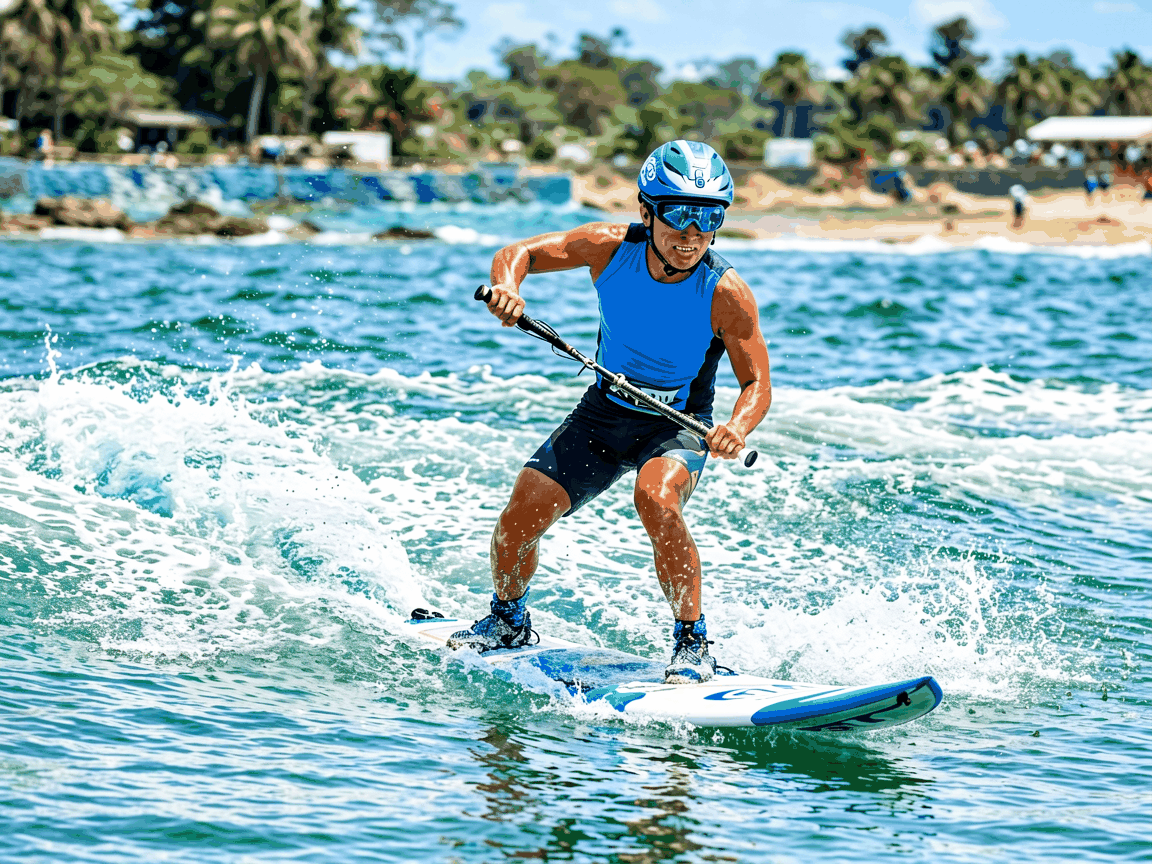
While primarily marketed for recreation, affordable electric surfboards serve practical roles in industrial contexts such as lifeguard training, maritime safety drills, and coastal inspection support. Their quiet operation and zero emissions allow deployment in environmentally sensitive zones where internal combustion engines are restricted. The simplicity of operation reduces training time for personnel compared to jet skis or boats.
In coastal facilities, these boards assist in monitoring swim zones, responding to distress signals, or transporting light equipment across short distances. Their portability—enabled by manageable weight and integrated handles—allows rapid deployment from shore or small vessels. For rental operations or training centers, lower acquisition cost and minimal maintenance (no engine oil, fuel, or winterization) improve return on investment over seasonal use cycles.
Quality and Reliability Factors
Affordability does not imply reduced reliability when design focuses on proven, robust components. Motors are often brushless DC (BLDC) with sealed bearings and potted windings to resist moisture. Controllers use conformal-coated PCBs and thermal throttling to prevent overheating during prolonged use. Battery packs include cell balancing and fuse protection to mitigate single-point failures.
Manufacturing quality control includes hydrostatic testing of seals, continuity checks on electrical paths, and functional validation of throttle and emergency stop systems. While certifications vary by region, many models comply with CE or UL standards for electrical safety and IP ratings for water resistance. Buyers should verify test reports and warranty terms that cover motor, battery, and structural components for at least 12 months.