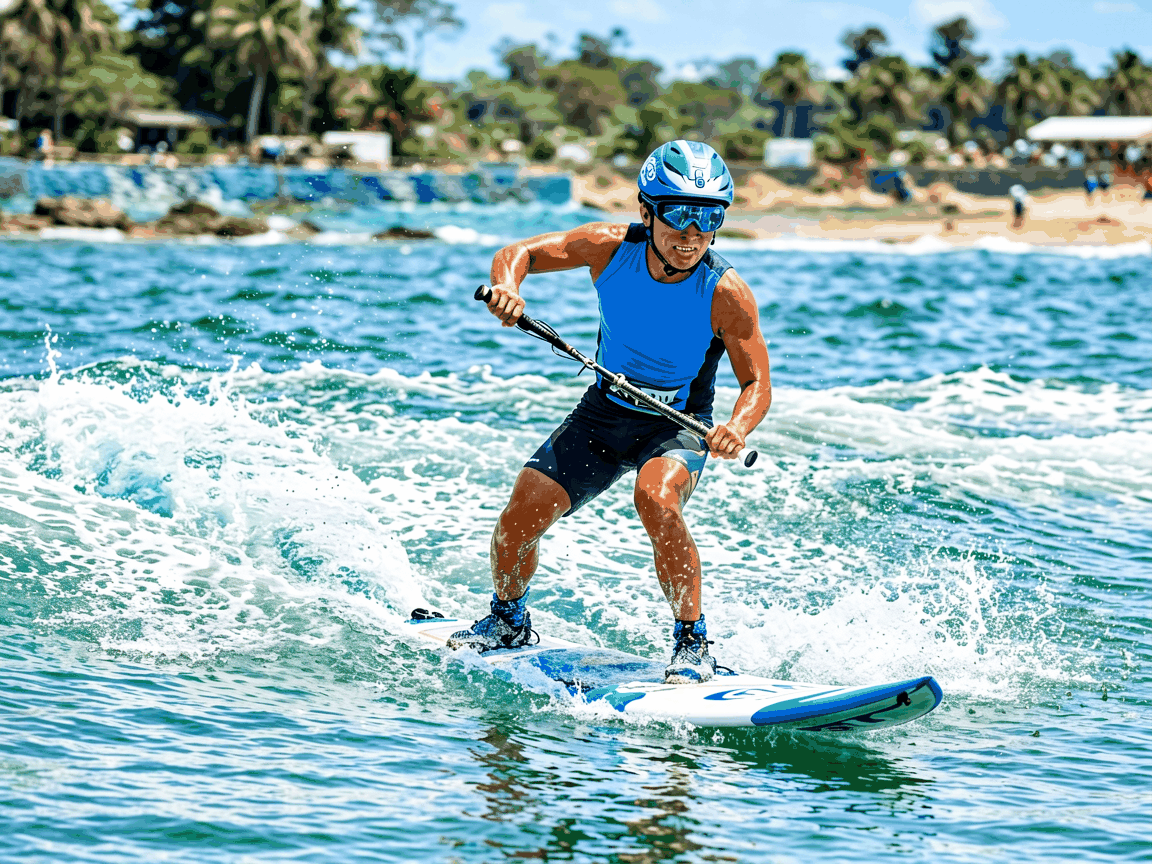
Powered Surfboard For Sale
Powered Surfboard for Sale
Electric propulsion systems have transformed recreational watercraft by enabling consistent thrust independent of wave conditions or paddling effort. This product page details the engineering specifications, operational parameters, and integration considerations for powered surfboards currently available for industrial and commercial procurement.
Propulsion System Architecture
The core of each powered surfboard is a sealed, water-cooled brushless DC motor integrated into a hydrodynamically shaped pod mounted beneath the board’s tail section. Motor continuous power ratings range from 5 kW to 15 kW depending on model, with peak torque delivered instantly across the operating RPM range to maintain planing speed in variable water conditions. Electronic speed controllers (ESCs) interpret throttle input via a wireless handheld trigger or pressure-sensitive deck sensor, modulating power delivery through sinusoidal commutation to minimize torque ripple and thermal buildup. Battery packs utilize lithium-ion NMC chemistry with nominal voltages between 36V and 72V, encased in IP68-rated aluminum housings with internal pressure equalization valves to prevent seal failure during depth changes. Thermal management relies on conductive transfer from motor windings to the surrounding water via the pod’s external fins, eliminating the need for active cooling pumps or fans that could introduce failure points in marine environments.
Board Construction and Hydrodynamics
Deck and hull structures are manufactured using vacuum-bagged epoxy composites with varying reinforcement schedules based on intended load capacity. Standard models employ a unidirectional carbon fiber skin over a PVC foam core, yielding a flexural modulus of approximately 18 GPa and a tensile strength exceeding 400 MPa in the longitudinal axis. High-load variants incorporate additional biaxial glass layers and stringer reinforcements to resist hogging and sagging under repeated impact loads, particularly relevant for rental fleets or training operations. The bottom contour features a hybrid displacement-to-planing shape with a moderate entry rocker (15–20 mm at the nose) and a flat aft section (last 600 mm) to promote early planing at speeds as low as 8 km/h. Rail volumes are softened near the nose to reduce pearling during acceleration, then progressively hardened toward the tail to enhance edge hold during turns. Fin configurations vary by model, typically consisting of a single center fin (150–200 mm depth) for tracking stability, optionally supplemented with side bites for improved lateral resistance in crosswinds or chop.
Performance Parameters and Envelope
Operational range is primarily dictated by battery capacity and average power draw, which itself varies with rider weight, water conditions, and throttle profile. Typical energy consumption rates fall between 120 Wh/km and 200 Wh/km at cruise speeds of 15–25 km/h, translating to usable ranges of 15–40 kilometers per charge depending on configuration. Maximum speed is electronically limited to between 35 km/h and 55 km/h across the product line, constrained not by motor capability but by hydrodynamic stability and safety considerations—beyond these speeds, the risk of nose-diving or loss of directional control increases significantly due to reduced wetted surface area and increased pitch sensitivity. Acceleration from rest to 20 km/h typically occurs in 3–5 seconds under full throttle, dependent on the power-to-weight ratio of the specific model. All systems include programmable soft-start and soft-stop profiles to reduce inertial loads on the drivetrain and improve rider comfort during launch and retrieval.
Control Interface and Rider Feedback
Throttle input is transmitted via a 2.4 GHz FHSS (Frequency-Hopping Spread Spectrum) wireless link between the handheld trigger and the board’s receiver unit, chosen for its resistance to interference from marine radios, radar, and onboard electronics. Signal latency remains under 20 ms end-to-end, ensuring immediate response to rider commands. The trigger itself features a spring-loaded, hall-effect sensor with adjustable tension and travel, allowing customization of the power curve to match rider preference or training protocols. Optional pressure-sensitive deck sensors are available as an alternative input method, utilizing a grid of capacitive pads beneath the front foot area to detect weight shift and apply proportional thrust—particularly useful in instructional settings where hand-mounted triggers may pose a snag hazard. Rider feedback is limited to basic LED indicators on the trigger or deck showing battery state of charge (SoC), fault codes, and connection status; advanced telemetry such as real-time power draw, speed, or GPS tracking requires aftermarket modules connected via the board’s UART or CAN bus expansion port.
Safety Systems and Redundancies
Primary safety functionality relies on a magnetic lanyard kill switch that physically opens a reed switch in the control circuit when detached, cutting power to the motor within 100 milliseconds—a faster response than electronic throttling alone could achieve. Secondary protection includes overcurrent detection in the ESC, which triggers a gradual power foldback if phase currents exceed safe thresholds for more than 3 seconds, preventing thermal runaway in the motor windings or battery connectors. Undervoltage protection halts output when battery voltage drops below 20% SoC to avoid deep discharge cycles that degrade lithium-ion cells. All electrical penetrations through the hull (motor shafts, sensor wires, charging ports) utilize dual-seal systems: a primary lip seal backed by a secondary potting compound or O-ring gland, verified through IP68 immersion testing to 1.5 meters for 30 minutes. Buoyancy chambers are sealed independently and tested to ensure the board remains afloat with a 100 kg load even if one compartment is compromised—a requirement derived from ISO 12217-2 stability criteria for small craft.
Typical Applications in Commercial and Institutional Settings
Powered surfboards serve distinct operational needs across several sectors where traditional wave-dependent surfing is impractical or inconsistent. In coastal rescue operations, they enable lifeguards to reach distressed swimmers quickly in flat or choppy conditions where personal watercraft may be too large or aggressive, and where swimming fins alone would be too slow. Marine research institutions use them as low-profile platforms for deploying sensors near the air-sea interface, minimizing wake disturbance compared to motorboats while allowing precise station-keeping in currents up to 2 knots. Surf schools and water sports centers integrate them into beginner programs to eliminate the variability of wave availability, ensuring consistent lesson delivery and reducing downtime during flat spells—particularly valuable in inland lake locations or regions with seasonal swell patterns. Military and coastal defense units evaluate them for rapid littoral reconnaissance, leveraging their quiet electric operation and low visual profile to approach shorelines undetected during low-light conditions.
Environmental and Operational Considerations
Unlike internal combustion alternatives, electric propulsion produces zero local emissions and operates below 65 dB(A) at full throttle, measured at a distance of 5 meters—well under typical marine noise ordinances and minimizing disturbance to aquatic life or nearby residents. The absence of exhaust, fuel leaks, or oil changes simplifies compliance with clean marina regulations and reduces routine maintenance burden. However, saltwater exposure necessitates specific material choices: all external fasteners are marine-grade stainless steel (A4-316), and any aluminum components undergo hard anodizing (Type III, >25 μm thickness) followed by a silicone-based sealant to prevent galvanic corrosion. Post-use rinse procedures with fresh water are mandatory to prevent chloride accumulation in crevices, particularly around the motor pod seal and charging port. Battery storage guidelines recommend maintaining a 40–60% SoC during extended idle periods and avoiding temperatures above 45°C or below 0°C to preserve cycle life—specifications that directly impact operational planning for rental fleets or seasonal operations.
Comparison of Standard Configurations
| Parameter | Entry Model | Performance Model | Load-Optimized Model |
|---|---|---|---|
| Motor Continuous Power | 5 kW | 10 kW | 15 kW |
| Battery Nominal Voltage | 36V | 48V | 72V |
| Battery Energy Capacity | 0.8 kWh | 1.2 kWh | 1.8 kWh |
| Typical Range (20 km/h cruise) | 15 km | 25 km | 35 km |
| Maximum Speed (Limited) | 35 km/h | 45 km/h | 55 km/h |
| Approximate Weight (Ready to Ride) | 18 kg | 22 kg | 28 kg |
| Recommended Rider Weight Range | 40–80 kg | 60–100 kg | 80–120 kg |
Values represent typical factory configurations; actual performance varies with rider technique, water temperature, salinity, and charge state. Customizations to battery capacity, motor winding, or hull reinforcement are available upon request for specific operational profiles.
Customization and Integration Options
Beyond standard models, several architectural adaptations are feasible to align the product with specialized workflows. Motor pods can be relocated forward or aft along a longitudinal track to adjust trim and balance for non-standard rider positions or payload distributions—particularly useful when mounting survey equipment, cargo baskets, or auxiliary batteries. Alternative fin systems, including retractable rudders or adjustable cant angles, are compatible with the existing fin box geometry to improve tracking in strong lateral currents or enhance maneuverability in confined spaces. Communication interfaces support external integration via CANopen or UART protocols, enabling telemetry logging, remote diagnostics, or synchronized control of multiple units in fleet operations. For applications requiring frequent battery swaps, quick-release mechanisms with guided alignment and automatic electrical connection (using blind-mate connectors) can be engineered to reduce changeover time under two minutes. OEM buyers may also specify alternative deck textures, such as diamond-ground EVA or molded non-slip patterns, to meet specific slip-resistance standards (e.g., DIN 51097 or ASTM F1637) under wet conditions.
Quality Assurance and Factory Testing
Each unit undergoes a standardized validation sequence prior to shipment. Hydrostatic testing confirms the integrity of all sealed enclosures at 2.0 meters depth for 10 minutes with no measurable ingress—exceeding the IP68 requirement to account for dynamic pressure variations during operation. Motor insulation resistance is measured at 500 VDC between windings and ground, with a minimum acceptance threshold of 100 MΩ to prevent leakage currents that could cause corrosion or control faults. Battery packs are subjected to a capacity verification test at 0.2C discharge rate, ensuring delivered energy meets or exceeds 95% of rated capacity before leaving the factory. Functional validation includes a full-throttle acceleration run to verify speed limiter behavior, followed by a low-voltage cutoff test to confirm safe shutdown at 20% SoC. All wireless systems are tested for packet loss and latency in a controlled RF environment simulating marina interference. Final inspection includes a visual check for cosmetic defects, verification of label legibility (including serial number, voltage rating, and warning symbols), and confirmation that all user manuals, charging cables, and safety lanyards are present and correctly packaged.
Procurement and Support Considerations
Industrial buyers should provide the following information during initial consultation to ensure accurate specification: intended primary use case (e.g., recreation, training, patrol), typical rider weight range and anticipated payload, average daily operational duration and required range between charges, environmental factors (saltwater exposure, temperature extremes, wave storage conditions), and any required third-party certifications or compliance standards (such as CE, FCC, or local marine equipment regulations). Lead times for standard models typically range from 4–6 weeks after receipt of purchase order, depending on battery and motor availability; custom configurations may extend this timeline based on tooling or certification needs. Packaging for international shipment includes a double-walled cardboard box with internal foam cradles designed to withstand 1.5G vertical shock and 15-degree corner drops per ISTA 3A standards, with desiccant packs included to control humidity during transit. Warranty terms cover the motor and electronic components for 12 months against manufacturing defects, with battery capacity guaranteed to retain at least 70% of initial rating over the same period or 300 full cycles, whichever occurs first—terms that reflect the predictable degradation characteristics of lithium-ion chemistry under normal use.