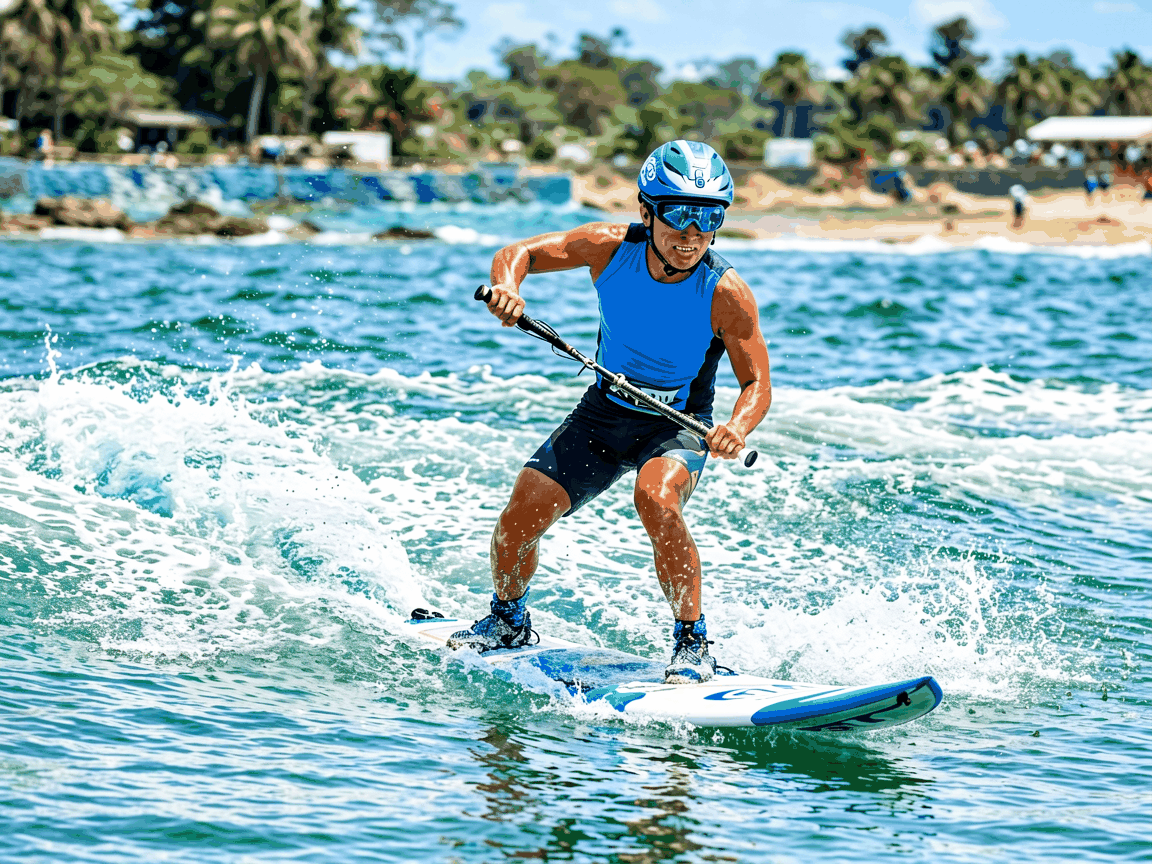
Wholesale Electric Powered Surfboard Manufacturer
Wholesale Electric Powered Surfboard Manufacturer
Electric powered surfboards represent a specialized segment of marine recreation equipment where electrical propulsion systems replace traditional wave-dependent movement. As a wholesale manufacturer, we focus on the engineering, production, and supply chain aspects required to deliver consistent, scalable units for commercial operators, rental fleets, and maritime leisure businesses. This page outlines the technical considerations, manufacturing parameters, and customization pathways involved in sourcing these units at volume.
Core System Architecture
The fundamental architecture of an electric surfboard integrates a sealed lithium-ion battery pack, a brushless direct current (BLDC) motor, a hydrodynamic jet propulsion unit, and an electronic speed controller (ESC) encapsulated within a buoyant, impact-resistant hull. Each subsystem must meet IP68 waterproofing standards for prolonged submersion, with thermal management critical for sustained power delivery. Motor efficiency typically ranges between 85–92% under load, directly influencing range and heat generation.
Battery energy density determines operational endurance; common configurations use 48V to 72V systems with capacities from 500Wh to 1500Wh, providing 30–90 minutes of active use depending on rider weight, speed profile, and water conditions. The ESC regulates power output based on throttle input from a wireless, waterproof handheld remote, often incorporating regenerative braking to recover energy during deceleration. Hull geometry is optimized via computational fluid dynamics (CFD) to minimize drag while maintaining stability at speeds up to 45–55 km/h.
Manufacturing Considerations for Volume Production
Scaling production requires strict tolerances in mold fabrication, particularly for the hull and motor compartment seals, where even 0.5mm deviations can compromise waterproofing or hydrodynamic performance. We utilize CNC-machined aluminum molds for composite layup processes, ensuring repeatability across batches. Battery packs undergo automated cell balancing and pressure testing during assembly, with each unit subjected to a 24-hour submersion test at 1-meter depth before leaving the production line.
Motor winding consistency is verified via inductance and resistance measurements; variations exceeding 3% between units trigger rework. ESC firmware is flashed with customized throttle response curves and thermal cutoffs based on client specifications, logged via serial number for traceability. Material selection for the hull—typically carbon fiber-reinforced polymer or fiberglass with epoxy resin—impacts both weight and repairability, with tensile strength and flex modulus documented per laminate schedule.
Customization Parameters
Wholesale buyers frequently adjust performance and ergonomic variables to align with rental models, training programs, or geographic operating conditions. Customization extends beyond aesthetics to include powertrain tuning, control interface logic, and structural reinforcements. These adjustments are engineered rather than cosmetic, affecting safety, usability, and lifecycle cost.
- Battery capacity: 500Wh–1500Wh in 100Wh increments, affecting range and charge time
- Motor KV rating: 180–300 RPM/V, tuned for top speed vs. torque emphasis
- Jet nozzle diameter: 60–90mm, influencing acceleration and maximum velocity
- Hull volume: 120–180L, calibrated for rider weight range (50–120kg)
- Remote control frequency: 2.4GHz or 900MHz, with optional GPS-based speed limiting
- Deck texture: molded EVA foam patterns or sand-grip coating for foot retention
Quality Control and Validation
Quality assurance begins at incoming material inspection, where battery cell voltage variance must remain under 10mV and hull laminate thickness is verified via ultrasonic gauging. During assembly, each motor undergoes a no-load spin test to detect bearing irregularities or stator shorts. Post-assembly, every unit completes a functional validation sequence: throttle response latency (<150ms), maximum speed verification via GPS logger, and battery cutoff accuracy at 10% residual charge.
We maintain a statistical process control (SPC) system tracking key parameters across production lots—such as seal compression force, ESC temperature rise under 30-minute continuous load, and hull weight deviation. Root cause analysis is initiated if any metric exceeds ±2σ from the mean. Final packaging includes desiccant packs and shock-indicating labels to monitor transit conditions, particularly for long-haul maritime freight.
Typical Specifications Table
| Parameter | Typical Range | Customizable? |
|---|---|---|
| Battery Voltage | 48V – 72V DC | Yes (cell configuration) |
| Motor Power (Peak) | 3–8 kW | Yes (winding/KV) |
| Max Speed | 45–55 km/h | Yes (propeller/nozzle) |
| Range (Typical Use) | 30–90 minutes | Yes (capacity/speed profile) |
| Charge Time (0–100%) | 2–5 hours | Yes (charger spec) |
| Hull Weight (No Battery) | 12–18 kg | Yes (material/layup) |
| Total Weight (With Battery) | 18–25 kg | Yes |
| Operating Temperature | 0°C – 40°C | No (chemistry-limited) |
Applications in Commercial Operations
Rental businesses prioritize durability and ease of maintenance; therefore, hulls are often specified with thicker gelcoat layers and reinforced rail guards to withstand frequent handling and beaching. Training centers favor models with adjustable power limits and programmable speed curves via the ESC, allowing instructors to cap performance for novice users. In coastal resorts where saltwater exposure is constant, we recommend marine-grade stainless steel fasteners and conformal coating on PCB assemblies to mitigate corrosion.
Municipal lifeguard agencies have begun evaluating electric surfboards for rapid response in zones inaccessible to jet skis due to swimmer proximity or shallow depth. Here, reliability under intermittent use and quick-deploy battery swapping become critical factors—features we address through modular battery trays and standardized mounting interfaces. Commercial success depends not only on peak performance but on consistent availability, which drives our focus on mean time between failures (MTBF) and spare part interchangeability across model generations.
For detailed technical consultations, volume pricing, or to request a product specification sheet, contact our engineering team directly.
Request Wholesale Inquiry