Cheap Jetsurf Gas Surfboard
Cheap Jetsurf Gas Surfboard
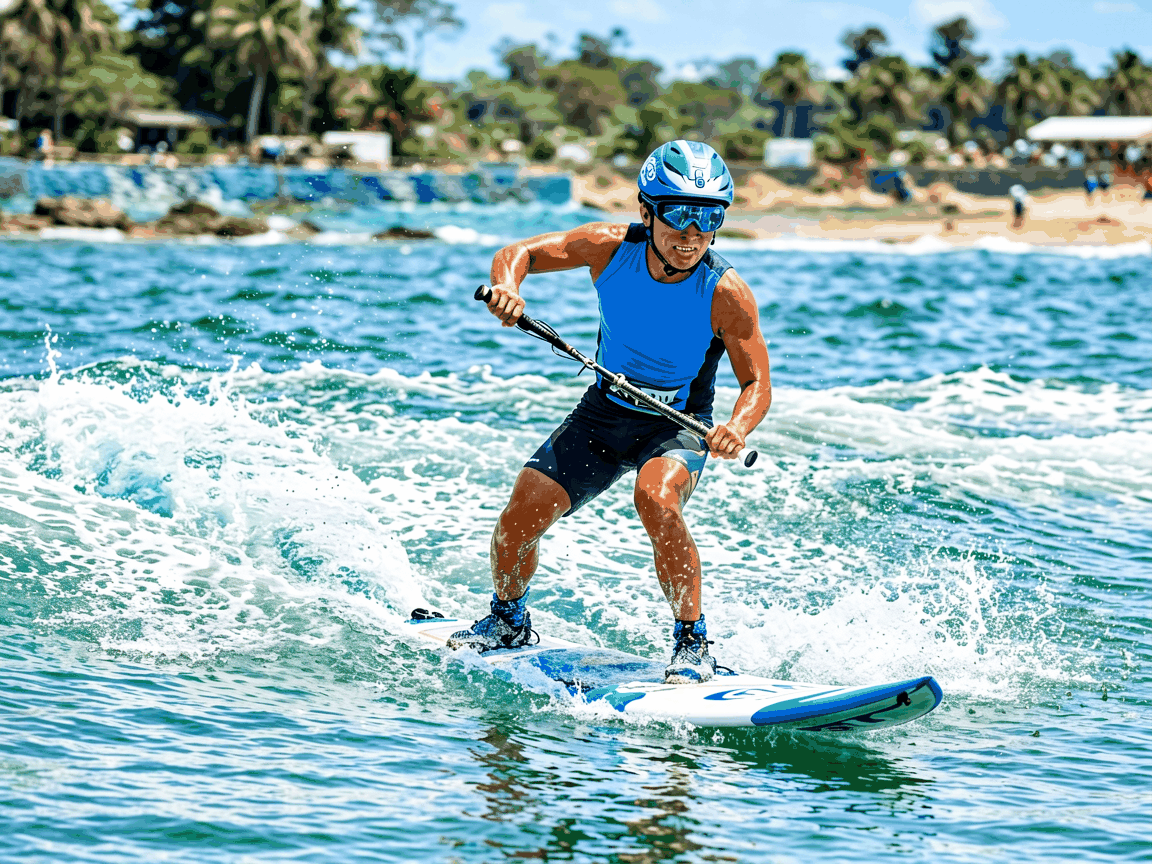
A cheap Jetsurf gas surfboard refers to a personal watercraft powered by a small internal combustion engine, designed for riders to stand and maneuver on open water without waves or tow assistance. Unlike electric models, these units rely on gasoline-fed two-stroke or four-stroke engines to drive a jet pump, providing thrust through a nozzle at the stern. The term “cheap” in this context indicates a lower acquisition cost, typically achieved through simplified design, reduced material thickness, or standardized components, rather than compromised safety or core functionality.
These boards are engineered for recreational use in calm to moderate conditions, such as lakes, rivers, and sheltered coastal areas. The hull shape combines elements of a surfboard and a personal watercraft, featuring a planing surface that lifts the rider above the water at speed. Steering is controlled via handlebars connected to a pivoting nozzle, while throttle management regulates engine output. Buyers seeking affordability often prioritize models with accessible maintenance points, widely available spare parts, and straightforward servicing procedures to minimize long-term ownership costs.
Key Technical Characteristics
The propulsion system typically consists of a single-cylinder engine ranging from 80cc to 120cc displacement, producing between 5 and 15 horsepower depending on tuning and fuel mixture. Most budget-oriented units use air-cooled two-stroke designs for simplicity and weight reduction, though some models incorporate four-stroke variants for improved fuel efficiency and lower emissions. Fuel tank capacity averages between 2 and 4 liters, providing 30 to 90 minutes of runtime at cruising speed, with consumption rates influenced by rider weight, water conditions, and throttle usage.
Hull construction commonly employs high-density polyethylene (HDPE) or fiberglass-reinforced plastic (FRP) with a foam core for buoyancy and impact resistance. Entry-level models often use rotomolded HDPE due to its low tooling cost and durability against UV exposure and minor impacts. Deck surfaces feature non-slip texturing or EVA foam pads to maintain rider stability. Dimensions generally fall within 2.0 to 2.5 meters in length, 0.6 to 0.8 meters in width, and 0.15 to 0.25 meters in thickness, with dry weights ranging from 25 to 40 kilograms depending on materials and engine size.
Performance and Operational Factors
Top speed for these boards typically ranges from 25 to 40 km/h (15 to 25 mph), constrained by hull drag, propeller efficiency, and engine power output. Acceleration is gradual compared to high-end models due to limited torque and higher power-to-weight ratios. Handling characteristics emphasize stability over agility, with wider hulls and lower centers of gravity reducing the likelihood of tipping during turns. However, this design trade-off results in a larger turning radius and less responsive feel during sharp maneuvers.
Operational considerations include mandatory pre-ride checks such as fuel line integrity, throttle cable responsiveness, and emergency shut-off switch functionality. Riders must wear personal flotation devices (PFDs) and, in many jurisdictions, complete a boating safety course. Saltwater use requires thorough rinsing after each session to prevent corrosion of metal components, particularly in the jet pump assembly and steering mechanism. Storage in a dry, shaded environment extends the lifespan of plastic components and prevents fuel degradation.
Comparison: Jetsurf Gas Surfboard Variants
| Feature | Entry-Level (Cheap) | Mid-Range | High-End |
|---|---|---|---|
| Engine Type | Air-cooled 2-stroke | Air-cooled 2-stroke or 4-stroke | Liquid-cooled 4-stroke |
| Displacement | 80–100 cc | 100–120 cc | 120–150 cc |
| Horsepower | 5–8 hp | 8–12 hp | 12–18 hp |
| Hull Material | Rotomolded HDPE | Fiberglass or HDPE | Carbon fiber or kevlar composite |
| Fuel Capacity | 2–3 L | 3–4 L | 4–5 L |
| Dry Weight | 30–40 kg | 25–35 kg | 20–30 kg |
| Top Speed | 25–30 km/h | 30–35 km/h | 35–45 km/h |
| Maintenance Interval | Every 10 hours | Every 15 hours | Every 20–25 hours |
The table above illustrates typical trade-offs across price tiers. Entry-level models prioritize low initial cost and simplicity, using heavier, more durable plastics and basic engine tuning. Mid-range options balance weight reduction with improved materials and optional features like adjustable trim. High-end variants focus on performance, utilizing lightweight composites and advanced engine management for higher speeds and longer runtime. Buyers should assess their intended use: occasional recreational riders may find entry-level models sufficient, while frequent users or those in choppy water benefit from the responsiveness and efficiency of higher-tier boards.
Applications in Recreational and Light Commercial Use
Cheap Jetsurf gas surfboards are commonly deployed in rental operations at lakeside resorts, where durability and ease of maintenance outweigh peak performance. Their straightforward mechanics allow staff with minimal training to perform routine checks and minor repairs, reducing downtime. In guided tour scenarios, the stable handling characteristics improve safety for novice riders, while the audible engine provides situational awareness in shared waterways. Some models are adapted for light patrol or surveillance duties in calm inland waters, where low speed and maneuverability around obstacles are valued over high-speed pursuit.
Private owners use these boards for short-distance transportation across reservoirs or along riverbanks, avoiding the need for trailers or launch ramps associated with larger watercraft. The compact size enables storage in a standard garage or truck bed. In aquatic training programs, instructors may use them to demonstrate watercraft dynamics or as chase boats for swimmers, benefiting from the direct drive and immediate throttle response. However, their limited range and exposure to engine noise and vibration make them unsuitable for extended offshore use or competitive racing.
Maintenance and Lifecycle Considerations
Routine maintenance for these boards centers on the engine and jet pump. Two-stroke models require pre-mixing oil with gasoline at a ratio typically between 25:1 and 50:1, depending on manufacturer specifications. Spark plugs should be inspected every 10–15 hours and replaced if fouled or worn. The jet pump intake grate must be cleared of debris after each use to prevent cavitation and impeller damage. Fuel filters, if present, need periodic replacement to avoid clogging from ethanol-blended fuels, which can degrade rubber components over time.
Hull integrity should be checked monthly for stress cracks, particularly around mounting points and the transom where the engine mounts. HDPE hulls can be repaired with plastic welding kits, while FRP sections may require fiberglass patches and resin. Steering cables and throttle linkages benefit from light lubrication every 20 hours to prevent seizing. Storage with fuel stabilizer added to the tank prevents varnish buildup in the carburetor during long idle periods. Owners in humid climates should inspect electrical connections (if equipped with kill switches or lights) for corrosion quarterly.
Safety and Regulatory Compliance
These devices are classified as personal watercraft (PWCs) in most maritime jurisdictions and are subject to the same regulations as jet skis or wave runners. Operators must meet minimum age requirements, often 16 years with supervision or 18 years unsupervised, and may need to complete a state-approved boating safety course. Many regions mandate the use of an engine cut-off switch (ECOS) lanyard attached to the rider’s wrist or life jacket to shut off the engine if they fall off. Navigation lights are not typically included, restricting operation to daylight hours in many areas.
Noise emissions are regulated in certain zones, particularly near residential shorelines or wildlife sanctuaries. Two-stroke engines produce higher decibel levels than four-stroke counterparts, which may limit usage in noise-sensitive environments. Manufacturers provide emission labels indicating compliance with EPA or CARB standards, though older or imported models may not meet current tiers. Buyers should verify local laws regarding registration, insurance, and permitted waterways before purchase, as some inland lakes prohibit gasoline-powered craft entirely.
Cost of Ownership Breakdown
Beyond the initial purchase price, ongoing expenses include fuel, oil (for two-stroke mixes), routine servicing, and potential repairs. Fuel consumption averages 1.5 to 3 liters per hour at cruising speed, translating to approximately $3–$6 per hour based on current gasoline prices. Two-stroke oil adds roughly $0.50–$1.00 per hour. Annual maintenance, assuming 50 hours of use, may include spark plug replacement ($10–$15), fuel filter ($8–$12), and impeller inspection ($20–$40 if performed by a technician). Winterization in colder climates adds $25–$50 for fuel stabilizer and fogging oil.
Repair costs vary widely. A damaged impeller from debris ingestion can cost $50–$100 to replace, while a seized engine due to inadequate lubrication may exceed $200 in parts and labor. Hull repairs are generally inexpensive for HDPE ($20–$50 for materials) but more costly for composite structures. Insurance premiums, where required, typically range from $100–$300 annually for liability coverage. Depreciation is significant, with most models losing 40–60% of value within three years due to wear, technological obsolescence, and market saturation of used units.