China Gas Surfboard Manufacturer
China Gas Surfboard Manufacturer
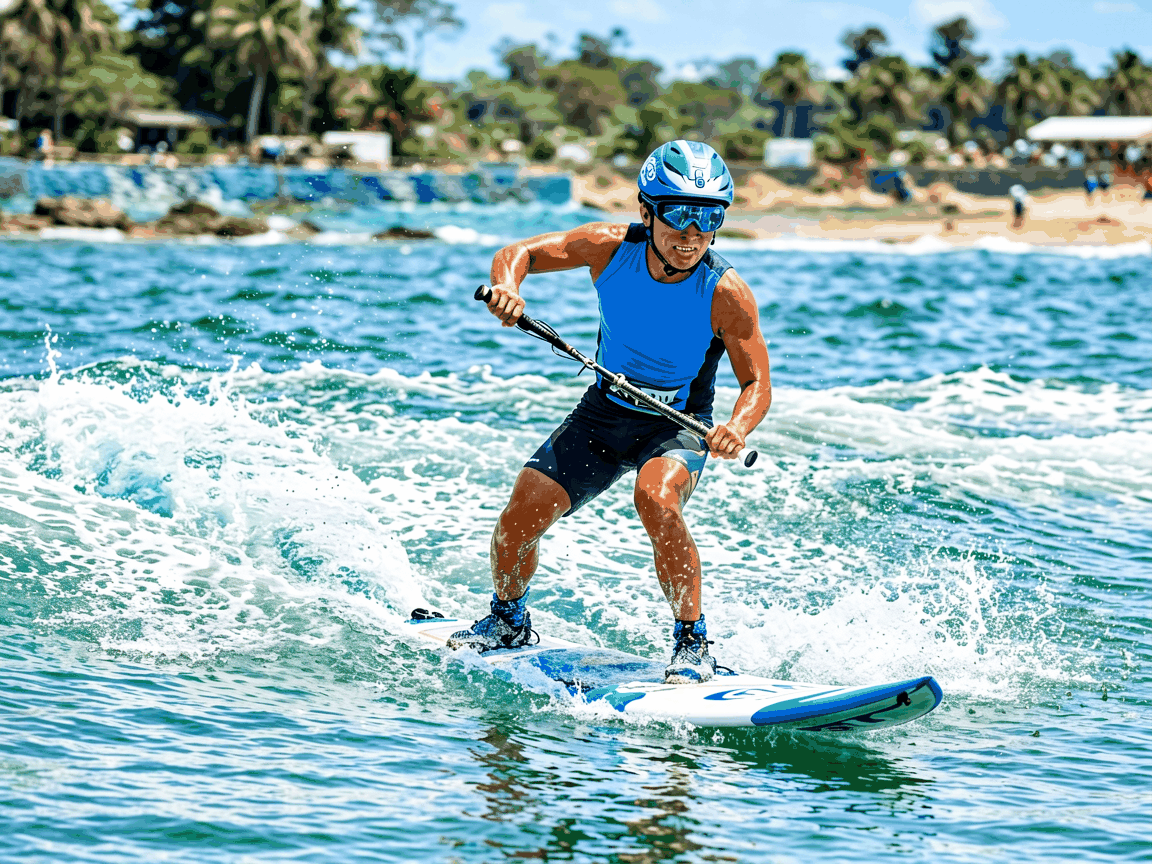
Gas-powered surfboards represent a niche segment of personal watercraft where internal combustion engines provide propulsion independent of battery capacity or charging infrastructure. Unlike electric models, these systems rely on compact two-stroke or four-stroke engines integrated into a buoyant hull, delivering sustained operation for extended recreational or patrol use. Manufacturers in China have developed expertise in adapting small marine engines to surfboard platforms, focusing on weight distribution, vibration damping, and corrosion resistance for saltwater environments.
The core engineering challenge lies in balancing engine power, fuel efficiency, and hull stability. Typical configurations use engines ranging from 5 to 15 horsepower, mounted vertically or at a slight aft angle to minimize drag and maintain planing characteristics. Fuel tanks are commonly positioned low and centrally to preserve balance, constructed from HDPE or cross-linked polyethylene to resist fuel permeation and UV degradation. Steering is achieved through handlebar-linked rudder systems or weight-shift mechanisms, depending on model design.
Material selection prioritizes impact resistance and long-term durability. Hulls are typically rotomolded from linear low-density polyethylene (LLDPE) or fiberglass-reinforced polyester composites, chosen for their ability to withstand repeated impacts with waves, debris, and beach launches. Reinforcement ribs are molded into the hull structure to increase stiffness without adding significant weight, while non-slip deck surfaces incorporate textured patterns or EVA foam inserts for rider safety.
Vibration isolation is critical to prevent engine fatigue from transferring to the rider and hull structure. Rubber mounts or neoprene isolators are used between the engine bed and hull, tuned to dampen frequencies in the 10–50 Hz range where two-stroke engines exhibit peak vibration. Exhaust systems are routed through water-jacketed silencers or dry mufflers with spark arrestors to meet noise regulations and prevent saltwater corrosion in the exhaust tract.
Fuel delivery systems employ carburetors or electronic fuel injection (EFI) depending on engine size and emission requirements. EFI systems offer improved starting reliability, altitude compensation, and reduced fuel consumption, particularly beneficial in varying operating conditions. Fuel lines are SAE J1527 compliant, resistant to ethanol blends, and routed away from heat sources to prevent vapor lock.
Safety features include automatic shut-off lanyards, throttle return springs, and flame arrestors on carburetor intakes. Some models incorporate tilt sensors that kill the engine if the board exceeds a predefined angle, reducing risk during falls. Bilge drainage channels are molded into the hull to expel ingressed water, and drain plugs allow for easy drying after use.
Typical performance metrics vary by model: top speeds range from 25 to 35 mph for recreational units, with higher-performance variants exceeding 40 mph. Cruising range depends on fuel tank capacity and engine efficiency, commonly between 60 and 120 minutes at moderate throttle. Weight typically falls between 35 and 55 kg, influenced by engine size, hull material, and fuel load.
Applications extend beyond recreation to include lifeguard patrols, coastal monitoring, and light rescue operations in zones inaccessible to larger vessels. The low draft and maneuverability allow operation in shallow water, surf zones, and near-shore environments where jet skis may be restricted. Compact size also facilitates transport and storage on trailers, roof racks, or small boats.
Customization options are frequently available to meet specific operational needs. These include alternative engine brands (e.g., Honda, Briggs & Stratton, or Chinese-made clones), custom hull colors, extended fuel tanks, GPS mounts, and specialized steering systems. Buyers can request reinforced hull layups for commercial use or lighter configurations for performance-oriented models.
| Parameter | Typical Range | Notes |
|---|---|---|
| Engine Power | 5–15 hp | Two-stroke or four-stroke; air or water-cooled |
| Hull Material | LLDPE or Fiberglass | Rotomolded or hand-laid; UV-stabilized |
| Fuel Capacity | 3–6 liters | HDPE tank; EPA/CARB compliant fuel lines |
| Top Speed | 25–40 mph | Dependent on hull design and propeller pitch |
| Operating Weight | 35–55 kg | Excludes rider and fuel |
| Steering Method | Handlebar rudder or weight-shift | Model-dependent; some offer hybrid systems |
Quality control procedures focus on hydrostatic hull testing, engine run-in verification, and dynamic balancing of rotating components. Each unit undergoes a minimum 30-minute operational test in water to confirm steering response, throttle linearity, and leak integrity. Final inspection includes torque verification of critical fasteners, safety switch functionality, and visual assessment of finish and labeling.
Packaging for export typically involves triple-wall corrugated cartons with internal bracing and foam corner protectors. Hulls are wrapped in vapor-corrosion inhibiting (VCI) film, and engines are drained of fuel and lubricants prior to shipment unless otherwise specified. Palletized shipments include shock indicators and tilt sensors to monitor handling conditions during transit.
For detailed specifications, customization requests, or quotation assistance, contact the manufacturer directly to discuss project requirements, including intended use, operating environment, and regulatory compliance needs.