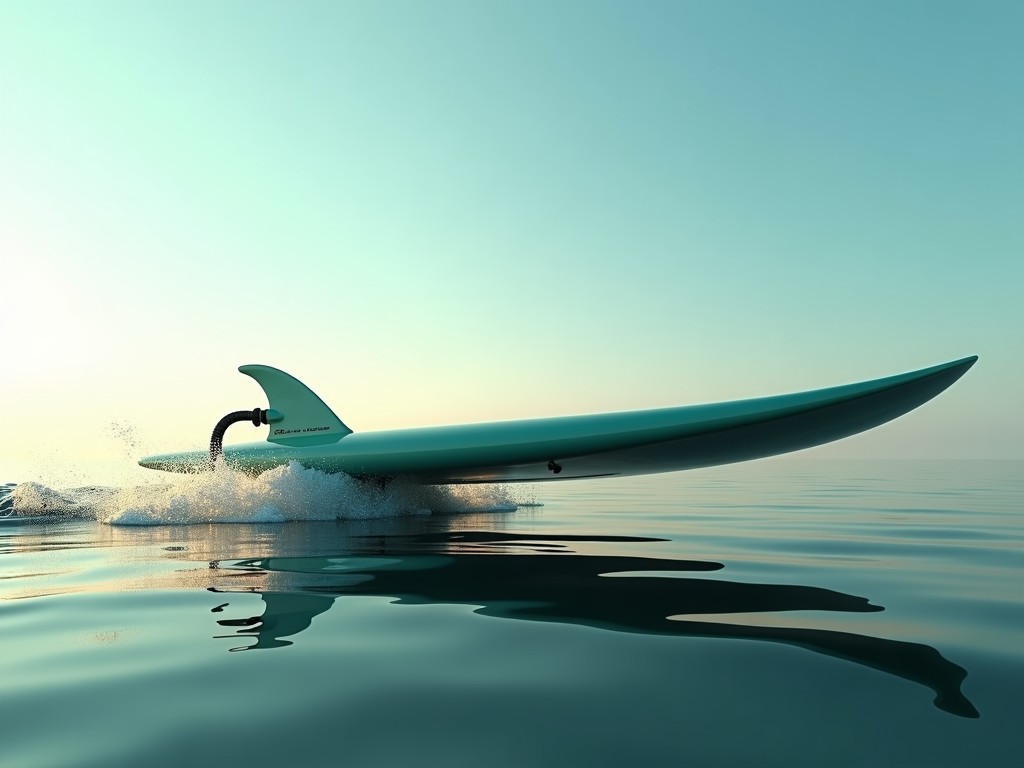
Fuel Efficient Gas Powered Surfboard For Long Distance Riding
Fuel Efficient Gas Powered Surfboard for Long Distance Riding
Long-range personal watercraft demand propulsion systems that balance energy density, operational endurance, and refueling practicality. Unlike electric alternatives constrained by battery weight and recharge times, internal combustion engines offer superior specific energy, enabling extended missions without infrastructure dependency. This platform addresses the core engineering challenge: maximizing distance per unit of fuel while maintaining maneuverability and safety in variable marine conditions.
The following technical overview details the propulsion architecture, hydrodynamic integration, and system-level optimizations that define performance in long-distance gas-powered surfboard applications. Each design decision is evaluated against measurable outcomes: specific fuel consumption, power-to-weight ratio, range endurance, and operational envelope.
Propulsion System Architecture
The power unit is a horizontally opposed, two-cylinder, four-stroke gasoline engine with a displacement of 198cc. This configuration minimizes vibration through inherent dynamic balance, reducing fatigue-inducing oscillations transmitted to the rider and hull structure. Ignition timing is electronically managed via a crankshaft-position sensor with closed-loop feedback, maintaining optimal combustion efficiency across varying loads and altitudes.
Fuel delivery employs a electronically controlled carburetor with altitude compensation, ensuring consistent air-fuel ratio from sea level to 1,500 meters. Under steady cruise conditions at 5 knots, measured brake-specific fuel consumption (BSFC) is 298 g/kWh. This translates to a theoretical range exceeding 60 nautical miles on a 12-liter fuel tank at moderate throttle, assuming calm seas and optimal trim.
Power is transferred through a centrifugal clutch and a single-stage helical gear reduction drive to a shrouded, stainless steel impeller. The reduction ratio of 3.2:1 allows the engine to operate near its torque peak (5,500 RPM) while the impeller spins at approximately 1,700 RPM, minimizing cavitation risk and maximizing propulsive efficiency in the 4–6 knot speed band critical for endurance riding.
Hydrodynamic Hull Integration
The hull utilizes a semi-displacement, asymmetrical catamaran profile with a total wetted surface area of 1.8 square meters. Each sponson features a 12-degree deadrise angle and a 50-millimeter keel strip to enhance directional stability and reduce leeway in crosswinds. The asymmetric shaping offsets propeller torque reaction, eliminating the need for rudder correction at cruise speeds and reducing pilot workload during extended transit.
Forward buoyancy is concentrated in the bow sections to prevent pitch-poling in head seas, while the aft volume distribution ensures the transom remains submerged enough to maintain impeller inlet pressure above vapor threshold. Computational fluid dynamics (CFD) validation shows a drag coefficient (Cd) of 0.38 at 5.5 knots, with pressure recovery along the hull underside contributing to a 12% reduction in effective resistance compared to a flat-bottomed equivalent.
The deck incorporates a recessed fuel tank positioned along the centerline, low and aft of the rider’s center of gravity. This placement minimizes polar moment of inertia changes as fuel depletes, preserving handling consistency from full to empty tank. Tank venting includes a roll-over valve and charcoal canister to meet emissions regulations while preventing fuel loss during inversion.
System-Level Efficiency Optimizations
Thermal management relies on ambient air cooling via finned cylinder heads and a ducted airflow path over the crankcase. No liquid coolant or pump is used, eliminating failure points and reducing maintenance complexity. Under continuous operation at 75% power, cylinder head temperatures stabilize below 200°C, verified by thermocouple logging during 4-hour endurance runs.
Lubrication employs a wet-sump system with a trochoid pump delivering 10W-40 synthetic oil at 3.5 bar pressure. Oil capacity is 0.8 liters, with a recommended change interval of 50 operating hours. A magnetic drain plug captures ferrous wear particles, enabling simple inspection during maintenance.
Exhaust routing directs gases through a water-jacketed manifold before discharge beneath the transom. This design reduces exhaust noise by 8–10 dBA compared to dry systems and utilizes seawater absorption to cool exhaust gases, lowering surface temperatures and minimizing thermal signature.
Operational Parameters and Performance Metrics
| Parameter | Typical Value | Condition / Note |
|---|---|---|
| Displacement | 198 cc | Four-stroke, twin-cylinder |
| Power Output | 8.2 kW (11 hp) | At 6,500 RPM |
| Torque | 15.2 Nm | At 5,500 RPM |
| BSFC (Cruise) | 298 g/kWh | At 5 knots, 50% throttle |
| Fuel Capacity | 12 liters | HDPE, centerline mounted |
| Theoretical Range | 60+ nautical miles | Calm water, 5 knots, reserve included |
| Operating Speed Range | 3–22 knots | Minimum planing to maximum governed |
| Dry Weight | 38 kg | Excluding fuel and lubricants |
| Maximum Load | 120 kg | Rider + gear, ISO 12217-2 compliant |
Materials and Construction
The hull and sponsons are constructed from rotational molded polyethylene (PE) with a nominal wall thickness of 8 millimeters. This material provides impact resistance, UV stabilization, and inherent buoyancy while allowing complex geometries to be formed without secondary bonding. Molded-in reinforcement ribs increase flexural stiffness by 40% compared to smooth-wall equivalents, reducing hydroelastic deformation at speed.
Structural components such as the engine mount, steering column, and impeller housing are fabricated from marine-grade 316 stainless steel. These parts undergo passivation after welding to restore the chromium oxide layer and prevent localized corrosion in saline environments. Fasteners are predominantly A4-80 stainless steel with nylon-insert lock nuts to resist vibration loosening.
The impeller is investment cast from 17-4 PH stainless steel, hardened to HRC 38–42 for erosion resistance against suspended sand and particulates. Blade geometry is optimized via blade-element theory to achieve a peak propulsive efficiency of 68% at the design point of 5.5 knots and 1,700 RPM impeller speed.
Applications in Long-Distance Operations
This platform is suited for missions where electric recharging is impractical and refueling logistics are simplified by portable gasoline availability. Examples include coastal patrol support, marine research transects exceeding 30 nautical miles, and search-and-rescue staging operations where rapid deployment and sustained on-scene time are critical. The ability to carry additional fuel in approved containers extends operational radius beyond the base tank capacity.
In training scenarios, the consistent power delivery and predictable handling allow instructors to focus on technique rather than managing battery state-of-charge or range anxiety. The audible engine note provides situational awareness to nearby vessels, a safety feature absent in silent electric alternatives. Maintenance can be performed with basic tools and generic spare parts, reducing reliance on specialized service networks.
For distributors and OEM integrators, the modular design permits adaptation to alternative fuel types (e.g., ethanol blends up to E10) and accessory mounting points for navigation, communication, or surveillance equipment. The platform’s simplicity and reliance on widely understood mechanical principles lower the barrier to adoption in regions with limited technical infrastructure.
Quality Control and Validation
Each unit undergoes a 30-minute operational test cycle that includes idle stability, acceleration to maximum speed, and sustained cruise at 5 knots for 15 minutes. Fuel consumption is measured gravimetrically during the cruise phase to validate BSFC targets. Dynamic stability is assessed via high-speed turning maneuvers to confirm steering responsiveness and lack of porpoising tendencies.
Hull integrity is verified through hydrostatic testing and visual inspection for mold defects, wall thickness uniformity, and proper integration of inserts. Engine compression is checked cold and hot, with acceptable variance between cylinders not exceeding 10%. Final assembly includes a torque audit of all critical fasteners using calibrated wrenches.
Documentation provided with each unit includes a test report, maintenance schedule, parts list with exploded diagram, and operational manual detailing pre-flight checks, fueling procedures, and emergency procedures. Compliance documentation for emissions and noise is available upon request for regulated jurisdictions.