High Horsepower Gas Powered Surfboard
High Horsepower Gas Powered Surfboard
This section outlines the technical characteristics, performance parameters, and operational considerations for high horsepower gas powered surfboards designed for professional water sports applications. The information focuses on measurable engineering attributes to support informed evaluation by procurement specialists and marine equipment engineers.
Core Propulsion System Specifications
The propulsion system utilizes a two-stroke or four-stroke internal combustion engine mounted internally within the hull, connected to a jet pump or propeller system via a sealed driveshaft. Engine displacement typically ranges from 600cc to 1100cc, producing peak power outputs between 80 and 150 horsepower at 6,000–8,000 RPM, depending on model and tuning. Power delivery is managed through a centrifugal clutch and variable pitch impeller system to optimize thrust across operating speeds.
Fuel consumption rates vary between 8 and 15 liters per hour at cruising speed, with fuel tanks integrated into the hull structure holding 15–25 liters. Cooling is achieved through a raw water intake system that circulates lake or seawater around the engine block and exhaust manifold, eliminating the need for a separate radiator. Exhaust gases are expelled via a water-jacketed system to reduce noise and surface visibility.
Hull Construction and Hydrodynamic Design
The hull is constructed using fiberglass-reinforced polymer (FRP) with a sandwich core of PVC foam or balsa wood, providing a strength-to-weight ratio suitable for high-speed planing conditions. Typical hull weight ranges from 35 to 50 kilograms, depending on size and reinforcement layers. The bottom contour features a deep V-entry forward transitioning to a flat or slightly concave planing surface aft, minimizing drag and enhancing stability at speeds exceeding 60 km/h.
Length overall (LOA) varies between 2.4 and 3.0 meters, with beam widths of 0.6–0.8 meters to balance maneuverability and lateral stability. The rider platform is positioned slightly aft of center to optimize weight distribution during acceleration and turning. Strategic placement of buoyancy chambers ensures positive flotation even if the hull is compromised, meeting ISO 12217-2 stability criteria for small craft.
Control and Safety Systems
Throttle control is delivered via a cable-actuated or electronic throttle-by-wire system connected to a handlebar-mounted twist grip, providing proportional engine response. Steering is achieved through a nozzle vectoring system linked to the handlebars, allowing directional control by adjusting the thrust vector left or right. A kill switch lanyard is standard, designed to cut ignition and fuel supply if the rider separates from the unit.
Additional safety features include an automatic idle shutdown system that engages after 30 seconds of no throttle input, reducing fuel consumption and preventing unintended motion. Flame arrestors are integrated into the intake system to prevent backfire ignition of fuel vapors. All electrical components are sealed to IP67 rating, and wiring uses tinned marine-grade conductors to resist corrosion in saltwater environments.
Performance Parameters and Operational Envelope
Maximum speed is primarily determined by hull design, power-to-weight ratio, and impeller efficiency, with typical top speeds ranging from 80 to 110 km/h under optimal conditions. Acceleration from 0 to 50 km/h typically occurs in 3.5–5.0 seconds, depending on rider weight and water conditions. Turning radius is influenced by hull length and nozzle responsiveness, generally falling between 4 and 8 meters at cruising speed.
Operational limits include a maximum recommended rider weight of 120 kilograms to maintain planing efficiency and stability. Minimum operating water depth is 0.6 meters to prevent impeller cavitation and hull grounding. The system is designed for use in freshwater and saltwater environments, with post-operation flushing recommended to mitigate corrosion in saline conditions. Operational altitude is limited to 1,500 meters above sea level due to air density effects on engine performance.
Maintenance Requirements and Service Intervals
Routine maintenance includes inspection and replacement of spark plugs every 25–30 operating hours, depending on fuel quality and operating conditions. The fuel filter should be replaced every 50 hours or annually, whichever occurs first. Impeller clearance and wear ring condition are checked every 100 hours to maintain pump efficiency, with typical clearance specifications between 0.2 and 0.5 mm.
Engine oil (for four-stroke models) or fuel-oil mixture ratio (for two-stroke) must be checked before each use and changed every 10–15 hours. The cooling system intake grate should be inspected and cleared of debris after each use to prevent blockage. Annual servicing includes compression testing, exhaust system inspection, and hull integrity checks for delamination or impact damage. Maintenance logs are recommended to track component life and schedule predictive replacements.
Applications in Professional and Recreational Marine Sectors
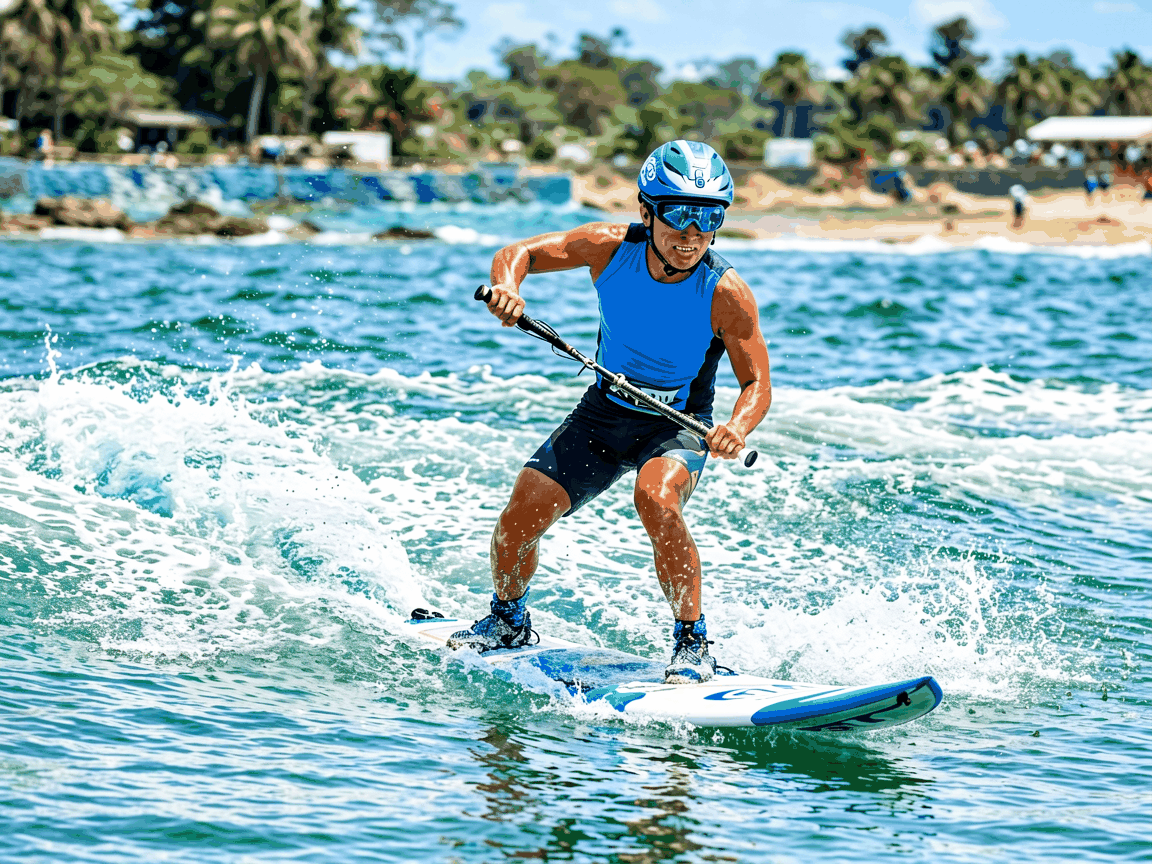
High horsepower gas powered surfboards are utilized in professional water sports training facilities where rapid acceleration and high-speed maneuverability are required for athlete development in disciplines such as jet surf racing and freestyle riding. The consistent power output and immediate throttle response support repetitive training cycles without the variability associated with human-powered or electric alternatives.
In commercial tourism operations, these units support guided high-speed excursions in coastal and inland waterways, offering passengers an adrenaline-focused experience with minimal setup time between rides. Their compact size allows for efficient storage and transport on trailers or boat decks. Rescue and patrol agencies employ modified configurations for rapid response in shallow or congested areas where larger vessels cannot operate, leveraging the platform’s agility and shallow draft.
Research and development teams use standardized models as test platforms for evaluating new hull materials, propulsion efficiencies, and control systems under repeatable high-load conditions. The mechanical simplicity of the gas-powered system allows for easier instrumentation and data logging compared to electric systems with complex battery management.
Comparison of Key Model Variants
| Parameter | Entry-Level Model | Intermediate Model | High-Performance Model |
|---|---|---|---|
| Engine Displacement | 600cc | 800cc | 1100cc |
| Peak Horsepower | 80 HP | 110 HP | 150 HP |
| Dry Weight | 38 kg | 42 kg | 48 kg |
| Fuel Capacity | 15 L | 20 L | 25 L |
| Max Speed (Est.) | 85 km/h | 95 km/h | 105 km/h |
| Typical Use Case | Recreational, Training | Commercial Tours, Patrol | Racing, High-Speed Response |
Customization Options and Integration Considerations
Customization options include alternative impeller designs tailored to specific torque or speed characteristics, adjustable trim systems to optimize hull attitude at speed, and reinforced hull layups for increased impact resistance in rocky or debris-laden environments. Handlebar configurations can be modified for ergonomic preference, including adjustable height and width, with optional foam grips or vibration-dampening mounts.
Fuel system modifications are available for ethanol-blended fuel compatibility or alternative fuel types, requiring corresponding adjustments to jetting and ignition timing. Electrical systems can be upgraded to include GPS speedometers, tachometers, or wireless kill switches with extended range. For commercial operators, optional storage compartments or tow points can be integrated into the hull design without compromising hydrodynamic performance.
All customizations are subject to engineering review to ensure compliance with weight distribution, balance, and safety standards. Modifications that alter the center of gravity or increase hull mass beyond 10% of base weight may require revalidation of stability and handling characteristics. Documentation of all changes is recommended for liability and insurance purposes.
For detailed specifications, customization inquiries, or to request a technical datasheet, please contact our engineering team. We provide consultation on model selection based on intended use, environmental conditions, and operational requirements.
Request Technical Consultation