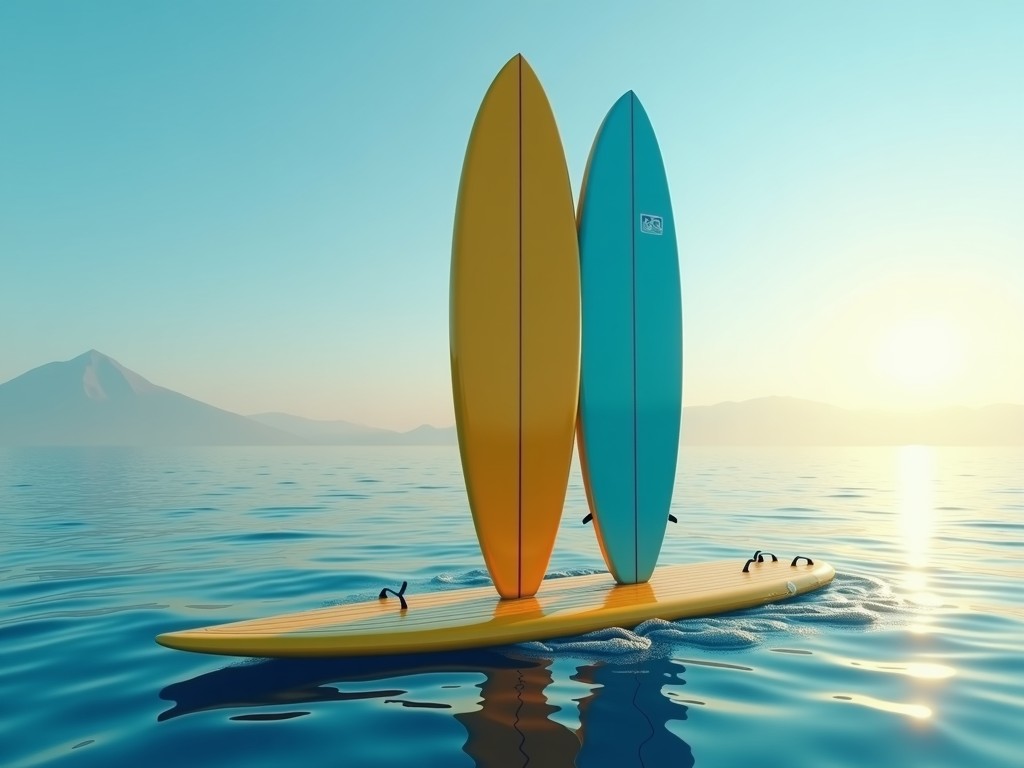
High Speed Gasoline Surfboard
High Speed Gasoline Surfboard
A high speed gasoline surfboard is a motorized watercraft designed for planing across water surfaces at elevated velocities using an internal combustion engine. Unlike electric or human-powered variants, it relies on a gasoline-fueled two-stroke or four-stroke engine to drive a jet pump or propeller system, enabling sustained speeds typically ranging from 30 to 50+ km/h depending on model configuration and water conditions. These boards are engineered for performance-oriented applications where rapid acceleration, extended operational range, and independence from charging infrastructure are critical requirements.
Core Technical Specifications
The performance envelope of a gasoline surfboard is defined by several interdependent engineering parameters. Engine displacement typically ranges from 40cc to 100cc, directly influencing power output and torque curve characteristics. Most production models utilize air-cooled two-stroke engines for their high power-to-weight ratio, though four-stroke variants are increasingly adopted for improved fuel efficiency and lower emissions. Fuel tank capacity generally falls between 1.5 and 3.0 liters, providing operational endurance of 60 to 90 minutes at cruising speed. Hull construction commonly employs composite materials such as fiberglass-reinforced polyester or carbon fiber laminates to balance stiffness, impact resistance, and hydrodynamic efficiency.
| Parameter | Typical Range | Engineering Implication |
|---|---|---|
| Engine Displacement | 40cc – 100cc | Determines peak power and acceleration profile |
| Fuel Tank Capacity | 1.5L – 3.0L | Directly affects operational endurance between refuels |
| Hull Material | Fiberglass, Carbon Fiber, or Hybrid | Influences weight, flexural stiffness, and impact tolerance |
| Propulsion Type | Jet Pump or Propeller Drive | Affects shallow water capability and debris handling |
| Maximum Speed | 30 – 50+ km/h | Dependent on hull design, engine tune, and rider weight |
Operational Considerations and Limitations
Prospective buyers must evaluate operational constraints inherent to gasoline-powered personal watercraft. Two-stroke engines require premixing of gasoline and oil at specific ratios (commonly 50:1 or 40:1), introducing a user-dependent variable that affects lubrication and combustion efficiency. Four-stroke models eliminate this step but carry higher dry weight due to additional components such as oil pumps and valve trains. Noise emissions typically exceed 85 dB(A) at full throttle, which may restrict use in environmentally sensitive zones or regulated marine areas. Additionally, exhaust emissions contain hydrocarbons and particulates, necessitating compliance with regional marine engine standards such as EPA or EU Stage V where applicable.
Maintenance intervals are shorter than electric alternatives due to mechanical wear in moving parts. Spark plug replacement, carburetor tuning, and impeller inspection are routine tasks. Fuel system components degrade over time when exposed to ethanol-blended fuels, requiring periodic inspection of lines, seals, and carburetor diaphragms. Winterization procedures are essential in colder climates to prevent fuel varnish and internal corrosion during storage.
Applications Where Gasoline Power Offers Distinct Advantages
Gasoline surfboards are particularly suited for scenarios where operational range and refueling speed outweigh the benefits of zero-emission operation. In coastal patrol or lifeguard support roles, the ability to refuel quickly at dockside stations enables extended mission duration without downtime for recharging. Remote island communities or expedition-based operations benefit from the high energy density of gasoline, allowing longer travel distances between fuel sources compared to battery-limited electric models. Training institutions and rental facilities in areas with limited electrical infrastructure often prefer gasoline platforms for their simplicity of replenishment and predictable logistical footprint.
Competitive racing and performance testing environments also favor gasoline propulsion due to the ease of tuning engine output via carburetor jetting, ignition timing, or propeller pitch adjustments. Unlike fixed-output electric systems, gasoline engines allow incremental performance calibration to match specific course conditions or rider weight classes. This tunability supports iterative development in prototyping and specialized manufacturing contexts where precise control over power delivery is required.
Customization and Integration Pathways
Manufacturers typically offer configuration options to align the surfboard with specific operational profiles. Engine selection can be tailored to prioritize either peak power (higher displacement, two-stroke) or sustained efficiency (lower displacement, four-stroke with electronic fuel injection). Hull geometry — including rocker curve, width distribution, and tail shape — is adjusted based on intended use: flatter profiles for stability in chop, increased rocker for maneuverability in waves, or narrowed waists for reduced drag in straight-line speed runs. Mounting points for auxiliary equipment such as GPS transponders, emergency beacons, or tow points are often customizable upon request.
Control systems vary from simple thumb-operated throttle levers to more sophisticated handlebar assemblies with kill switches, choke mechanisms, and analog fuel gauges. Steering is universally achieved through body weight shifting, though some models incorporate optional rudder assist systems for improved tracking at high speeds. Foot strap configurations and deck padding materials can be specified to accommodate different rider stances and endurance requirements. All customizations are subject to hydrodynamic validation to ensure stability and handling characteristics remain within safe operational envelopes.
Quality Assurance and Manufacturing Considerations
Reliability in marine environments demands rigorous attention to sealing, corrosion resistance, and vibration tolerance. Critical junctions — such as engine mounts, fuel line fittings, and drive shaft seals — utilize marine-grade O-rings, gaskets, and potting compounds to prevent water ingress. Aluminum components are typically anodized or coated, while stainless steel fasteners (A2 or A4 grade) are standard for exposed assemblies. Composite layups undergo vacuum bagging or resin infusion processes to minimize void content and ensure consistent fiber-to-resin ratios, directly impacting hull strength and fatigue life.
Engine break-in procedures are formally documented to ensure proper piston ring seating and cylinder wall lubrication during initial operating hours. Final assembly includes dynamic balancing of the propeller or impeller assembly to minimize vibration transmission to the hull. Each unit undergoes a wet test protocol involving idle, acceleration, and full-throttle runs to verify cooling system integrity, fuel delivery consistency, and steering responsiveness. Hydrostatic checks are performed on hollow hull sections to confirm absence of leaks or delamination. Documentation of test results is retained for traceability.
For technical inquiries, specification sheets, or to discuss configuration options for your operational requirements, please contact our engineering team. Submit a Request for Quotation