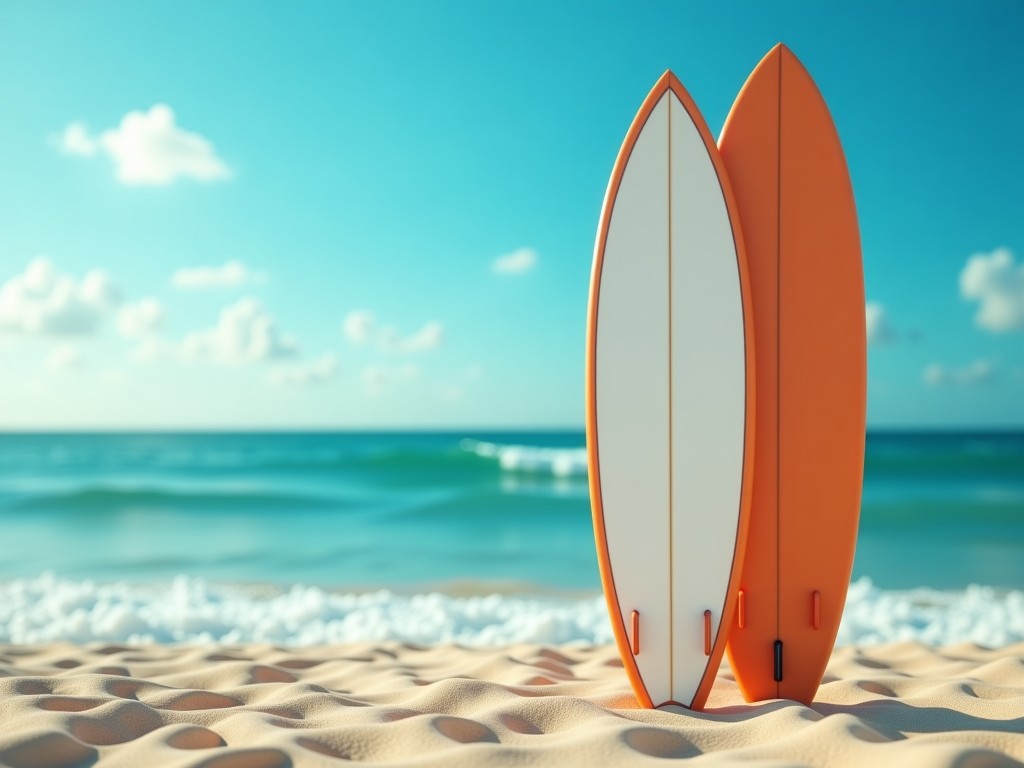
Lightweight Gasoline Surfboard
Lightweight Gasoline Surfboard
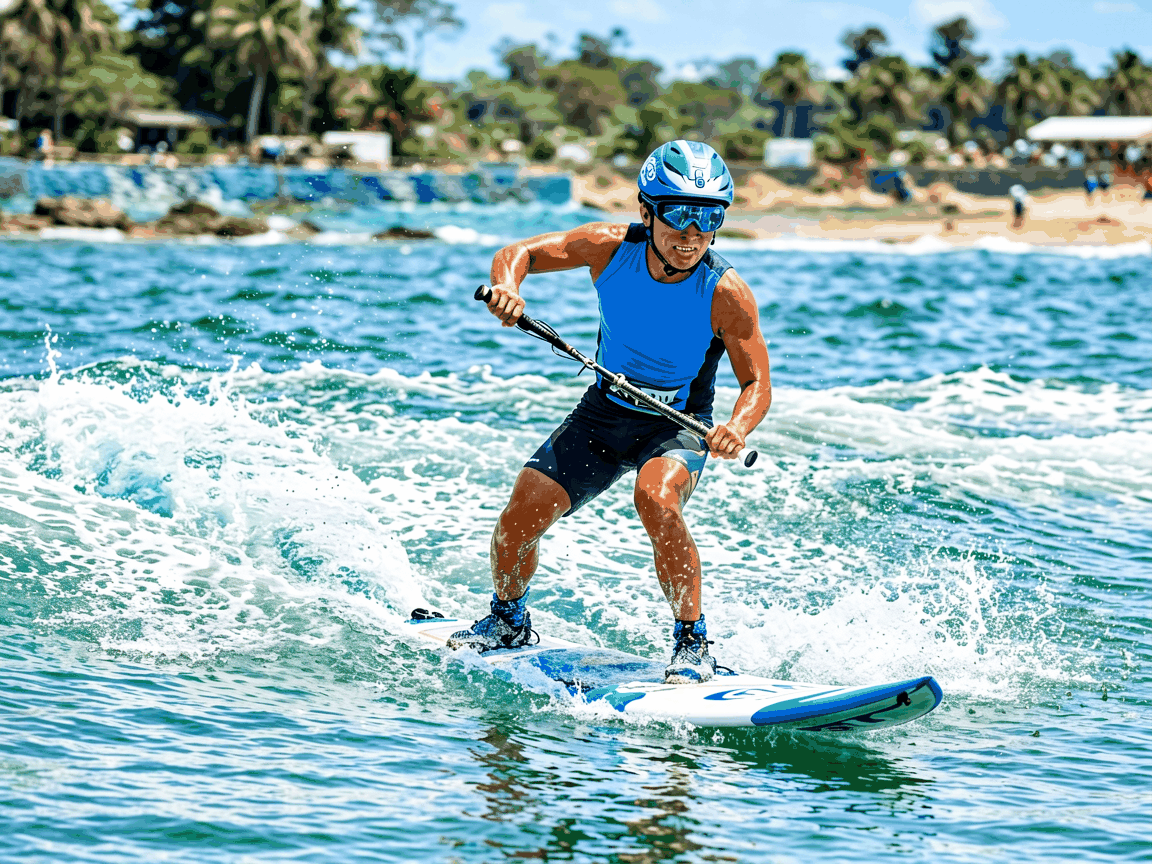
This lightweight gasoline surfboard combines a compact two-stroke engine with a reinforced composite hull to deliver autonomous propulsion in flat-water environments. Designed for applications where wave dependency limits usability, it enables consistent operation on lakes, rivers, and calm coastal zones. The system integrates fuel efficiency, weight distribution, and hydrodynamic shaping to maintain maneuverability while reducing operator fatigue. Unlike electric alternatives, it offers extended range without recharge delays, making it suitable for prolonged recreational or patrol use.
Total dry weight remains under 15 kg through strategic material selection and minimalist framing, allowing single-person transport and launch. The powertrain is isolated from the rider zone via vibration-dampening mounts to minimize noise and hand-arm transmission. All components are marine-grade treated to resist UV exposure, salt spray, and freshwater corrosion. This configuration supports riders up to 100 kg while maintaining planing efficiency at speeds between 15–25 km/h.
Core Design Principles
Hull geometry follows a modified displacement-to-planing transition profile, optimized for low-power propulsion. The widened tail section increases lift at low speeds, reducing the power threshold needed to achieve planing. Rocker curve is minimized in the rear third to minimize drag, while retained nose rocker prevents pearling during acceleration. Symmetrical rails enhance lateral stability without introducing roll resistance during turns.
Weight distribution centers the engine just ahead of the rider’s standing position, balancing pitch moments during throttle application. Fuel tank placement low and rearward lowers the center of gravity, improving stability in chop. Internal baffles prevent fuel slosh from affecting trim at partial loads. The entire structure avoids internal cavities that could trap water, eliminating hidden weight gain and corrosion risks.
Composite layup uses unidirectional carbon fiber in high-load zones (engine mounts, keel, rail edges) and woven E-glass in secondary areas for impact resistance. Resin system is vinylester-based for superior hydrolysis resistance compared to polyester. Final gel coat includes UV stabilizers and abrasion-resistant additives. Surface finish is polished to below 20µm Ra to minimize skin friction.
Propulsion System Specifications
The integrated powertrain uses a 35cc air-cooled two-stroke gasoline engine with electronic ignition and centrifugal clutch. Rated output is 1.8 kW at 7,500 rpm, delivered via a sealed flexible shaft to a submerged propeller. Propeller diameter is 140 mm with variable pitch blades optimized for cavitation resistance at shallow submersion depths. Gear reduction is fixed at 2.6:1 to match engine powerband to propulsive efficiency.
Fuel consumption averages 0.6 liters per hour at cruise speed, enabling approximately 8 hours of runtime on a 5-liter tank. Exhaust is routed through a water-cooled suppressor to reduce thermal signature and noise below 75 dB(A) at 3 meters. Throttle control is handled via a twist-grip assembly with return spring and idle stop, mounted on the handlebar. Kill switch is lanyard-activated for immediate shutdown upon rider separation.
Shaft sealing uses dual lip seals with petroleum-resistant nitrile rubber, backed by a sacrificial zinc anode to prevent galvanic corrosion. Lubrication is pre-mixed at 50:1 fuel-to-oil ratio, with optional injector system available. All fasteners are marine-grade stainless steel (A4-80). Housing is vented to equalize pressure while blocking water ingress via hydrophobic membrane.
Material Composition and Durability
Hull laminate consists of three layers: outer veneer of 200g/m² E-glass for impact diffusion, middle layer of 300g/m² unidirectional carbon fiber aligned with longitudinal stress lines, and inner layer of 150g/m² E-glass for bonding integrity. Core material in non-structural zones is closed-cell PVC foam (60 kg/m³ density) to add stiffness without weight penalty. Transition zones use tapered laminates to avoid stress risers.
Engine mount is a standalone aluminum alloy (6061-T6) cradle with rubber isolators, bolted through-bolted to hull via stainless steel inserts. Fuel tank is high-density polyethylene (HDPE) with multilayer barrier to prevent permeation. Seals and gaskets are Viton® or equivalent fluorocarbon rubber for fuel and heat resistance. Control cables are stainless steel inner with polyethylene outer jacket, UV-stabilized.
Anode system includes two replaceable zinc blocks (120g each) mounted on the keel and skeg, inspected every 25 hours. Abrasion pads at tail and rail ends are replaceable urethane strips. All external fasteners are countersunk and sealed with marine epoxy. Expected service life exceeds 300 hours under recreational use with routine rinsing and annual inspection.
Performance Characteristics
Acceleration from rest to planing speed averages 4.2 seconds with a 75 kg rider under calm conditions. Top speed is limited by propeller cavitation and hull drag, measured at 26 km/h GPS-verified. Turning radius at 20 km/h is approximately 3.5 meters, influenced by rail engagement and rider weight distribution. Fuel range exceeds 20 km at cruise speed, depending on load and water conditions.
Static stability is quantified by metacentric height (GM) of 0.18 m, indicating adequate resistance to heel without excessive tenderness. Longitudinal stability prevents porpoising due to balanced center of pressure and center of gravity. Vibration levels at handlebar remain below 5 m/s² RMS across operating range, within ISO 5349-1 limits for hand-arm exposure. Noise spectrum shows dominant peaks at engine firing frequency and blade pass frequency, both attenuated by hull damping.
In freshwater, corrosion rate of aluminum components is negligible (<0.01 mm/year). In saltwater, rinsing after use reduces chloride accumulation to non-damaging levels. Impact testing shows hull withstands 10 J lateral strikes without delamination. UV exposure testing (1500 hours) shows less than 5% gloss loss and no cracking in gel coat. Performance remains consistent across temperatures from 5°C to 35°C.
Typical Applications
Recreational users benefit from independent operation in wave-scarce regions, extending usable days per season. Training centers use them for consistent tow-in practice where boat traffic is restricted or unsafe. Rescue teams deploy them for rapid response in shallow or debris-laden waters where larger vessels cannot maneuver. Their low acoustic profile minimizes disturbance in ecological zones or residential shorelines.
Rental operations favor them due to simple refueling logistics versus battery charging infrastructure. Patrol agencies utilize them for shoreline surveillance, offering silent approach and rapid deployment. Film production crews employ them for stable camera platforms in calm inland lakes. Unlike electric models, they avoid range anxiety during full-day events or multi-location use.
They are not intended for surf-specific wave riding, whitewater, or open-ocean conditions due to limited righting moment and propulsion depth. Maximum recommended wave height is 0.5 m for stability. Operation requires calm to slight chop (Beaufort scale 0–2). User must maintain proper stance and throttle control to avoid instability during acceleration or turns.
| Parameter | Value | Notes |
|---|---|---|
| Dry Weight | 14.2 kg | Excludes fuel and rider |
| Fuel Tank Capacity | 5.0 L | HDPE with barrier layer |
| Engine Power | 1.8 kW | At 7,500 rpm |
| Max Speed | 26 km/h | GPS-measured, calm water |
| Fuel Consumption | 0.6 L/hr | At cruise speed (20 km/h) |
| Operating Range | 20+ km | Dependent on load and conditions |
| Max Rider Weight | 100 kg | With planing maintained |
| Noise Level | <75 dB(A) | At 3 meters, idle to cruise |
| Vibration (Handlebar) | <5 m/s² RMS | ISO 5349-1 compliant |
| Material - Hull | Carbon/E-glass hybrid | Vinylester resin |
| Material - Tank | HDPE multilayer | Fuel permeation resistant |
Customization Options
Hull length can be adjusted between 2.1m and 2.4m to alter speed potential and stability. Longer variants increase top speed by up to 3 km/h but require more power to plane. Shorter versions improve maneuverability in tight spaces but reduce glide efficiency. Width remains fixed at 58 cm to maintain balance between stability and paddling ergonomics.
Engine displacement options include 25cc and 45cc variants, affecting power-to-weight ratio and fuel consumption. The 25cc version reduces dry weight by 1.2 kg and lowers noise, suited for lighter riders or training. The 45cc version increases top speed to 30 km/h but adds 0.8 kg and increases fuel burn to 0.9 L/hr. All variants use the same mounting interface and shaft diameter.
Custom graphics can be applied via marine-grade vinyl or direct gel coat pigmentation. Handlebar height and rake are adjustable within 40 mm range via spacer system. Foot strap inserts can be added or omitted based on user preference. Tank color options include black, translucent, or custom colors upon request. All modifications retain original certification boundaries.
Quality Assurance and Testing
Each hull undergoes vacuum-assisted resin infusion to ensure consistent fiber wet-out and minimal void content (<2%). Post-cure involves elevated temperature cycle to maximize resin cross-linking and dimensional stability. Final inspection includes laser scanning for profile accuracy within ±1.5 mm tolerance and tap testing for delamination detection.
Engine systems are bench-tested for ignition timing, compression, and fuel delivery before installation. Run-in procedure includes 30 minutes at varying loads to seat components. Final assembly receives a 15-minute operational test in water tank to verify steering, throttle response, and leak integrity. All units are pressurized to 0.3 bar to check for hull permeability.
Documentation includes material traceability reports, resin batch records, and engine serial logs. Quality records are retained for 5 years. Samples are available upon request for material verification or performance validation. Warranty covers manufacturing defects for 12 months or 100 hours, whichever comes first, excluding normal wear items like anodes, seals, and propeller.
For technical specifications, customization inquiries, or sample availability, contact our engineering team to discuss your operational requirements.
Request Technical Consultation